
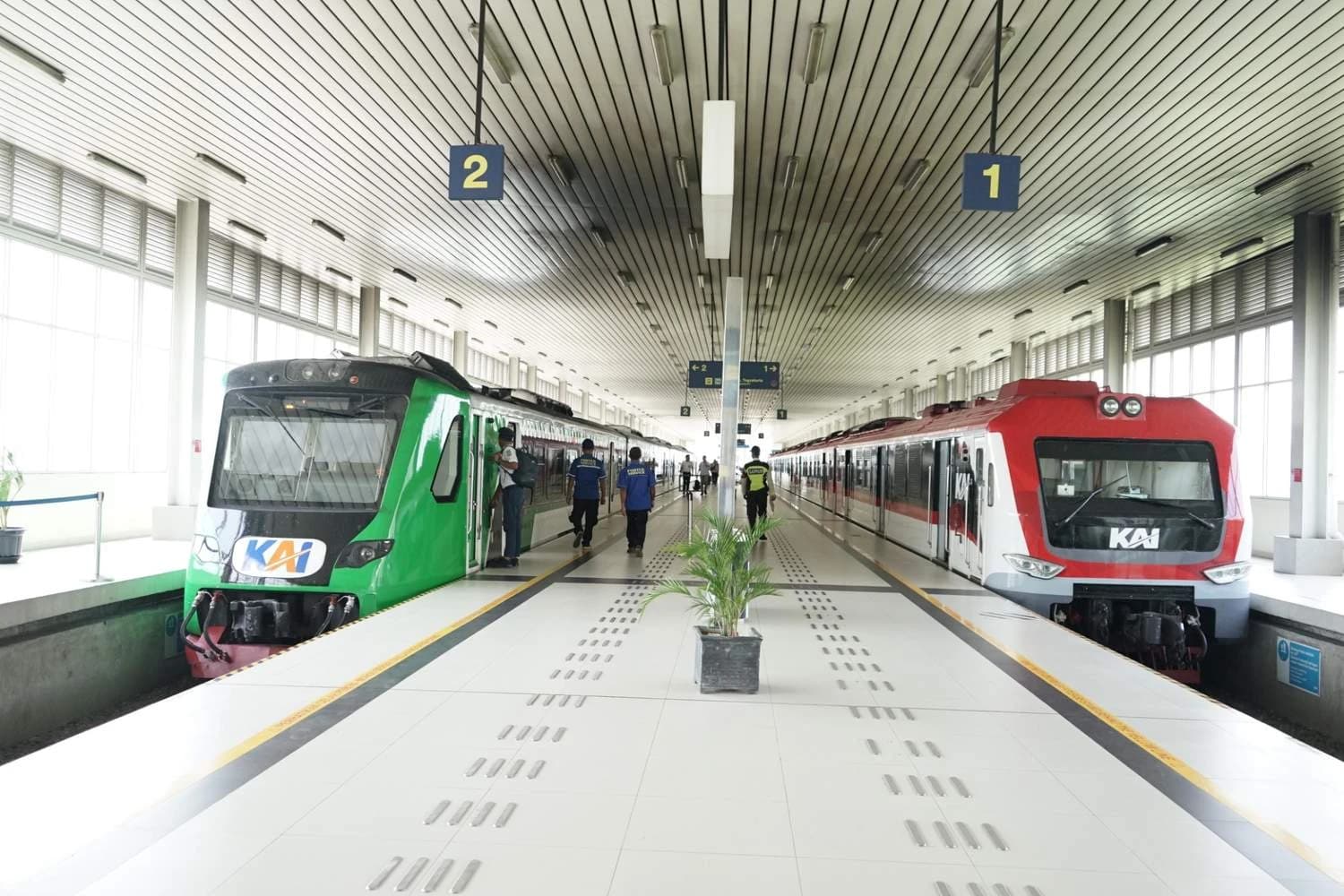
Smoother Airport Connectivity: KAI Group's Eight Services Serve 7.47 Million Passengers in the First Half of 2026
Making airport journeys easier than ever, KAI Group's eight rail-based airport connectivity services served 7.47 million passengers in the first half of 2026, marking a 2.94% increase compared with the same period last year.
Whether traveling for a family holiday, a business trip, or a long-awaited getaway, the journey to the airport is often the first step of every travel experience. To support seamless mobility, KAI Group continues to strengthen rail-based connectivity that links airports with city centers and surrounding areas, offering passengers a convenient, reliable, and integrated travel option.
Throughout the first half of 2026, KAI Group's eight airport connectivity services recorded 7,468,887 passengers, an increase of 2.94% from 7,255,754 passengers served during the same period in 2025.
KAI Vice President of Corporate Communication Anne Purba said the continued growth reflects increasing public confidence in rail transport as a practical and dependable solution for airport travel.
During the first half of 2026, our eight airport connectivity services welcomed an additional 213,133 passengers compared with the same period last year. These services play an important role in connecting air travel with city centers, residential areas, business districts, and railway stations, making multimodal travel more convenient for the public.
The eight services are designed to meet the unique mobility needs of each region across Indonesia.
In Yogyakarta, passengers can choose between the YIA Airport Rail Regular Service, operating on the Yogyakarta–Wates–YIA International Airport round-trip route, which served 908,898 passengers, and the YIA Airport Rail Xpress, providing direct services between Yogyakarta Station and YIA International Airport with 434,765 passengers. Together, both services—operated by KAI Bandara—served 1,343,663 passengers during the first half of 2026.
In North Sumatra, the Srilelawangsa Train served 793,519 passengers on the Medan–Kualanamu Airport route and 1,345,715 passengers on the Medan–Kuala Bingai route. The Kuala Bingai service also offers convenient access to Kualanamu International Airport via Medan Station. Combined, KAI Bandara's services in North Sumatra served 2,139,234 passengers. Together with the Yogyakarta services, KAI Bandara recorded a total of 3,482,897 passengers during the first half of 2026.
In the Greater Jakarta area, the Soekarno-Hatta Airport Commuter Line (Commuter Line Basoetta), operating between Manggarai Station and Soekarno-Hatta International Airport, served 1,197,413 passengers, remaining one of the preferred public transportation options for airport access.
Meanwhile, the Adi Soemarmo International Airport Rail (KA BIAS), serving the Adi Soemarmo Airport–Madiun and Adi Soemarmo Airport–Caruban routes, recorded 461,482 passengers.
In West Sumatra, the Minangkabau Express connected Pulau Aie Station with Minangkabau International Airport and served 120,599 passengers, while the South Sumatra LRT, linking DJKA Station and Sultan Mahmud Badaruddin II International Airport, recorded the highest ridership among the eight services with 2,206,496 passengers.
Anne explained that each service is designed to accommodate the travel patterns and mobility needs of local communities. From dedicated airport rail services and commuter trains to regional railways and light rail transit (LRT), passengers can choose the option that best fits their departure location, flight schedule, and onward journey.
Our diverse range of airport connectivity services gives passengers greater flexibility in planning their trips. By integrating rail transport with air travel, we aim to deliver a smoother, more efficient, and more comfortable travel experience.
Beyond providing convenient airport access, these services also help reduce reliance on private vehicles while encouraging the use of sustainable public transportation. Fixed schedules enable passengers to better plan their journeys, particularly during weekends, holiday seasons, and other peak travel periods.
KAI encourages passengers to check train schedules and ticket availability through each service's official application and sales channels. Travelers are also advised to align their train departure with flight schedules, airport security procedures, and airline check-in requirements.
A comfortable airport journey starts with good planning. We encourage customers to check schedules in advance and use our official channels to stay updated with the latest travel information, ensuring a smooth, safe, and on-time journey.