
KAI and INKA Advance Consolidation Plans to Strengthen Indonesia’s Railway Industry
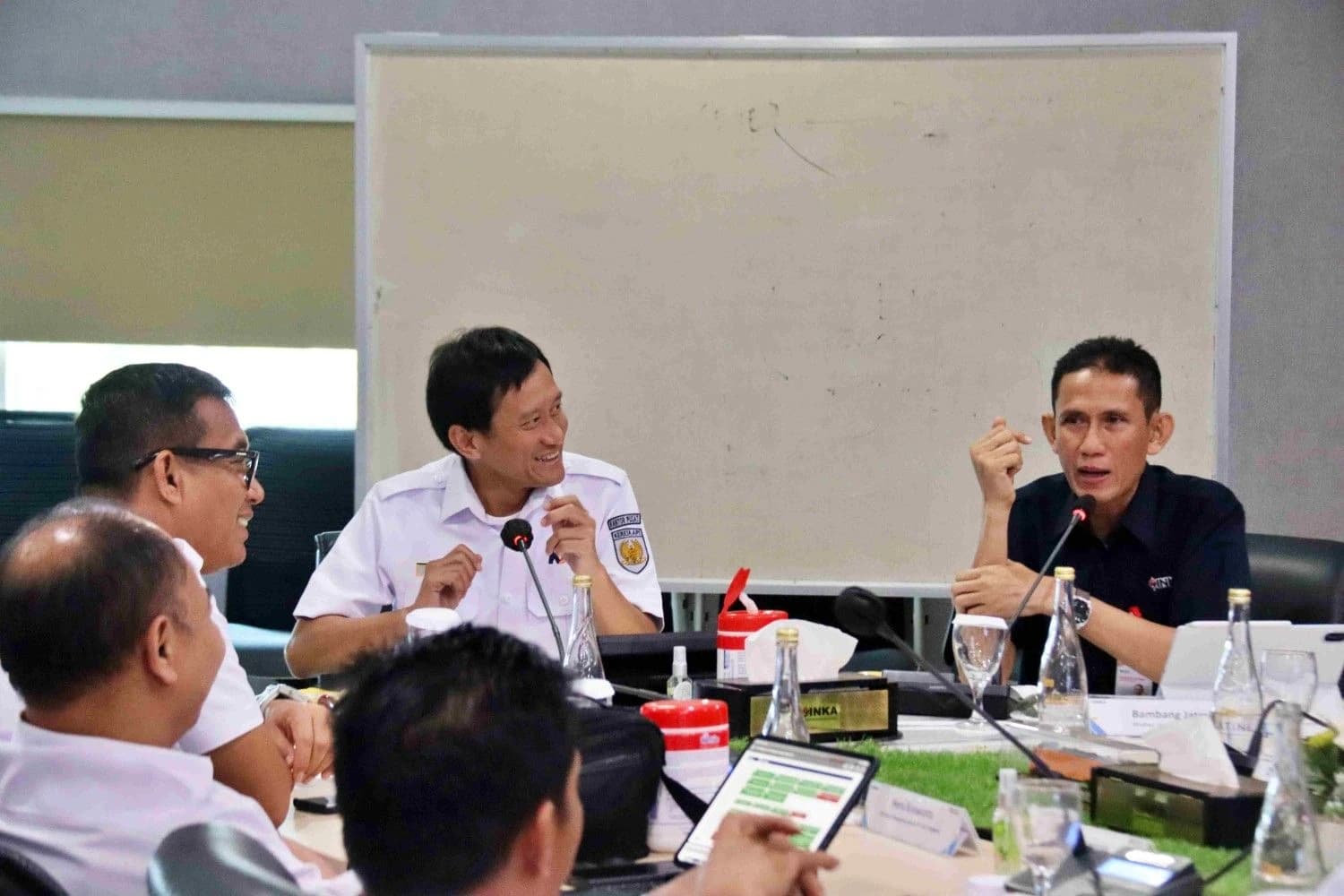
PT Kereta Api Indonesia (Persero) (KAI) and PT Industri Kereta Api (Persero) (INKA) are advancing plans to consolidate their efforts to strengthen Indonesia’s railway industry. The discussions took place during a working visit by KAI President Director Bobby Rasyidin to INKA’s office in Madiun, East Java, on Thursday (November 12), where both companies also discussed the proposed acquisition of INKA by KAI.
The planned consolidation aims to align railway rolling stock requirements with the manufacturing capabilities of the domestic industry. With greater certainty regarding KAI’s long-term needs as an operator, INKA is expected to develop more structured production plans, expand its manufacturing capacity, and invest in technology.
During the meeting with the management teams of both companies, Bobby emphasized that strengthening the industry requires more than increasing production capabilities. It must also involve continuous quality improvements through a Make It Better approach. INKA is encouraged to refine its production processes, improve rolling stock quality, and strengthen its design and engineering capabilities to achieve operational excellence and deliver products that better meet operational requirements and customer expectations.
These quality improvements cover various technical aspects, including door system reliability, air conditioning performance, passenger comfort, and the availability of supporting components. Evaluations of domestically manufactured KRL trains are also a priority to ensure that development, testing, validation, and quality control processes are carried out more effectively. Accelerating project completion must remain aligned with safety and rolling stock reliability standards.
KAI’s long-term requirements include intercity passenger trains, KRL commuter trains, locomotives, and urban rail vehicles. These projected needs can serve as a reference for INKA in planning production capacity and technology development. Aligning operator requirements with manufacturing capabilities is expected to improve project completion timelines, cost efficiency, and production continuity.
Bobby further explained that industrial development relies on three essential elements: human resources, financing, and technology, all of which must be supported by market certainty. KAI’s long-term rolling stock requirements are expected to provide INKA with sustained demand, allowing the company to plan production capacity expansion and technology development more effectively.
KAI and INKA also discussed optimizing production facilities in Madiun and plans to develop additional facilities in Banyuwangi. Capacity management at both locations will take into account production line readiness, material availability, workforce capabilities, and project completion targets. KAI is also encouraging greater productivity through supply chain management and the implementation of production standards focused on delivery timelines, costs, and quality.
The industrial development strategy also aims to strengthen INKA’s independence, from manufacturing capabilities and system integration to the development of proprietary technology. Partnerships with global industry players can still serve as a means of technology transfer, workforce competency development, and the expansion of domestic component suppliers.
INKA President Director Bambang Jatmika said the meeting provided an opportunity for both companies to further develop their integration plans. Greater certainty regarding KAI’s rolling stock requirements is expected to help INKA establish more sustainable industrial development plans, including technology management, human resources, financing, and production project completion.
Bambang added that KAI and INKA share the same goal of improving the national railway industry to deliver greater benefits to the country and its customers. With greater certainty regarding future demand from KAI, INKA expects to maintain project continuity while continuously improving product quality.
Bobby emphasized that the consolidation through the proposed acquisition of INKA is part of KAI’s efforts to build a more integrated national railway industry ecosystem. This ecosystem will cover the entire process, from demand planning and manufacturing to technology development and rolling stock maintenance. Through this initiative, KAI aims to accelerate improvements in domestic industrial quality while ensuring sustainable fulfillment of its rolling stock requirements, ultimately supporting safer, more comfortable, and more reliable railway services.