
Exploring 10 Historic Railway Tunnels in Indonesia
Railway tunnels stand as reminders of Indonesia’s transport and engineering development since the late 19th century. Built to cut through hills and connect different regions, these historic structures tell stories of construction challenges, economic activity, and the communities that lived during the period in which they were built.
PT Kereta Api Indonesia (Persero), or KAI, highlights a number of historic railway tunnels across Java and Sumatra. Their construction was linked to the need to transport plantation products, support mining operations, facilitate trade, and connect settlements across different regions.
KAI Vice President of Corporate Communication Anne Purba explained that historic tunnels offer valuable educational insights, particularly for younger generations. They reflect the engineering methods of their time and show how Indonesia’s geographical conditions influenced railway network development.
Here are 10 historic railway tunnels in Indonesia and the stories behind their construction:
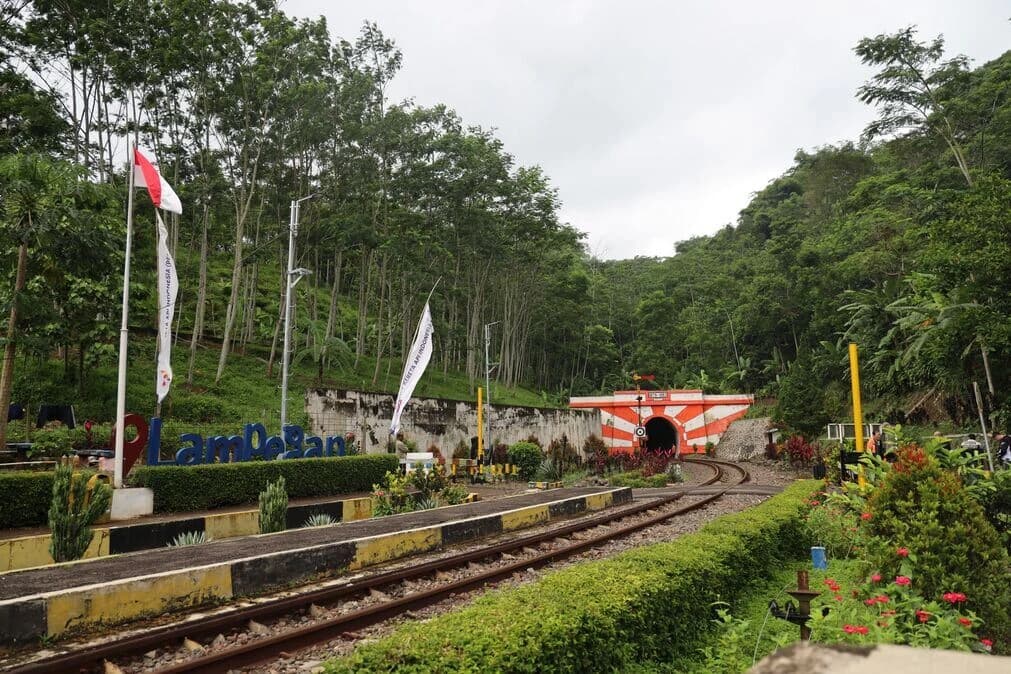
1. Lampegan Tunnel – West Java (1879–1882)
Located in the Cianjur area, Lampegan Tunnel has a historical length of approximately 686 metres and is recognised as Indonesia’s oldest railway tunnel. Its construction formed part of railway development towards the Priangan region, where hilly terrain presented engineering challenges and plantation products were an important part of freight transport.
2. Ijo Lama Tunnel – Central Java (1885–1886)
Approximately 580 metres long, Ijo Lama Tunnel is located in the Kebumen area. It was built as part of railway development along the southern coast of Java, where tracks had to cross hilly terrain to connect economic centres and settlements.
3. Lembah Anai I Tunnel – West Sumatra (1890–1891)
This tunnel, with a historical length of approximately 100 metres, is located in the mountainous Lembah Anai area. Its construction was associated with the development of transport links between the Minangkabau hinterland and the coastal region.
4. Lembah Anai II Tunnel – West Sumatra (1890–1891)
With a historical length of approximately 200 metres, this tunnel forms part of the Lembah Anai railway route, which crosses steep terrain. The area’s geography also encouraged the use of rack railway technology to help trains navigate mountain gradients.
5. Kupitan Tunnel – West Sumatra (1892–1894)
Kupitan Tunnel is approximately 600 metres long and lies along the Muara Kalaban–Padang Sibusuk railway section. Its construction formed part of the expansion of West Sumatra’s railway network to support commodity transport and connections between different areas.
6. Lubang Kalam Tunnel – West Sumatra (1892–1894)
Built along the Sawahlunto–Muara Kalaban route, Lubang Kalam Tunnel is approximately 828 metres long, according to UNESCO nomination documentation. It is closely connected to the history of the Ombilin coal mining industry. The railway formed part of a transport system that moved coal from inland West Sumatra to Emmahaven Port, now known as Teluk Bayur, for international trade.
7. Garahan Tunnel – East Java (1901–1902)
Located in a mountainous area along the Jember–Banyuwangi route, Garahan Tunnel is approximately 113 metres long. It formed part of railway development connecting eastern Java across hilly terrain.
8. Mrawan Tunnel – East Java (1901–1902)
Mrawan Tunnel is approximately 690 metres long and is located in the Mount Gumitir area. Construction proceeded from both ends to cut through the mountainous terrain connecting Jember and Banyuwangi, illustrating the engineering challenges involved in building railway routes through the region.
9. Sasaksaat Tunnel – West Java (1902–1903)
At approximately 949 metres long, Sasaksaat Tunnel was built along the Purwakarta–Padalarang railway section. Historical KAI records state that excavation was carried out from both sides of the hill. When workers encountered hard rock, they drilled manually because explosives and machinery were considered potential risks to ground stability. Electricity generated by a dynamo was also used to support construction work.
10. Batulawang Tunnel – West Java (1914)
Batulawang Tunnel has a historical length of approximately 281.5 metres and lies along the former Banjar–Cijulang railway line. The route was developed to connect southern West Java with the wider transport network. Although the line is no longer in operation, the tunnel remains part of Indonesia’s railway heritage.
The construction of these tunnels coincided with a period of technological development in the global railway industry. In Europe, Switzerland’s approximately 15-kilometre Gotthard Tunnel opened in 1882, while the approximately 19.8-kilometre Simplon Tunnel began operating in 1906. During a similar period, tunnel construction in Indonesia presented its own challenges, including hilly terrain and tropical geographical conditions.
The connection between railways and industrial history is also evident in West Sumatra. The Ombilin Coal Mining Heritage of Sawahlunto was designated a UNESCO World Heritage Site in 2019. The site includes mining facilities, railway infrastructure, and port facilities developed during the colonial period. Its history also encompasses the experiences of workers, including forced labourers, which are an important part of understanding the social context of the time.
Anne explained that railway heritage can support learning across several disciplines, including civil engineering, geology, transportation, economic history, and international trade. Historical documentation and accurate contextual information are important to helping the public understand the cultural and historical significance of these sites.
As Indonesia marks 159 years of railway history in 2026, historic tunnels offer a glimpse into the country’s long journey in rail transportation. Some remain part of active railway networks, while others are remnants of discontinued routes. Both hold documentary and educational value for current and future generations.
Through archives, documentation, museums, and collaboration with various stakeholders, KAI hopes to help the public continue exploring Indonesia’s railway history. These historic structures tell more than the story of transport technology: they also reflect the relationship between infrastructure development, geography, economic activity, and social life during their time.