
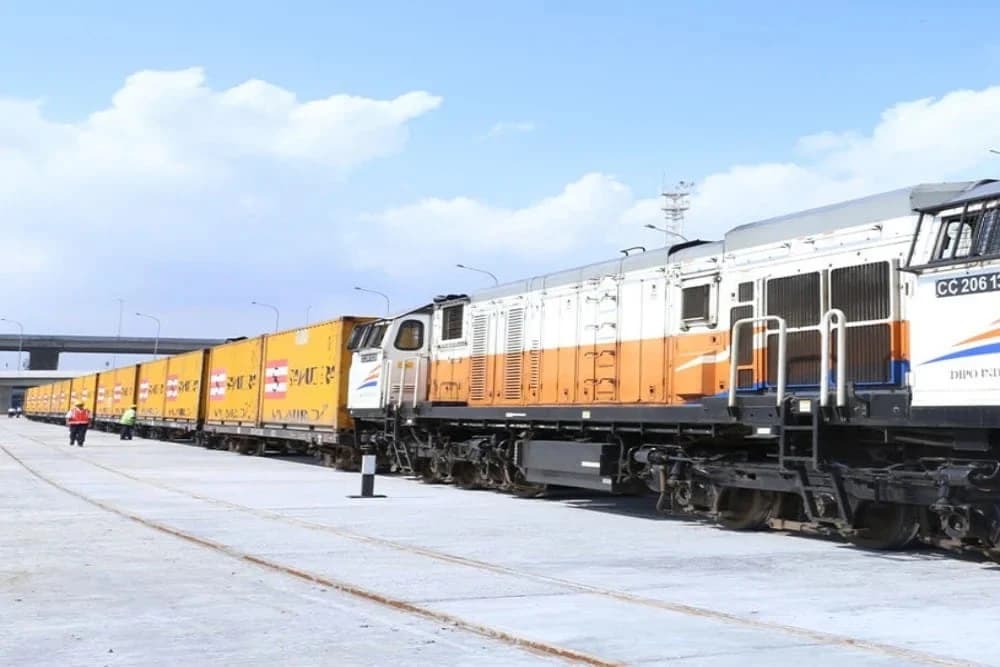
KAI Container Transportation Reaches 4.44 Million Tons Through September 2026, Growing by 19.57 Percent
Container transportation by rail continued to show positive growth throughout 2026. PT Kereta Api Indonesia (Persero), or KAI, recorded a total of 4,438,999 tons of containers transported from January to September 2026. This figure grew by 19.57 percent compared to the same period in 2025, when 3,712,477 tons were transported. This means an additional 726,522 tons of goods were distributed by rail over nine months.
Containers are a key contributor to KAI’s non-coal freight segment. Of the total 9,148,571 tons of non-coal freight transported through September 2026, nearly half, or around 48.5 percent, came from containers. Overall, non-coal freight grew by 2.6 percent compared to 8,912,566 tons in the same period last year. Revenue also reached approximately IDR 1.095 trillion, an increase of 7.2 percent.
KAI Vice President of Corporate Communication Anne Purba said that container growth represents a positive development for logistics connectivity linking production areas, inland terminals, ports, and destination markets.
“Growth of nearly 20 percent shows that the use of trains to transport containers is becoming increasingly popular. With large carrying capacity, planned schedules, and consistent distribution routes, rail transportation has significant potential to support logistics needs,” Anne said.
This positive trend aligns with Indonesia’s ongoing trade activity. Statistics Indonesia (BPS) recorded Indonesia’s export value at US$193.64 billion from January to August 2026, an increase of 4.74 percent. Non-oil and gas exports reached US$185.63 billion, growing by 5.48 percent. Meanwhile, imports during the same period reached US$186.39 billion, an increase of 19.84 percent.
In international trade, the movement of goods does not stop when they arrive at ports. Goods still need to be distributed to various destinations, from industrial areas and warehouses to distribution centers and consumers. UN Trade and Development reports that maritime transport carries more than 80 percent of global trade by volume. Therefore, connections between ports and their surrounding regions are essential to maintaining a smooth supply chain.
This is where rail transportation plays an important role. Containers can be transported in large volumes by train for the main journey, while trucks handle the collection and delivery of goods during the initial and final stages, known as first mile and last mile. Combining these two modes gives logistics customers more options to organize shipments based on cargo volume, distance, schedules, and costs.
KAI is also exploring opportunities to expand container transportation connectivity. One initiative being considered in the company’s long-term plan is connecting the Cilacap Container Terminal with the national railway network and the Semarang Container Terminal. This plan is part of the development of multimodal transportation and the expansion of logistics services to port hinterland areas.
“For logistics customers, certainty in capacity, schedules, and smooth cargo movement is essential. KAI will continue identifying potential corridors so that container transportation by rail can grow further and better support goods distribution needs,” Anne concluded.