
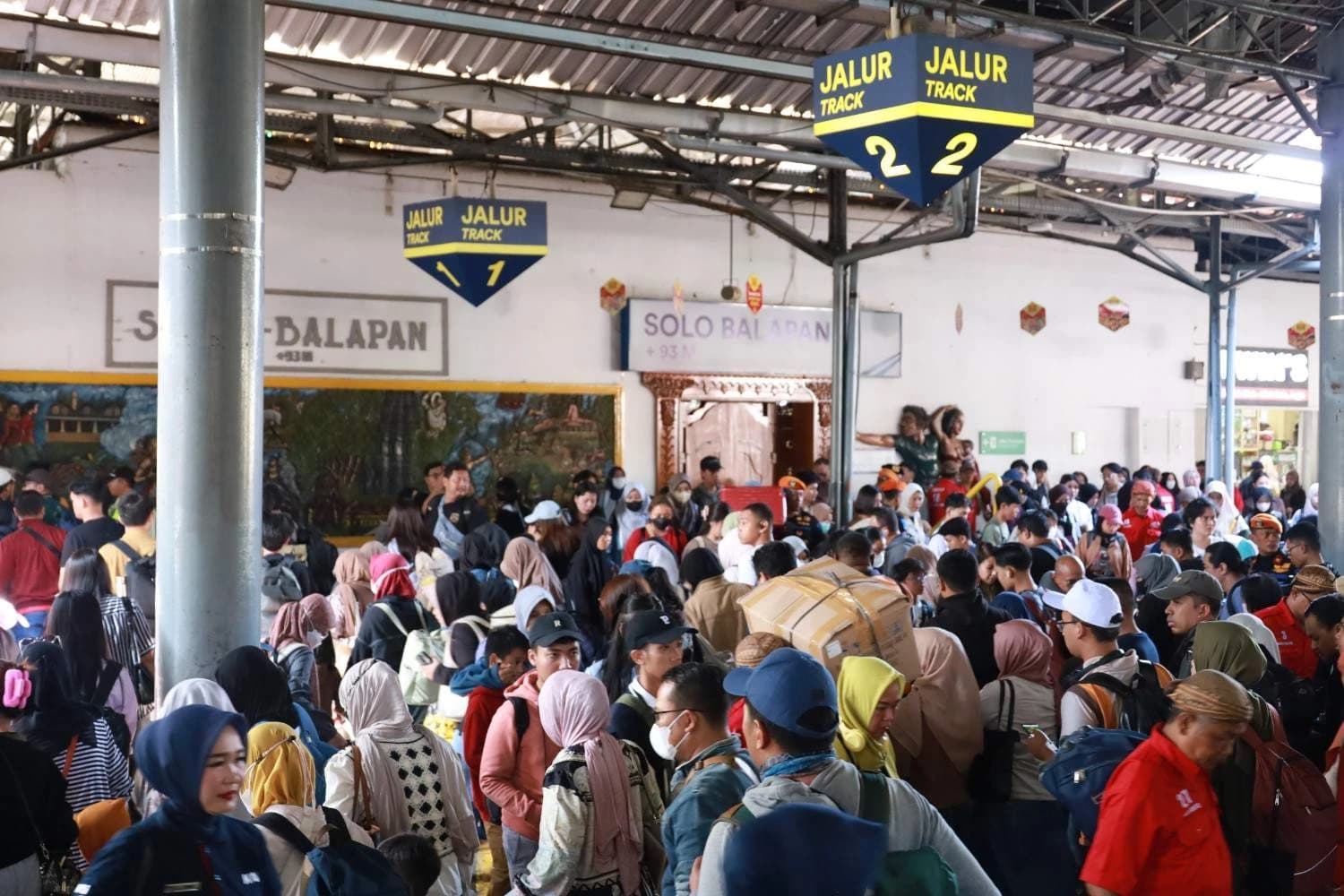
UNESCO Creative Cities Record 7.86 Million Rail Passenger Movements Through September 2026
Bandung, Pekalongan, Solo, and Malang each have their own appeal. Bandung is known for design and creative industries, Pekalongan for batik, Solo for arts and crafts, while Malang continues to develop its digital media sector. All four cities are part of the UNESCO Creative Cities Network and are connected by railway services that support public mobility.
PT Kereta Api Indonesia (Persero), or KAI, recorded 7,855,198 passenger boarding and alighting movements on long-distance and local trains at Bandung, Pekalongan, Solo Balapan, and Malang stations from January to September 2026. This represented an 8.85 percent increase from 7,216,612 movements during the same period in 2025.
According to KAI Vice President of Corporate Communication Anne Purba, the high level of mobility to these cities reflects a wide range of travel needs. People travel for work, education, business, cultural activities, and tourism, with each city offering attractions throughout the year.
Bandung joined the UNESCO Creative Cities Network in 2015 in the field of Design. Its creative ecosystem spans design, fashion, architecture, graphic design, creative products, and digital media. Reflecting the city's activity, Bandung Station recorded 2,606,290 passenger movements on long-distance and local trains from January to September 2026. This was a 12.26 percent increase from 2,321,687 movements during the same period a year earlier.
Whoosh also provides another rail travel option for reaching the Bandung area. From January to September 2026, the service carried 4,576,841 passengers, up 1.16 percent from 4,524,311 passengers during the same period in 2025. Monthly passenger numbers peaked in July at 578,562, followed by 560,772 in August. Anne explained that trips to Bandung serve various purposes, from work and university activities to concerts, exhibitions, conferences, and other creative events. The range of rail services gives people more options for reaching these destinations.
Pekalongan joined the UNESCO Creative Cities Network in 2014 in the field of Crafts and Folk Art. Batik is not only a defining part of the city's cultural identity but also an important element of its local economy. Pekalongan Station recorded 1,050,509 passenger movements from January to September 2026, an increase of 3.72 percent from 1,012,784 movements during the same period in 2025.
Surakarta, widely known as Solo, joined the UNESCO Creative Cities Network in 2023 in the field of Crafts and Folk Art. The city is known for its batik, crafts, traditional dance, karawitan music, wayang performances, and other cultural events. Solo Balapan Station recorded 2,538,838 passenger movements on long-distance and local trains from January to September 2026. This represented an 11.60 percent increase from 2,274,844 movements during the same period a year earlier.
Rail-based mobility in the Solo area is also supported by Commuter Line Area VI Yogyakarta along the Yogyakarta–Palur corridor. From January to September 2026, the service recorded approximately 7.16 million passengers, up 7.68 percent from around 6.65 million during the same period in 2025. Solo Balapan is one of the corridor's main stations, serving both intercity trips and daily travel across the Solo Raya and Yogyakarta areas.
Malang joined the UNESCO Creative Cities Network in 2025 in the field of Media Arts. Its creative ecosystem includes animation, gaming, film, design, content production, and other digital activities. Malang Station recorded 1,659,561 passenger movements from January to September 2026, up 3.25 percent from 1,607,297 movements during the same period a year earlier.
Travel to these four cities comes amid strong tourism activity across Indonesia. Statistics Indonesia (BPS) recorded 104.30 million domestic tourist trips in August 2026. International visitor arrivals to Indonesia reached 1.60 million during the same month.
Anne noted that passenger movements recorded at stations, Whoosh, and Commuter Line cover a variety of travel purposes, meaning they cannot all be classified as tourism or creative-economy activity. Nevertheless, the figures highlight the scale of mobility to cities with diverse economic, cultural, educational, and tourism activities.
Each city offers its own reasons to visit, whether for cultural experiences, local cuisine, events, business, education, or family visits. Rail-based transport remains one of the travel options supporting public mobility and connecting people with activities in their destination cities.