
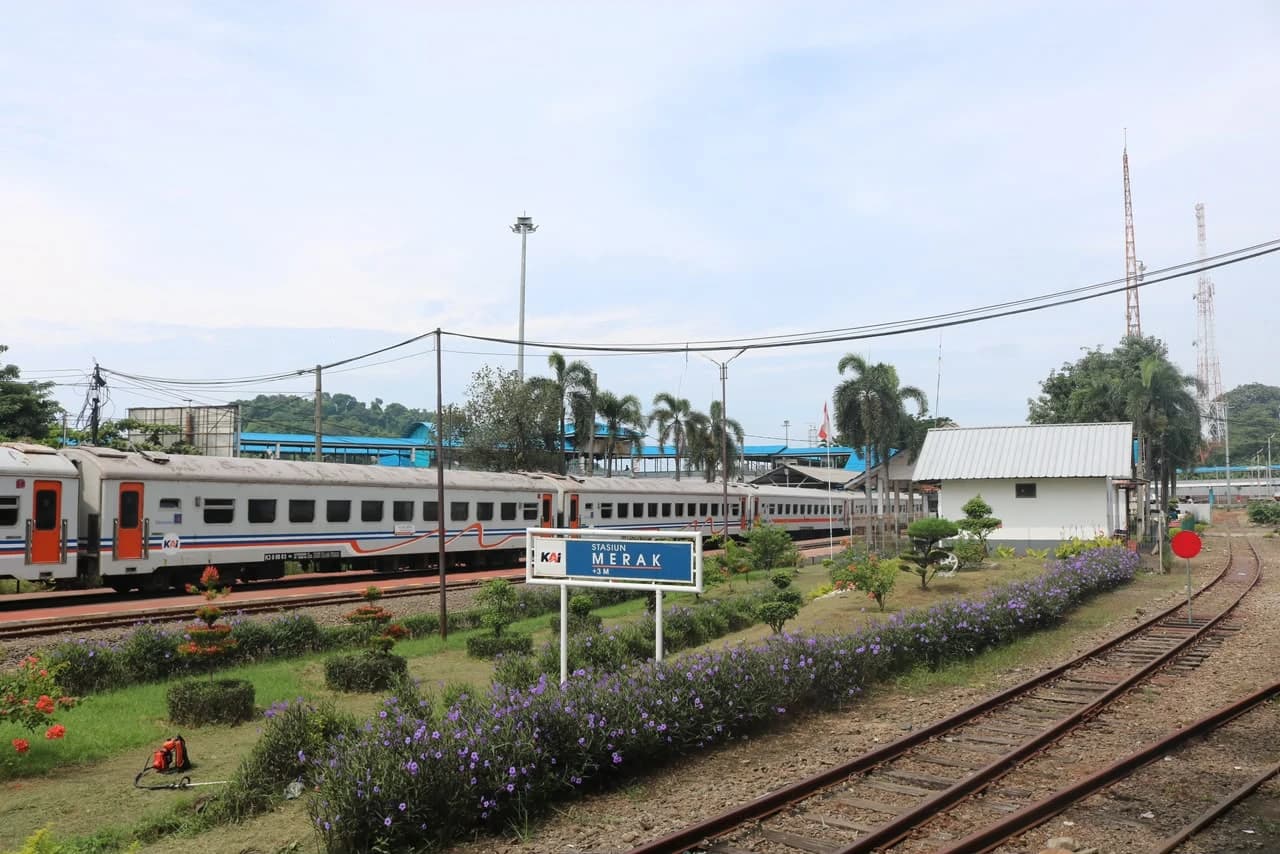
From Merak to Ketapang, Krueng Mane to Tanjungkarang, Exploring the Far Ends of Java and Sumatra’s Railway Network
Indonesia’s railway network does more than connect major cities. It also reaches various points at the far ends of the railway network across Java and Sumatra. On Java, railway journeys extend to Merak Station in the west and Ketapang Station at the island’s eastern end. On Sumatra, active passenger services reach Krueng Mane in Aceh, while Tanjungkarang in Lampung serves as one of the main gateways for railway journeys in the southeastern part of the island.
Each of these four stations has its own story. Some grew alongside port activities, others became connections between cities and coastal areas, while others were part of railway network development that began more than a century ago. Despite their different histories, they remain part of people’s mobility today.
Vice President of Corporate Communication KAI Anne Purba explained that the geographical location and history of each station give railway journeys their own character. The railway network’s presence across different regions also reflects how rail travel has remained connected to people’s lives over time.
In western Java, Merak Station is located near Merak Port, which connects Java and Sumatra across the Sunda Strait. Railway services to Merak have been operating since the early 20th century, and the station continues to serve passengers on the Rangkasbitung–Merak route. Its proximity to the port allows customers to continue their journey to Sumatra via the Merak–Bakauheni ferry crossing.
At the eastern end of Java, railway services reach Ketapang Station in Banyuwangi. The railway history in the area began when the line to Banyuwangi opened on February 2, 1903. As the area developed and port activities shifted, the railway network eventually extended to Ketapang. Today, Ketapang Station serves as an access point to Banyuwangi as well as a gateway for onward journeys to Bali through the Ketapang–Gilimanuk ferry crossing.
Activity at Ketapang Station has also continued to grow. From January to September 2026, the station recorded 615,161 customer movements for boarding and alighting, consisting of 292,618 departing customers and 322,543 arriving customers. This was an 8.56% increase from 566,643 movements during the same period in 2025.
Further west across Sumatra, Krueng Mane Station in Aceh serves as one of the endpoints of active passenger services on the Cut Meutia Train network. The service connects Krueng Geukueh–Bungkaih–Krueng Mane, keeping rail travel as part of daily mobility in Aceh while continuing the long history of railways in northern Sumatra.
Meanwhile, in southeastern Sumatra, Tanjungkarang Station has a history closely linked to the development of the railway network and Panjang Port. Construction began in 1911, and the station was officially inaugurated on June 30, 1914. In its early years, Tanjungkarang served the movement of employees and materials from Panjang Port before developing into one of the main railway stations in Lampung.
More than a century later, Tanjungkarang Station continues to see strong activity. From January to September 2026, the station recorded 562,993 customer movements for boarding and alighting, consisting of 280,094 departing customers and 282,899 arriving customers. This represented a 13.99% increase from 493,881 movements during the same period in 2025.
From Merak to Ketapang, and from Krueng Mane to Tanjungkarang, these stations show that railway journeys are about more than simply where a trip begins or ends. Each station carries its own regional story while remaining connected to people’s daily lives, economic activities, family journeys, and tourism.
Moving forward, KAI continues to strengthen railway connectivity so that its benefits can reach more communities, including through stations located at the far ends of the railway network across Indonesia.