
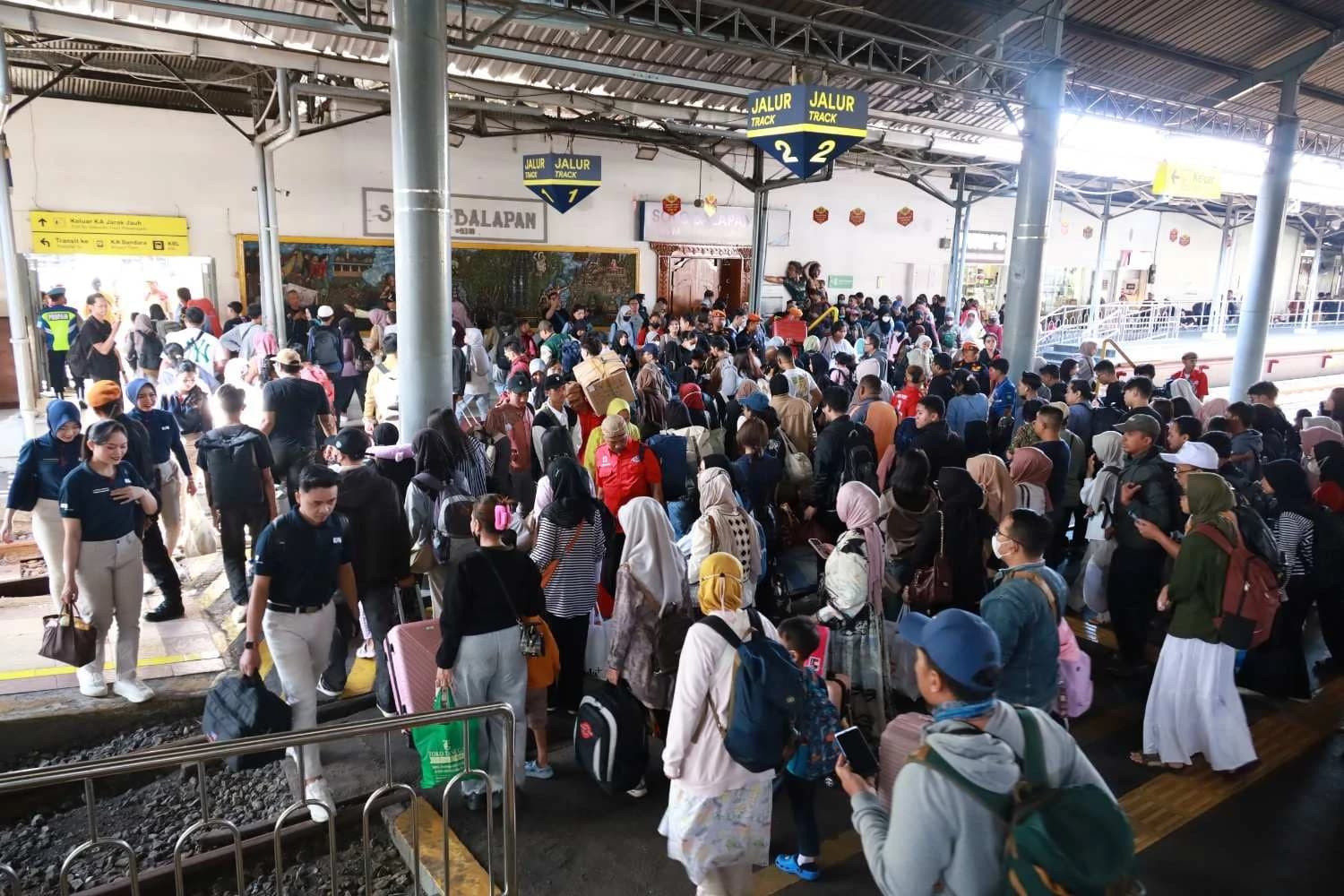
1.1 Million Customers, Joglosemarkerto Strengthens Its Role in Central Java–Yogyakarta Mobility
Intercity travel across Central Java and the Special Region of Yogyakarta continued to gain momentum throughout 2026. By September, Joglosemarkerto Train had served 1,104,419 customers, growing 9.73 percent from 1,006,467 customers recorded in the same period of 2025.
The service added 97,952 customers within nine months, reflecting strong demand for intercity mobility across the Central Java–Yogyakarta corridor, which connects major economic, educational, governmental, and tourism centers.
One of Joglosemarkerto’s key characteristics is its circular route. The service connects cities including Semarang, Solo, Yogyakarta, Purwokerto, Tegal, and Pekalongan, along with several other areas along its route.
The growth in ridership also comes alongside increasing travel and tourism activity. Statistics Indonesia’s Central Java office recorded 13.79 million domestic tourist trips to Central Java in August 2026, up 25.80 percent compared with August 2025.
At the national level, domestic tourist trips reached 104.30 million in August 2026, growing 11.47 percent year-on-year. This trend creates further opportunities for railway services connecting multiple cities and travel destinations.
Joglosemarkerto serves a wide range of travel needs, from work and education to trade, family visits, and tourism. Its interconnected route allows customers to travel between different city pairs within a single regional network.
The strong performance was also reflected in the first half of 2026. Joglosemarkerto served around 730,000 customers, an increase of 10.29 percent compared with the first half of 2025. KA 187 and KA 193 Joglosemarkerto also ranked as the two highest-ridership commercial train services during the period.
With its circular route, Joglosemarkerto can reach travel markets across multiple cities without relying on a single main destination. This flexibility makes the service increasingly relevant to the evolving mobility patterns of people across Central Java and Yogyakarta.
The 9.73 percent growth through September highlights the continued momentum of regional mobility. Moving forward, capacity and service management will continue to follow customer demand patterns to make intercity travel more convenient and accessible.