
Gone but Not Forgotten: KAI and Railfans Revisit the Banjar–Pangandaran–Cijulang Railway Line
Although it has been inactive since the 1980s, the Banjar–Pangandaran–Cijulang railway line, built by the Staatsspoorwegen, a railway company owned by the Dutch East Indies government, is widely known for its stunning and exotic natural scenery, winding through hills and valleys. Starting from Banjar, the Banjar–Kalipucang–Pangandaran–Parigi–Cijulang railway route features four tunnels, namely Batulawang, Hendrik, Juliana, and Wilhelmina, as well as six long bridges, including Cipamottan (Cikacepit), Cipambokongan, Cikabuyutan, Cikacampa, and the concrete and steel Ciputrapinggan bridges. Unfortunately, the line can no longer be enjoyed today, although remnants of its infrastructure can still be visited to trace the legacy of railway glory in the Banjar–Cijulang area.

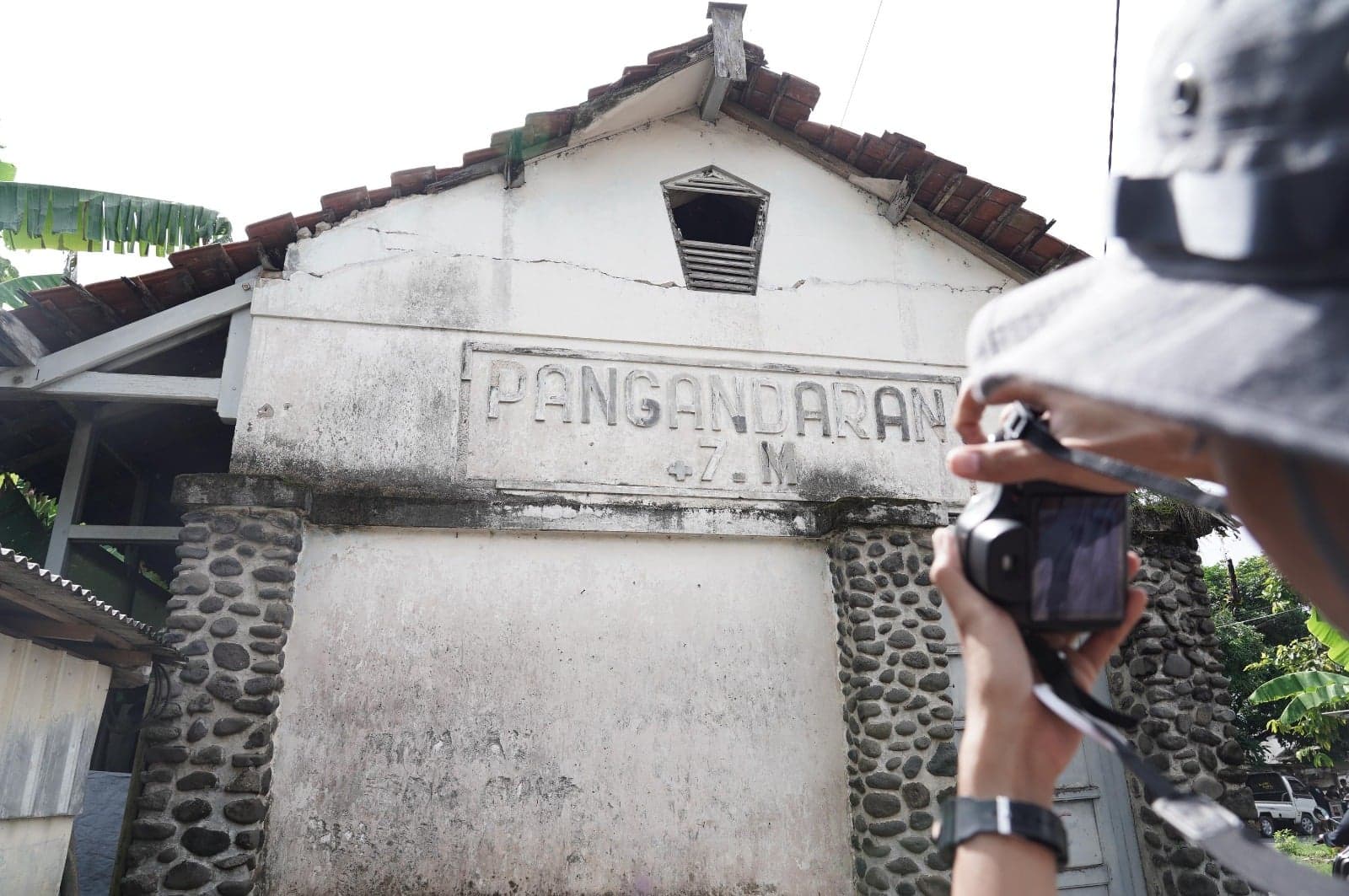
Pangandaran Station Historic Building
To revive memories and the historical significance of the route, KAI held the “Napak Tilas Historical Railway Trip 2024” on Saturday (February 17), attended by 54 railfan representatives from various regions across Java and Sumatra. During this event, participants were invited to learn about the history of the Banjar–Cijulang railway line—from its construction to its final years of operation—while visiting historic stations, tunnels, bridges, and railway tracks that once witnessed active train operations.
"This activity was also organized as a gathering and appreciation event from KAI for railfans who have actively supported the development of Indonesian railways through various positive activities held in different regions," said KAI Vice President of Public Relations Joni Martinus.
The historical journey was guided by the Indonesian Railway Preservation Society (IRPS), which provided detailed explanations of the Banjar–Cijulang railway history. IRPS even brought along members who had personally experienced train travel on the line in its operational days. Participants visited the remains of Pangandaran Station and Cijulang Station, as well as Cipamottan (Cikacepit) Bridge, and passed through Hendrik Tunnel (105 meters), Juliana Tunnel (147 meters), and Wilhelmina Tunnel (1,116 meters), the longest railway tunnel in Java.
Beyond exploring history, participants were also treated to the natural beauty along the former railway corridor, including hills, rice fields, small rivers, and the famous Pangandaran Beach. The experience became a memorable moment for all participants.

Introduction to the History of Cipamottan (Cikacepit) Bridge
During the event, KAI expressed appreciation for railfans who continue to preserve Indonesia’s railway heritage. The activity also highlighted that railway enthusiasm is not merely a hobby, but also a commitment to preserving and introducing history to future generations.
"The historical journey of the Banjar–Pangandaran–Cijulang railway is not just a physical trip, but also a spiritual journey that invites participants to reflect on the beauty and rich history embedded in every trace of the former railway. Hopefully, this activity can continue to be held to revive nostalgia and introduce railway heritage to present and future generations," Joni concluded.

Group Photo in Front of the Historic Wilhelmina Tunnel