
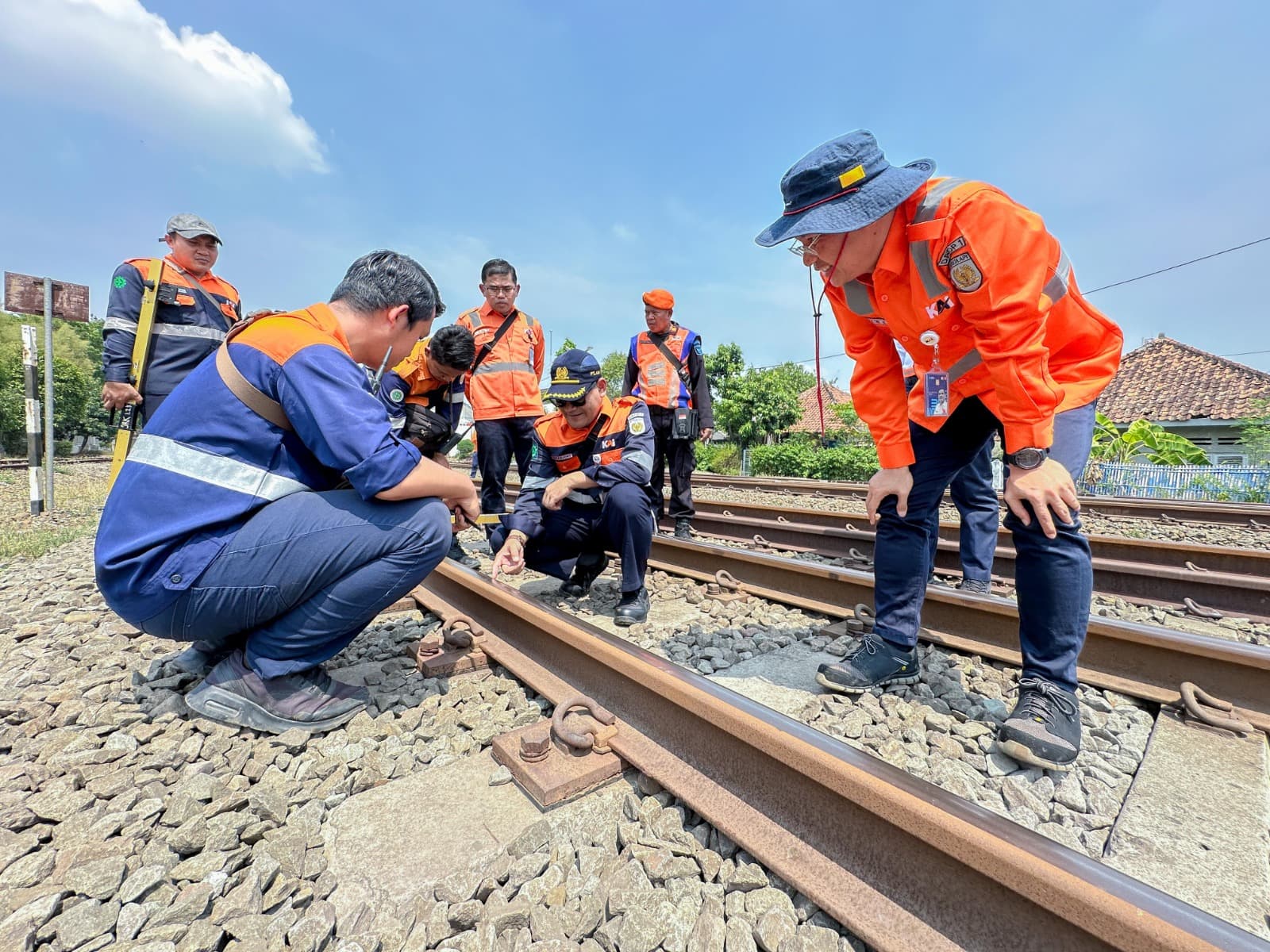
Commitment of KAI in Maintaining Railway Travel Safety through Walking Track Inspection

Railway travel safety plays an important role in KAI’s operations. To ensure operational safety and quality, routine inspection and maintenance are required. Not only rolling stock, railway infrastructure is also the focus of these inspections.
The infrastructure inspected by KAI includes railway tracks, bridges, tunnels, signaling equipment, telecommunications equipment, and electrical installations. Stations, along with supporting installations and platforms, are also routinely inspected. In certain operational areas, such as Daop 1 Jakarta and Daop 6 Yogyakarta, overhead line (LAA) inspections are also part of the routine.
Inspection and maintenance of this infrastructure can be carried out in various ways, either directly on foot or using special vehicles. The public may have seen a vehicle that runs on railway tracks. It turns out that the vehicle is a specially modified vehicle used for track inspection purposes.
Vice President Public Relations KAI, Joni Martinus, explained that the vehicle has been modified so it can run on railway tracks for the purpose of track inspection.
“With its ability to run on the tracks, this vehicle allows officers to reach certain locations more quickly and efficiently,” Joni explained.
Joni added that the vehicle is known as a “lorry,” which is a special vehicle used by KAI officers to inspect railway tracks. There are various types of lorries used by KAI, such as rail lorries, motor lorries, and modified car lorries. Each type of lorry has different functions and roles according to inspection needs and purposes. These vehicles play an important role in ensuring the safety of railway infrastructure for safe and smooth travel. Through routine inspections, officers can detect early and address potential damage or defects in the railway tracks.
Track inspections are also carried out in more detail involving Track Inspection Officers (Petugas Pemeriksa Jalur/PPJ). PPJ walks along the railway tracks, carefully checking track conditions to ensure safety. In addition to PPJ, KAI management—from top positions such as directors, regional/division heads, to managers from various units—also routinely conduct track inspections on foot.
“The walking track inspection program is a routine activity carried out every week with different routes to ensure the safety of railway tracks in each operational area,” Joni said.
According to him, the main focus of walking inspections is to check the condition of rails, switches (track switching devices), signaling systems, bridges, tunnels, and KAI-owned assets. In addition, KAI management also reviews station facilities to ensure service standards are met. Interaction with passengers and receiving feedback and suggestions are also considered to improve services. Management also tests the understanding of railway operation regulations among level crossing guards and station train dispatch officers. Furthermore, management provides assistance to field officers as a form of appreciation and to boost morale during duty.
“We also conduct outreach to residents living near railway tracks, to avoid carrying out activities or placing objects near the railway line because it can endanger train operations and public safety,” he said.
KAI is committed to always being ready and carrying out maintenance and repairs of railway lines, ensuring that train operations across all KAI working areas remain smooth and safe. One of the efforts taken is the direct involvement of KAI management in walking track inspections.
“This is done by KAI management to ensure more detailed inspections, so that any findings can be addressed immediately. Not only that, by directly conducting walking track inspections, KAI management can also hear firsthand the conditions faced by field employees, strengthening the relationship between management and frontline staff,” Joni concluded. (Public Relations KAI)