
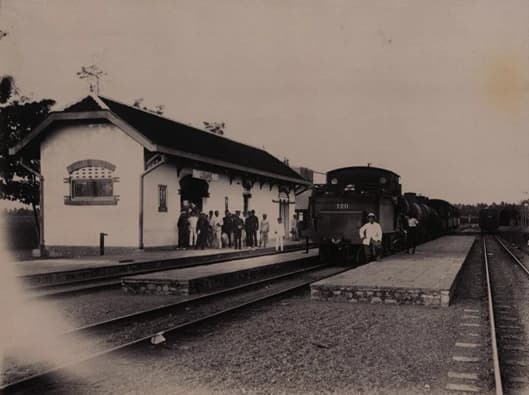
The Semarang-Cheribon Stoomtram Maatschappij (SCS) Tramway on the Waruduwur–Luwunggajah–Losari Route
TABLE OF CONTENTS
The Cirebon Residency
Was a fertile agricultural and plantation region located on the northern coast of Java. Its primary crop was sugarcane, which was extensively cultivated across the region. Furthermore, a booming sugar industry emerged, with numerous sugar mills mushrooming throughout the area.
Construction of the Tramway Line
Initially, the railway network in the Semarang–Cirebon area was operated by a private railway company, the Java Spoorweg Maatschappij (JSM), starting in 1885. However, due to a lack of funding, the concession was purchased by the Semarang-Cheribon Stoomtram Maatschappij (SCS). After taking over JSM's railway network, SCS converted the tracks into a tramway system. In addition, SCS expanded the network, which included extending construction from Cirebon to Sindang Laut and continuing onward to Losari, a project completed in 1897.
Sugar Transportation Infrastructure
The existence of the SCS tramway network was closely tied to sugar transport, as seen on the Waruduwur–Luwunggajah–Losari route. The tramline was strategically laid out close to sugar factories, entering mill complexes and plantation grounds complete with designated stopping points. In fact, several segments of the tramway network were proposed directly by sugar entrepreneurs.
To facilitate operations, SCS built large stations, small stations (halte), and stopping points (stopplaats). The sequence of stopping points along this route included:
Cirebon Prujakan Station
Mundu Stopplaats
Kanci Stopplaats
Sindanglaut Halte (serving the Sindanglaut Sugar Factory)
Karang Suwung Halte (serving the Karangsuwung Sugar Factory)
Jatipiring Stopplaats (serving the Jatipiring Sugar Factory)
Pabuaran Stopplaats (serving the Pabuaran Arak Distillery, which used molasses—a byproduct of sugar processing)
Walet Stopplaats (located near the Walet Sugar Factory)
Luwunggajah Halte (designated for the Luwunggajah Sugar Factory)
Ciledug Halte (serving the Ciledug Sugar Factory)
Losari Station
Cessation of Operations
In 1942, Japan began its occupation of Indonesia after defeating the Allied forces. In the same year, the Japanese military dismantled the Waruduwur–Luwunggajah–Losari tramway line. This event marked the definitive end of operational services on the route.
Present Day
Traces of the Waruduwur–Luwunggajah–Losari tramway network can still be found today. The remaining relics include the former Sindanglaut Station building (now used as a residential house), a tram bridge over the Cimanis River, the old bridge foundations leading toward the Sindanglaut Sugar Factory, and remnants of tracks embedded in the ground in front of the Karang Sembung Market.

Map 1: The 1913 SCS Tramway Line map; the Waruduwur–Luwunggajah–Losari route is located within the blue circle. (Source: Kitlv.nl)

Image 1: An SCS tram train passing by the Gempol Sugar Factory in Cirebon. (Source: Kitlv.nl)

Image 2: Losari SCS Station in 1930. (Source: Kitlv.nl)

Image 3: The remnants of the bridge foundation leading to the Sindanglaut Sugar Factory. (Source: APA Collection)

Image 4: The former bridge over the Cimanis River. (Source: APA Collection)

Image 5: Remnants of the tram tracks around the Karang Sembung Market. (Source: APA Collection)
Source:
ANRI, Memori Serah Jabatan 1921-1930 (Jawa Barat)
Basundoro, Purnawan, Transportasi di Karesidenan
Marihandono, Djoko, Dari Konsensi ke Nasionalisasi Sejarah Kereta Api Cirebon-Semarang
Kitlv.nl
Officieele Reisgids Der Spoor-en Tramwegen en Aansluitende Automobieldiensten op Java en Madoera, 1935.
Zuhdi, Susanto, Cilacap: Bangkit dan Runtuhnya Suatu Port di Jawa (1830-1942)