
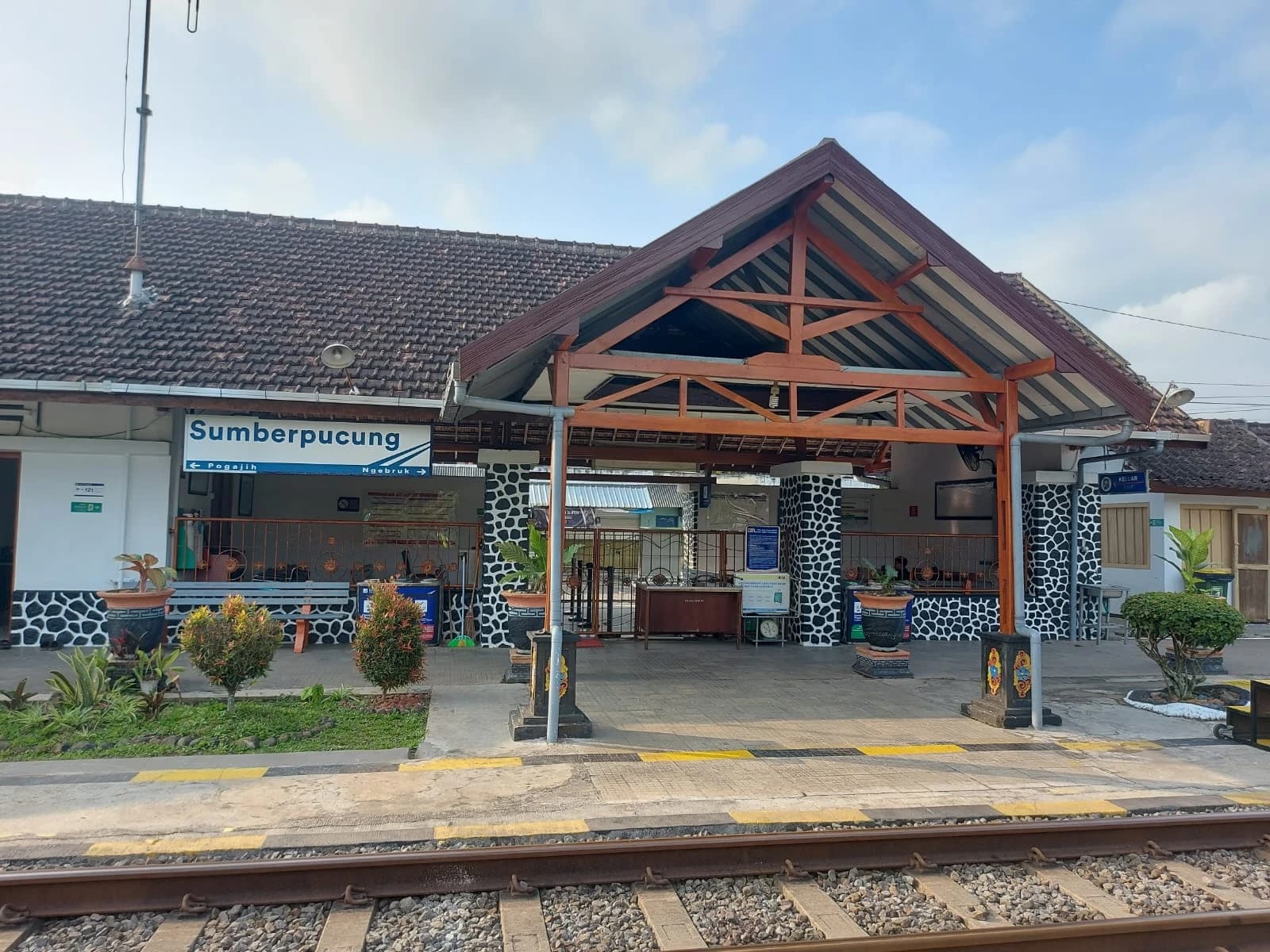
Easier Weekends to Karangkates: Sumberpucung Station Opens Access for Tourism and Local Economy
Weekends often serve as a time for the public to unwind, enjoy natural tourism, gather with family, or seek a fresh atmosphere close to home. In Malang Regency, the Sutami Dam area, or Karangkates Reservoir, stands as one of the recreational spaces deeply connected to local life. Amid this potential, Sumberpucung Station serves as a vital gateway that helps the community reach tourism, employment, education, markets, and local economic activities.
For PT Kereta Api Indonesia (Persero), Sumberpucung Station demonstrates that small stations can yield substantial benefits for local regions. From this node, passengers can continue their journeys toward the Karangkates area, while local residents secure more affordable, scheduled transit access that is close to their daily activity centers.
KAI Vice President of Corporate Communications Anne Purba stated that regional stations must be viewed as hubs that connect public travel with local economic opportunities. When railway services are consistently available, residents gain transport options that support them in working, trading, schooling, traveling, and maintaining social ties across families and regions.
“Sumberpucung Station serves as a gateway that is close to the daily lives of residents. From this station, access to the Karangkates area, workplaces, schools, markets, and the community's economic activities becomes more open,”
The public's need for this service is reflected in customer volume trends. Based on KAI data, from March to May 2026, Sumberpucung Station served 984 boarding passengers and 793 alighting passengers. The number of boarding passengers grew by 15.49 percent compared to the October to December 2025 period, which recorded 852 passengers. Meanwhile, alighting passengers grew by 21.63 percent compared to the previous period's 652 passengers.
In total, the combined boarding and alighting volume at Sumberpucung Station increased from 1,504 passengers in October–December 2025 to 1,777 passengers in March–May 2026, representing an 18.15 percent growth. This expansion signals that rail services in Sumberpucung have room for continuous reinforcement alongside the growing activities of communities surrounding the Sutami Dam.
“This customer growth figure is important to interpret as the voice of the community. When access is available, residents utilize it. Therefore, increasing attention toward stations like Sumberpucung will bring a direct impact to regional livelihoods,”
Sumberpucung's potential is also backed by demographic strength. According to the "Sumberpucung District in Figures 2025" publication, which contains data from 2024, Sumberpucung District houses 58,955 residents. Out of this total, the productive age population between 15–64 years old reaches 41,201 people. They consist of workers, entrepreneurs, farmers, freshwater fish farmers, traders, students, and young families requiring proper mobility access.
For this productive-age population, the station represents a gateway to opportunity.
“An easier journey can mean broader employment opportunities. More affordable transport access can mean higher savings for a family budget. A more punctual travel schedule can mean a more peaceful trip home for parents awaited by their children,”
Surrounding Sumberpucung Station, the Sutami Dam holds a crucial role in local livelihoods. This dam supports the water management of the Brantas River, irrigation, flood control, power generation, and tourism activities in the Karangkates area. In its waters, the community also develops freshwater fish farming through floating net cages, which serve as a source of income for many families.
The presence of railways helps expand these benefits. Tourists gain alternative routes to reach the Karangkates area. Culinary MSMEs gain a broader customer pool. Fish farmers, tourism workers, small vendors, and local residents secure easier access to run their daily routines. From journeys that seem simple, an economic cycle thrives across food stalls, local services, lodging, onward transportation, and family businesses around the dam.
“KAI views connectivity as a path to unite natural potential, workforce, tourism, and public economic growth. In Sumberpucung, trains help communities reach opportunities in a safer and more affordable manner,”
This region also possesses future development opportunities through renewable energy. The planned Karangkates Floating Solar Power Plant (PLTS) at the Sutami Dam forms part of the strategic direction to utilize water bodies for clean energy. With such developments, the need for transit access toward Sumberpucung is poised to expand, benefiting workers, service providers, MSMEs, and the surrounding community.
Consequently, reinforcing connectivity toward Sumberpucung Station is vital for regional stakeholders. Enhancing road access to the station, supporting feeder transit, promoting Karangkates tourism, integrating MSME players, and developing public spaces around the station can magnify the benefits of rail for the community. The easier it is for residents and tourists to reach the station, the greater the economic opportunities that can flourish in Sumberpucung.
Over the weekend, this potential feels even closer. Tourists can enjoy the Sutami Dam, grilled fish culinary offerings, waterfront atmospheres, family picnic spots, and the scenic landscapes of Karangkates. On the flip side, every tourist visit opens up new hopes for residents who depend on food stalls, parking services, culinary ventures, tour boats, and local products for their livelihoods.
The Sumberpucung area also holds railway historical value. Not far from the station lie the Karangkates I Tunnel and Karangkates II Tunnel, which are important milestones in Indonesia’s railway engineering history. The combination of the dam, rail lines, tunnels, and natural scenery adds unique value for special-interest tourism, photography, education, and experiential travel.
Sumberpucung Station currently handles both long-distance and local train operations. For long-distance travel, the station serves as a stop for the Malabar Train (Malang–Bandung route) and the Matarmaja Train (Malang–Pasar Senen route). Meanwhile, for the daily mobility of East Java residents, Sumberpucung is connected to the Dhoho Commuter Line and the Penataran Commuter Line.
Anne emphasized that KAI will continue to ensure regional stations remain central to public service strengthening and regional growth.
“Every station holds a story of a community striving for a better life. In Sumberpucung, the railway brings residents closer to jobs, education, tourism, and aspirations. When regional connectivity is reinforced, what grows along with it are opportunities, pride, and the future of the community,”
VP Corporate Communications KAI