
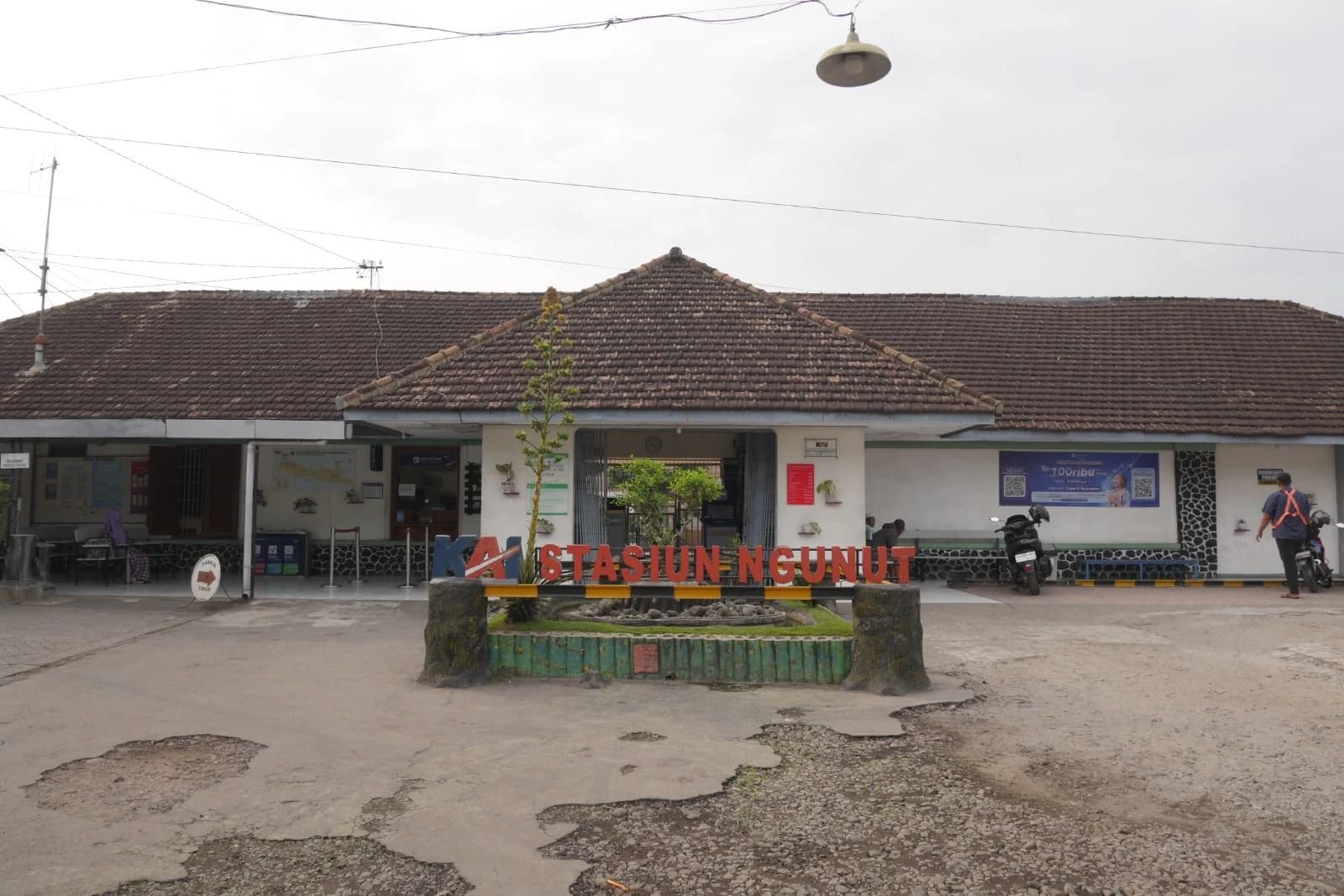
Ngunut Station Keeps Blitar–Tulungagung Communities Connected

Every railway station has a story about community mobility. Behind its modest building, a station becomes a meeting point between history, economic activity, and the journeys of people that continue over time.
Ngunut Station is one of the important transportation hubs on the eastern side of Tulungagung Regency. This Class 2 station in KAI's Operation Area 7 (Daop 7) is located in Ngunut Subdistrict and serves communities traveling to Tulungagung, Blitar, Kediri, Malang, Surabaya, and Jakarta.
Historically, the existence of Ngunut Station is closely related to the development of the railway network along the Blitar–Tulungagung–Kediri corridor. This route became part of an important railway network connecting residential centers, trade activities, agricultural areas, and community activities in southern East Java.
KAI Vice President Corporate Communication Anne Purba said that Ngunut Station plays a role that is closely connected to the daily lives of local residents. The station serves customers traveling for work, education, trade, access to public services, family visits, and onward journeys to other cities.
“Ngunut Station demonstrates how rail transportation remains an important part of regional community mobility. Its presence helps residents access educational centers, workplaces, markets, healthcare services, and other cities through travel that is more scheduled and affordable,” said Anne.
According to KAI data, throughout January–May 2026, a total of 5,248 customers departed from Ngunut Station. This figure increased by 12.47 percent compared with the same period in 2025, when 4,666 customers departed from the station. During the same period, arrivals at Ngunut Station reached 4,487 customers, growing by 10.87 percent compared with 4,047 customers in January–May 2025.
In total, passenger movements at Ngunut Station during January–May 2026 reached 9,735 boarding and alighting customers. This figure increased by 11.73 percent compared with the same period in 2025, when total passenger movements reached 8,713 customers. This growth indicates that services at Ngunut Station continue to be a preferred choice for both daily mobility and intercity travel.
This role is becoming increasingly important as Ngunut has a large population base and significant economic activity. Referring to the Ngunut District in Figures 2025 publication by Statistics Indonesia (BPS), the area consists of 18 villages and urban wards with a population of approximately 85,000 people. The population composition, residential density, trade activities, and the distribution of educational and healthcare facilities continue to sustain demand for public transportation in the area.
Ngunut is also known as one of the economic activity centers in eastern Tulungagung. The station’s location near Ngunut Traditional Market, commercial areas, banking services, healthcare facilities, and community activity centers makes rail transportation part of the local mobility ecosystem.
In addition to trade, Ngunut and its surrounding areas are supported by agricultural activities, small businesses, home industries, and community production centers. Railway connectivity helps residents expand access to employment opportunities, education, urban services, and regional economic centers without relying entirely on private vehicles.
To meet these mobility needs, Ngunut Station serves several long-distance and local train services. For long-distance travel, customers can use the Brantas, Singasari, and Matarmaja trains. For regional mobility within East Java, customers are also served by the Dhoho Commuter Line and Penataran Commuter Line.
“For the people of Ngunut, the station is a gateway to broader opportunities. From this station, residents can travel to work, pursue education, conduct trade activities, and maintain family connections across cities. Therefore, KAI continues to maintain services at regional stations so that the benefits of rail transportation can be increasingly felt by the community,” Anne added.
Rail access also opens tourism opportunities in eastern Tulungagung. Customers can use Ngunut Station as a gateway to destinations such as Ranu Gumbolo, Puncak Jowin, culinary attractions around Ngunut Market, and various other tourist destinations in Tulungagung and Blitar.
KAI encourages customers to plan their journeys through official channels, including the Access by KAI application, and to check travel schedules before departure. With services that continue to be maintained, Ngunut Station is expected to remain a safe, comfortable, and valuable transportation link for the communities of Blitar–Tulungagung and surrounding areas.
VP Corporate Communication KAI