
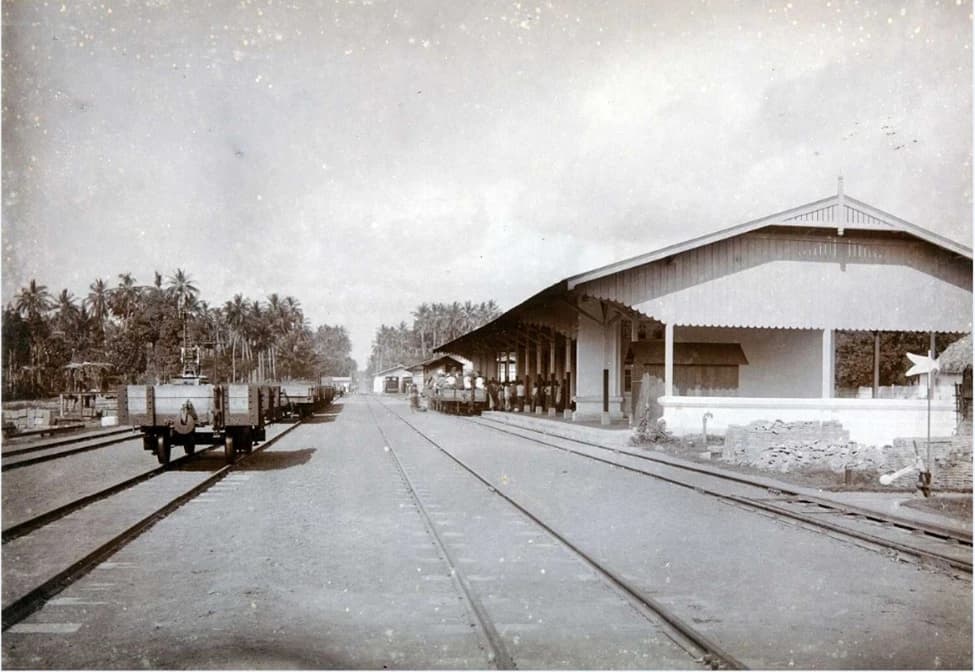
Ketapang Station Serves 553 thousand Customer Activities, Preserving the History of Railways at the Eastern Tip of Java
PT Kereta Api Indonesia (Persero) recorded an increase in customer activity at Ketapang Station, Banyuwangi, from January to August 2026. Located at the eastern tip of Java Island, the station has a long history that has evolved alongside the development of the area, from its role in past trade routes to becoming a mobility hub for people traveling to Banyuwangi and Bali today.
From January to August 2026, Ketapang Station recorded 553,202 customer boarding and alighting activities, an increase of 8.50 percent compared to 509,862 customer activities in the same period in 2025.
Vice President of Corporate Communication KAI Anne Purba said that Ketapang Station is part of Indonesia’s long railway journey, which continues to evolve in line with the needs of the community.
“Ketapang Station has a long history dating back to when railways first reached Banyuwangi more than a century ago. Its journey reflects the changing role of railways, from supporting trade activities to becoming a connection for people traveling to Banyuwangi and Bali,” said Anne.
The history of Ketapang Station began with the development of a railway network to Banyuwangi by Staatsspoorwegen (SS), the state railway company of the Dutch East Indies. Following the expansion of the railway line from East Java to the eastern part of Java Island, construction continued until it reached Banyuwangi.
The final Mrawan–Banyuwangi section, spanning 58 kilometers, was completed and opened to the public on February 2, 1903. Along with the inauguration of the line, Banyuwangi Station began operating as the easternmost railway station on Java Island.
At the time, Banyuwangi Station was connected to Boom Port in the Mandar area, which served as one of the centers of trade activity. The station served both passenger services and freight transportation moving in and out of Banyuwangi by sea.
Train travel activity at Banyuwangi Station continued to grow. In 1926, 12 train services were recorded as stopping at Banyuwangi Station, serving round trips between Kalibaru–Banyuwangi and Kalisat–Banyuwangi.
As the area developed, Banyuwangi’s connectivity hub gradually shifted toward Ketapang. Port activities were moved from Boom Port to the Ketapang area on January 1, 1974. This change prompted the development of a new railway line connecting train services with the ferry crossing area to Bali.
The Kabat–Banyuwangi Baru railway line was officially opened on September 7, 1985, along with the operation of Banyuwangi Baru Station. The new location provided closer access to Ketapang Port, allowing passenger services to be gradually transferred from Banyuwangi Lama Station. On March 31, 1988, Banyuwangi Lama Station was officially decommissioned, while Banyuwangi Baru Station was renamed Ketapang Station in 2019.
Customer activity at Ketapang Station has continued to grow in recent years. From January to August 2022, customer activity reached 277,928. The figure increased to 388,193 in 2023, then to 449,867 in 2024, 509,862 in 2025, and reached 553,202 in 2026.
Compared to the January–August 2022 period, customer activity at Ketapang Station in 2026 increased by approximately 99.05 percent.
The increase demonstrates the growing role of Ketapang Station as a mobility hub for people in the eastern part of Java Island. In addition to supporting journeys to Banyuwangi, the station’s location near Ketapang Port also provides convenient access for people continuing their journeys to Bali.
“The journey of Ketapang Station is part of the long story of Indonesia’s railways. From a station that once supported trade activities through Boom Port to becoming a mobility hub for the community today, every development in the area has shaped the journey of this station,” Anne concluded.
Today, more than a century after railways first reached Banyuwangi, Ketapang Station remains part of people’s journeys to an area rich in natural resources, culture, and tourism potential at the eastern tip of Java Island.
VP Corporate Communication KAI