
During the First Semester of 2026, KAI Group Served 258.99 Million Passengers and Transported 32.50 Million Tons of Freight
PT Kereta Api Indonesia (Persero) recorded positive performance throughout the first semester of 2026. KAI Group served 258,993,359 passengers, an increase of 7.55% compared with the same period in 2025, when it served 240,805,920 passengers.
This achievement reflects KAI Group's growing role in supporting public mobility, regional connectivity, economic activity, national supply chains, and increasingly integrated public transportation services.
KAI President Director Bobby Rasyidin stated that the continued growth in passenger numbers demonstrates increasing public confidence in rail transportation for daily commuting, intercity travel, airport access, tourism, and urban mobility.
"Throughout the first semester of 2026, KAI Group served 258.99 million passengers. This figure demonstrates that rail transportation is increasingly becoming the public's preferred choice for safe, affordable, and integrated travel. For KAI, this growth must always be accompanied by improvements in safety, service quality, and broader benefits for the community," Bobby said.
KAI's Long-Distance and Local Train services carried 29,858,267 passengers, an increase of 8.72% compared with 27,463,555 passengers during the first semester of 2025. Meanwhile, KAI Commuter served 204,151,200 passengers, up 6.58% from 191,540,583 passengers during the same period last year.
Growth was also recorded across other business segments. LRT Jabodebek served 16,018,911 passengers, increasing by 22.84% from 13,040,403 passengers in the first semester of 2025. The Makassar–Parepare Railway served 172,015 passengers, representing growth of 15.44% compared with 149,014 passengers in the same period last year. Meanwhile, KAI Wisata served 164,743 passengers, an increase of 64.45%.
Bobby explained that the growth across multiple services reflects increasingly diverse customer needs. Railways are being used for commuting, education, family travel, tourism, business trips, airport access, and seamless multimodal connections.
"KAI Group continues to strengthen services according to the characteristics of each customer segment. Commuters require punctuality and capacity, intercity passengers seek comfort, leisure travelers value the travel experience, while communities across the regions need affordable public transportation," Bobby said.
The first semester of 2026 also brought several important service developments. On May 1, 2026, KAI launched the Sangkuriang Train on the Bandung–Ketapang round-trip route. The new service provides a direct rail connection from West Java to Banyuwangi via Yogyakarta, Solo, Surabaya, and several other destinations along the southern and eastern railway corridors of Java.
KAI also expanded intercity travel options by introducing the Pandalungan 2 Train on the Gambir–Jember round-trip route beginning June 18, 2026. The new service strengthens connectivity between Jakarta and Jember while providing additional travel options to the Tapal Kuda region and surrounding areas.
In the urban transport sector, Jakarta International Stadium (JIS) Station began serving passengers on the Tanjung Priok Commuter Line on June 22, 2026. During its first week of operation, from June 22 to June 28, 2026, the station served 4,203 passengers, consisting of 2,555 boarding passengers and 1,648 alighting passengers. The station expands public access to the stadium district, public spaces, and community activities in North Jakarta.
Service improvements were also implemented on the Rajabasa Train operating between Kertapati and Tanjungkarang. Between January and June 2026, the Rajabasa Train served 439,984 passengers, an increase of 36.44% compared with 322,485 passengers during the same period in 2025.
To accommodate growing travel demand between Lampung and South Sumatra, KAI increased the Rajabasa Train consist from five to eight passenger cars. While still using Economy-class coaches with longitudinal seating, this expansion increased capacity from 530 to 848 seats per trip, representing an increase of approximately 60%.
In addition to expanding train capacity, KAI also operated additional Rajabasa Train services on a situational basis during the early months of 2026 to accommodate sustained passenger demand following the Christmas and New Year transportation period. This initiative reflects KAI's responsiveness to the continued growth in rail travel demand along the South Sumatra–Lampung corridor.
Further service improvements were introduced on July 4, 2026, with the deployment of Modified Premium Economy Coaches on the Rajabasa Train. Operating with eight modified premium economy coaches, the service now provides 640 seats per trip featuring enhanced passenger amenities, including individual seating, centralized air conditioning, power outlets, and an improved seating configuration for long-distance travel.
In terms of network accessibility, several stations that began serving Long-Distance Train passengers during the first semester of 2026 received positive public response. Between April and June, Comal Station recorded 11,996 boarding and alighting passengers, Plabuan Station served 814 passengers, and Rajapolah Station served 528 passengers. These figures demonstrate that expanding rail access at selected locations brings railway services closer to local communities.
On the freight side, KAI transported 32,498,043 tons of cargo during the first semester of 2026. This consisted of 26,534,095 tons of coal and 5,963,948 tons of non-coal commodities.
The performance underscores KAI's role in supporting national supply chains, particularly for the energy, industrial, and logistics sectors. With its large transport capacity and scheduled operations, rail freight has become an essential component in ensuring the efficient distribution of strategic commodities.
KAI also strengthened its logistics business through fleet expansion. By the end of the first semester of 2026, a total of 1,080 flat wagons had been delivered to support freight services in Sumatra. The additional rolling stock increases transport capacity for coal and other rail-based commodities.
KAI also introduced the Brumbung Cargo Train as a more efficient national logistics alternative. During the first semester of 2026, KAI transported 2.62 million tons of containerized freight. The Brumbung Cargo Train forms part of the company's efforts to strengthen rail freight distribution with carrying capacity of up to 800 tons per trainset.
"Freight services represent one of KAI's key contributions to the national economy. Rail transport offers advantages in terms of capacity, scheduling reliability, and regional connectivity. Therefore, we will continue strengthening our freight services to provide greater value for businesses and Indonesia's national supply chain," Bobby said.
In the area of safety, KAI completed the closure of 172 priority railway crossings during the first semester of 2026. This initiative forms part of the company's ongoing efforts to strengthen railway safety while improving protection for communities living near railway corridors.
The closures focused on high-priority locations with elevated safety risks, particularly level crossings requiring better management to ensure safer railway operations and community activities. KAI carried out these initiatives in coordination with regulators, local governments, and other relevant stakeholders.
"Safety remains KAI's highest priority in every aspect of our services. The closure of 172 priority crossings represents an important step in reducing potential risks along the railway network. KAI will continue strengthening coordination to ensure crossing improvements provide greater protection for the public," Bobby said.
The first semester of 2026 also saw continued expansion of services that directly support local economic activities. The Farmers and Traders Train operating on the Rangkasbitung–Merak route served 26,074 passengers between January and June 2026. Since the service was introduced on December 1, 2025, it has served a cumulative total of 30,189 passengers.
Developed by Balai Yasa Surabaya Gubeng, the Farmers and Traders Train was specifically designed to provide a more organized travel environment for farmers, traders, and customers transporting agricultural products and merchandise. The service supports communities that rely on rail transportation for work, trade, and daily economic activities.
Through its People's Economy Rail Services, KAI recorded a total of 56,908 passengers during 2026. The figure consisted of 24,398 passengers on additional Economy Train services operating between Lempuyangan and Pasarsenen during the Eid Transportation period from March 11 to April 5, 2026, and 32,510 passengers on the Cikuray Train operating between Garut and Pasarsenen from June 11 to June 30, 2026.
"The Farmers and Traders Train and the People's Economy Train services were developed in response to genuine community needs. Many passengers travel with agricultural products, merchandise, business equipment, and essential goods for their daily activities. KAI wants these services to continue providing safe, orderly, and meaningful support for local economic activities," Bobby said.
As part of its sustainability agenda, KAI strengthened its energy transition through the phased adoption of biodiesel toward B50 implementation. This initiative forms part of the company's 2025–2030 decarbonization roadmap, with the potential to reduce emissions by up to 133,676 tons of CO₂ equivalent. KAI continues to prioritize rolling stock readiness and operational reliability to ensure that the energy transition proceeds safely, systematically, and without compromising service quality.
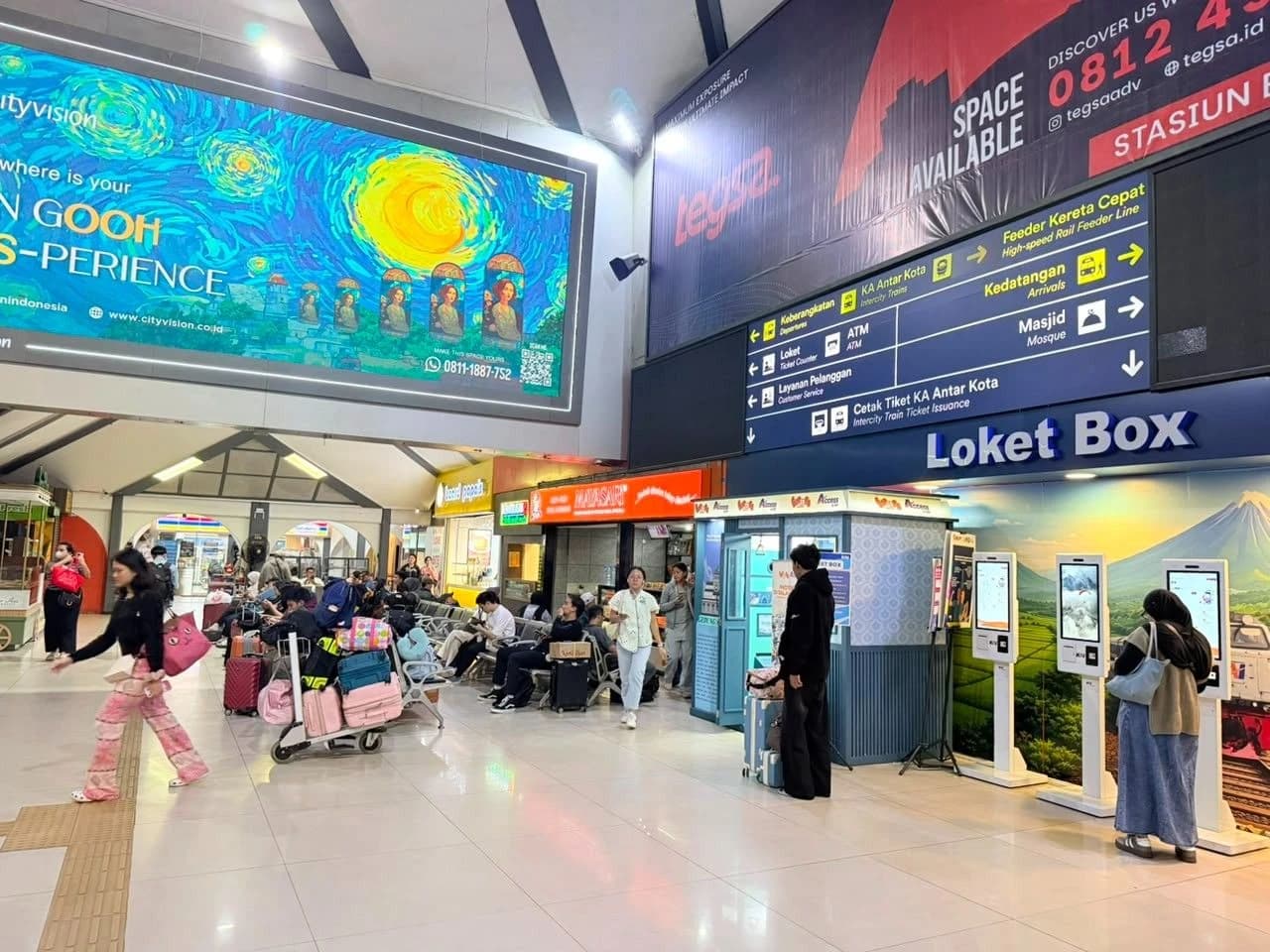
Beyond passenger and freight services, KAI also continued expanding Non-Fare Box revenue through the optimization of station assets and commercial spaces. Initiatives such as Space by KAI, station area activation, tenant development, and commercial partnerships are designed to enhance customer experience while creating business opportunities for entrepreneurs and commercial partners.
Bobby noted that railway stations are playing an increasingly important role as transportation hubs, public service centers, commercial spaces, and community activity centers. The development of station precincts creates added value for passengers, generates business opportunities, and strengthens local economies surrounding railway stations.
"KAI views railway stations as an integral part of the travel ecosystem. Customers need convenient access, comfortable facilities, seamless services, and spaces that provide added value. Therefore, improvements in services, digitalization, safety, logistics, community-focused transportation, low-emission energy, and station development are all being implemented as part of a single transformation agenda," Bobby said.
KAI expressed its appreciation to customers, the Government, business partners, communities, and the public for their continued support of railway services. During the second semester of 2026, KAI will continue to prioritize safety, enhance service quality, strengthen multimodal integration, expand freight services, and increase the economic benefits of rail transportation for communities across Indonesia.
"Thank you to all our customers for making rail transportation part of your daily journeys. KAI Group will continue to uphold this trust by providing services that are increasingly safe, comfortable, accessible, and capable of delivering broad benefits to both the public and Indonesia's economy," Bobby concluded.
VP Corporate Communication KAI