
Since July 1 KAI Has Gradually Implemented B50, Strengthening Indonesia's Energy Transition and Distribution
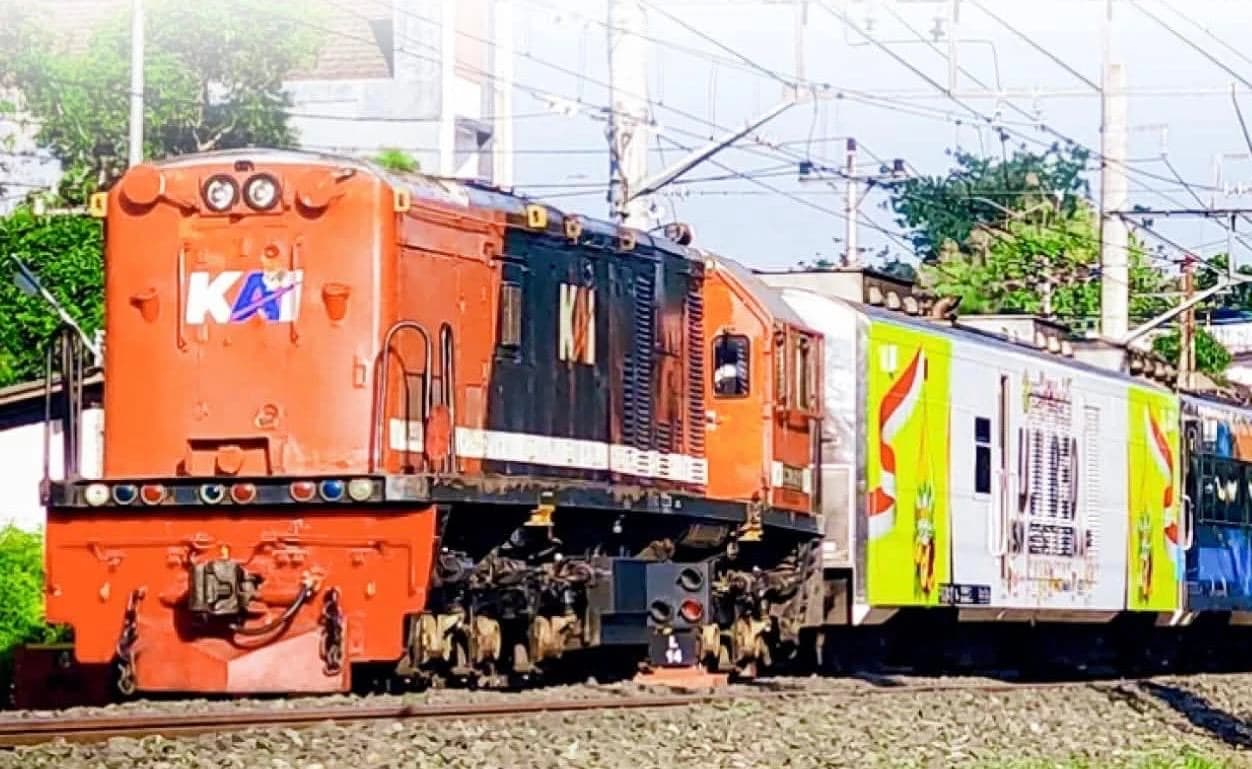
PT Kereta Api Indonesia (Persero) has begun gradually implementing the use of B50 biodiesel in diesel rolling stock since July 1, 2026. This implementation covers locomotives and power generator cars following a series of technical tests, component monitoring, and the strengthening of safety and operational reliability aspects.
KAI Vice President Corporate Communication Anne Purba stated that the implementation of B50 represents KAI’s support for government policies in expanding the use of renewable energy based on domestic resources.
“Since July 1, 2026, KAI has gradually implemented B50 in diesel rolling stock in accordance with government policy. Each stage is prepared through technical testing and operational evaluation to ensure that the energy transition remains aligned with travel safety and rolling stock reliability,” said Anne.
B50 is a fuel consisting of a blend of 50 percent plant-based biodiesel and 50 percent diesel fuel. Increasing the biodiesel blend enhances the utilization of domestic renewable energy, reduces dependence on fossil-based diesel, and strengthens national energy resilience.
From an environmental perspective, the Ministry of Energy and Mineral Resources estimates that nationwide implementation of B50 can support a reduction in carbon dioxide emissions of up to 44.46 million tons. This projection is higher than the emission reduction achieved through B40 implementation, which reached 39.66 million tons.
Readiness in the railway sector has been built through trials of B50 usage in diesel engines of power generator cars and locomotives. Testing includes engine performance, fuel consumption, combustion stability, emissions, filter conditions, lubricants, and components within the fuel system.
Testing on power generator cars is conducted to ensure that generators can maintain electricity supply during journeys. Meanwhile, locomotive testing is aimed at assessing engine response to the operational characteristics of train services with varying loads and operating durations.
“Monitoring is carried out comprehensively, from fuel quality, engine condition, and filters to maintenance patterns. Evaluations will continue to ensure that B50 implementation supports safe, reliable, and measurable railway operations,” Anne added.
KAI’s experience in using biodiesel in previous stages, from B35 to B40, also serves as a reference in entering the B50 implementation phase. Each increase in biodiesel content is accompanied by adjustments in inspection procedures, maintenance, fuel management, and workforce competencies handling diesel rolling stock.
In line with the application of more sustainable energy in rolling stock, KAI is also strengthening its contribution to maintaining national energy distribution through rail-based logistics services.
From January to June 2026, KAI transported 1,338,180 tons of fuel, an increase of 4.66 percent compared to the same period in 2025, which recorded 1,278,621 tons. This commodity includes various types of fuel required by the public and strategic national sectors.
One such service is the distribution of aviation fuel (avtur) from Cilacap Station to Rewulu Station. From Rewulu, the avtur is further distributed to support flight operations at Yogyakarta International Airport (YIA) in Kulon Progo.
This service positions railways as part of the energy supply chain connecting fuel supply centers with user regions. Large capacity, scheduled operations, and controlled management support the smooth distribution of energy while reducing the burden on road-based logistics.
“KAI operates on two fronts. In diesel rolling stock operations, we implement B50 as part of the energy transition. In logistics services, KAI ensures the smooth distribution of fuel, including avtur that supports aviation activities at YIA Airport,” Anne explained.
The implementation of B50 and the improvement of fuel distribution services demonstrate the interconnection between transportation, energy, and economic activity. Reliable diesel rolling stock supports train operations, while efficient logistics services help maintain energy availability for the public, industry, and intermodal connectivity.
“KAI will continue to enhance rolling stock readiness, maintenance quality, workforce competence, and coordination with stakeholders. These steps are essential to ensure that KAI’s support for national energy policies continues while prioritizing safety, operational reliability, and service quality,” Anne concluded.
PT Kereta Api Indonesia (Persero) has begun gradually implementing the use of B50 biodiesel in diesel rolling stock since July 1, 2026. This implementation covers locomotives and power generator cars following a series of technical tests, component monitoring, and the strengthening of safety and operational reliability aspects.
KAI Vice President Corporate Communication Anne Purba stated that the implementation of B50 represents KAI’s support for government policies in expanding the use of renewable energy based on domestic resources.
“Since July 1, 2026, KAI has gradually implemented B50 in diesel rolling stock in accordance with government policy. Each stage is prepared through technical testing and operational evaluation to ensure that the energy transition remains aligned with travel safety and rolling stock reliability,” said Anne.
B50 is a fuel consisting of a blend of 50 percent plant-based biodiesel and 50 percent diesel fuel. Increasing the biodiesel blend enhances the utilization of domestic renewable energy, reduces dependence on fossil-based diesel, and strengthens national energy resilience.
From an environmental perspective, the Ministry of Energy and Mineral Resources estimates that nationwide implementation of B50 can support a reduction in carbon dioxide emissions of up to 44.46 million tons. This projection is higher than the emission reduction achieved through B40 implementation, which reached 39.66 million tons.
Readiness in the railway sector has been built through trials of B50 usage in diesel engines of power generator cars and locomotives. Testing includes engine performance, fuel consumption, combustion stability, emissions, filter conditions, lubricants, and components within the fuel system.
Testing on power generator cars is conducted to ensure that generators can maintain electricity supply during journeys. Meanwhile, locomotive testing is aimed at assessing engine response to the operational characteristics of train services with varying loads and operating durations.
“Monitoring is carried out comprehensively, from fuel quality, engine condition, and filters to maintenance patterns. Evaluations will continue to ensure that B50 implementation supports safe, reliable, and measurable railway operations,” Anne added.
KAI’s experience in using biodiesel in previous stages, from B35 to B40, also serves as a reference in entering the B50 implementation phase. Each increase in biodiesel content is accompanied by adjustments in inspection procedures, maintenance, fuel management, and workforce competencies handling diesel rolling stock.
In line with the application of more sustainable energy in rolling stock, KAI is also strengthening its contribution to maintaining national energy distribution through rail-based logistics services.
From January to June 2026, KAI transported 1,338,180 tons of fuel, an increase of 4.66 percent compared to the same period in 2025, which recorded 1,278,621 tons. This commodity includes various types of fuel required by the public and strategic national sectors.
One such service is the distribution of aviation fuel (avtur) from Cilacap Station to Rewulu Station. From Rewulu, the avtur is further distributed to support flight operations at Yogyakarta International Airport (YIA) in Kulon Progo.
This service positions railways as part of the energy supply chain connecting fuel supply centers with user regions. Large capacity, scheduled operations, and controlled management support the smooth distribution of energy while reducing the burden on road-based logistics.
“KAI operates on two fronts. In diesel rolling stock operations, we implement B50 as part of the energy transition. In logistics services, KAI ensures the smooth distribution of fuel, including avtur that supports aviation activities at YIA Airport,” Anne explained.
The implementation of B50 and the improvement of fuel distribution services demonstrate the interconnection between transportation, energy, and economic activity. Reliable diesel rolling stock supports train operations, while efficient logistics services help maintain energy availability for the public, industry, and intermodal connectivity.
“KAI will continue to enhance rolling stock readiness, maintenance quality, workforce competence, and coordination with stakeholders. These steps are essential to ensure that KAI’s support for national energy policies continues while prioritizing safety, operational reliability, and service quality,” Anne concluded.
VP Corporate Communication KAI