
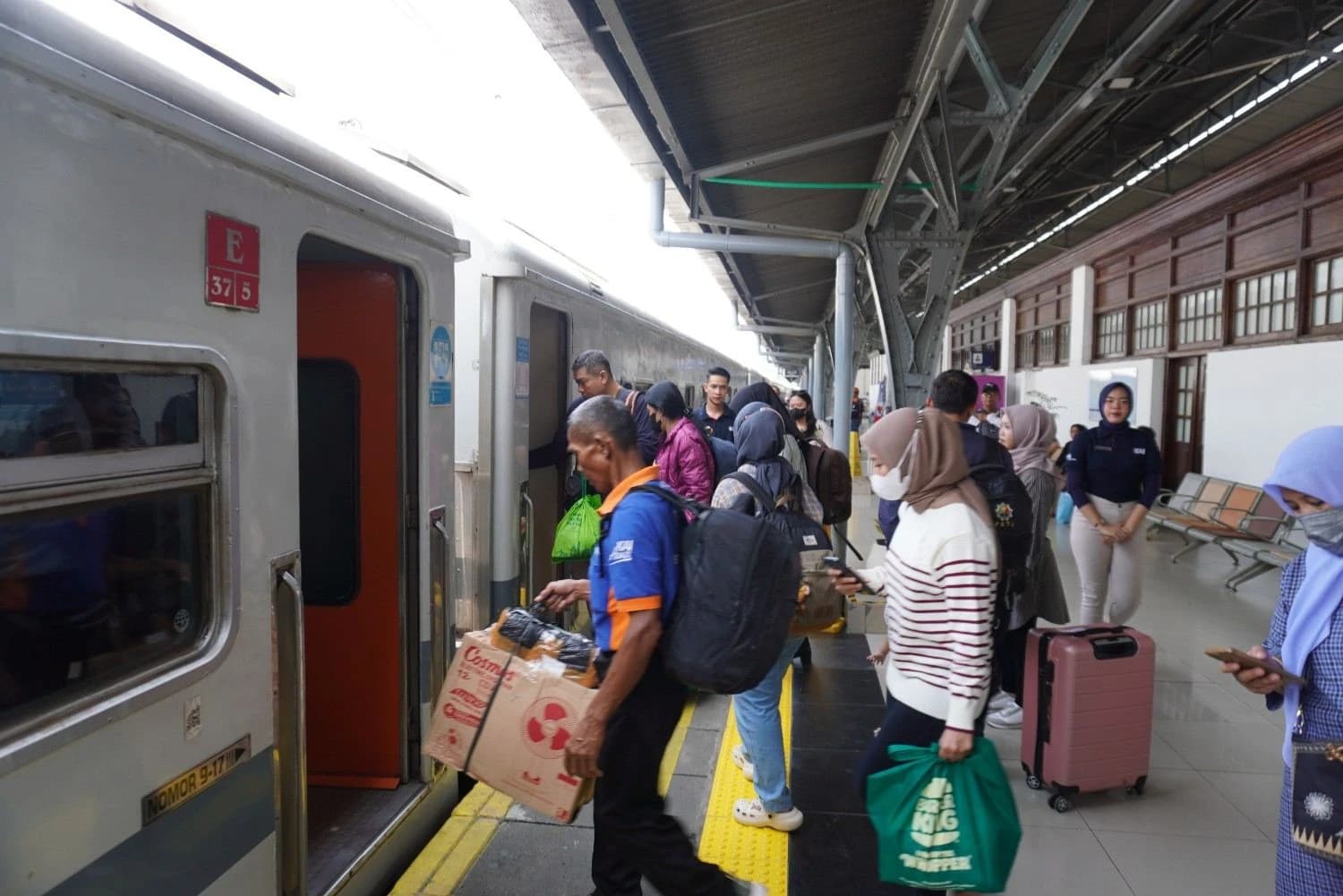
PSO Helps Keep Train Travel Affordable
For some people, traveling by train means returning home after work. For others, it provides a way to get to campus, run a business, access a hospital, or visit family in another city. Behind these different destinations, travel costs are one of the factors people consider when choosing their mode of transportation.
Through the Public Service Obligation (PSO) scheme, the government assigns railway operators to provide economy-class train services at fares set by the government. This support helps ensure that people have access to more affordable rail travel options in accordance with applicable regulations.
For PT Kereta Api Indonesia (Persero), PSO is part of its public transportation service mandate to meet the needs of people from diverse economic backgrounds and with different travel purposes.
KAI Vice President of Corporate Communication Anne Purba said the benefits of PSO can be seen in the opportunities it provides for people to continue traveling to meet their everyday needs.
“Affordable train fares can help people manage their travel expenses. Some use trains to commute to work, pursue education, run businesses, access healthcare services, or return home to visit their families. Government support through PSO helps ensure that affordable transportation options remain available to meet these mobility needs,” said Anne.
These benefits are reflected in the use of KAI’s PSO-supported Long-Distance Train and Local Train services. Based on KAI’s commercial performance data for January–September 2026, a total of 14,164,401 customers used these two service categories. This represents an increase of approximately 7.7% compared with 13,155,181 customers during the same period in 2025.
In detail, PSO-supported Long-Distance Train services served 8,862,107 customers, an increase of approximately 4.0% compared with 8,517,769 customers from January to September 2025. Meanwhile, PSO-supported Local Train services served 5,302,294 customers, an increase of approximately 14.3% compared with 4,637,412 customers during the same period last year.
Anne explained that these figures reflect the public’s need for affordable economy-class train services for both intercity travel and regional mobility.
“Every customer has different needs. Some travel long distances to return to their hometowns, others travel between cities for work or education, while some rely on local trains as part of their daily routines. The availability of affordable services helps people plan their journeys according to their budgets and needs,” said Anne.
Among the Long-Distance Train services assigned to receive PSO support are KA Airlangga on the Pasar Senen–Surabaya Pasarturi route, KA Bengawan on the Pasar Senen–Purwosari route, KA Kahuripan on the Kiaracondong–Blitar route, and KA Sri Tanjung on the Lempuyangan–Ketapang route. Other PSO-supported economy services, such as KA Serayu, also help people reach various cities through interregional journeys.
These travel options connect areas with different needs and characteristics. People can reach their destinations to seek employment, pursue further education, run businesses, or meet family needs by choosing services based on available schedules and routes.
On local services, the benefits of PSO can be seen in journeys connecting residential areas with community activity centers. Local trains help provide access to workplaces, markets, schools, and various public services in the areas they serve.
According to Anne, the benefits of PSO must also be considered in terms of service continuity. Government support goes hand in hand with the operator’s responsibility to maintain rolling stock readiness, travel safety, and service quality in accordance with applicable standards.
“Affordable fares must go hand in hand with safe and reliable services. KAI continues to carry out its assigned responsibilities in accordance with regulations, manage operations, and maintain its rolling stock to ensure that these services remain available to the public over the long term,” said Anne.
The implementation of PSO is part of the cooperation between the government, through the Directorate General of Railways at the Ministry of Transportation, and railway operators. Through this scheme, fare policies can be directed toward meeting public service needs, while railway operations must continue to comply with applicable safety standards and regulations.
Anne added that public transportation plays an important role in expanding people’s access to various opportunities. When travel costs are affordable, people have more flexibility to allocate their spending to other needs while maintaining connections with their families and supporting economic activities in their regions.
“The value of public transportation lies in how it supports people’s lives. We hope that PSO-supported train services will continue to provide affordable travel options, allowing people to carry out their daily activities and pursue various opportunities with greater flexibility,” Anne concluded.
VP Corporate Communication KAI