
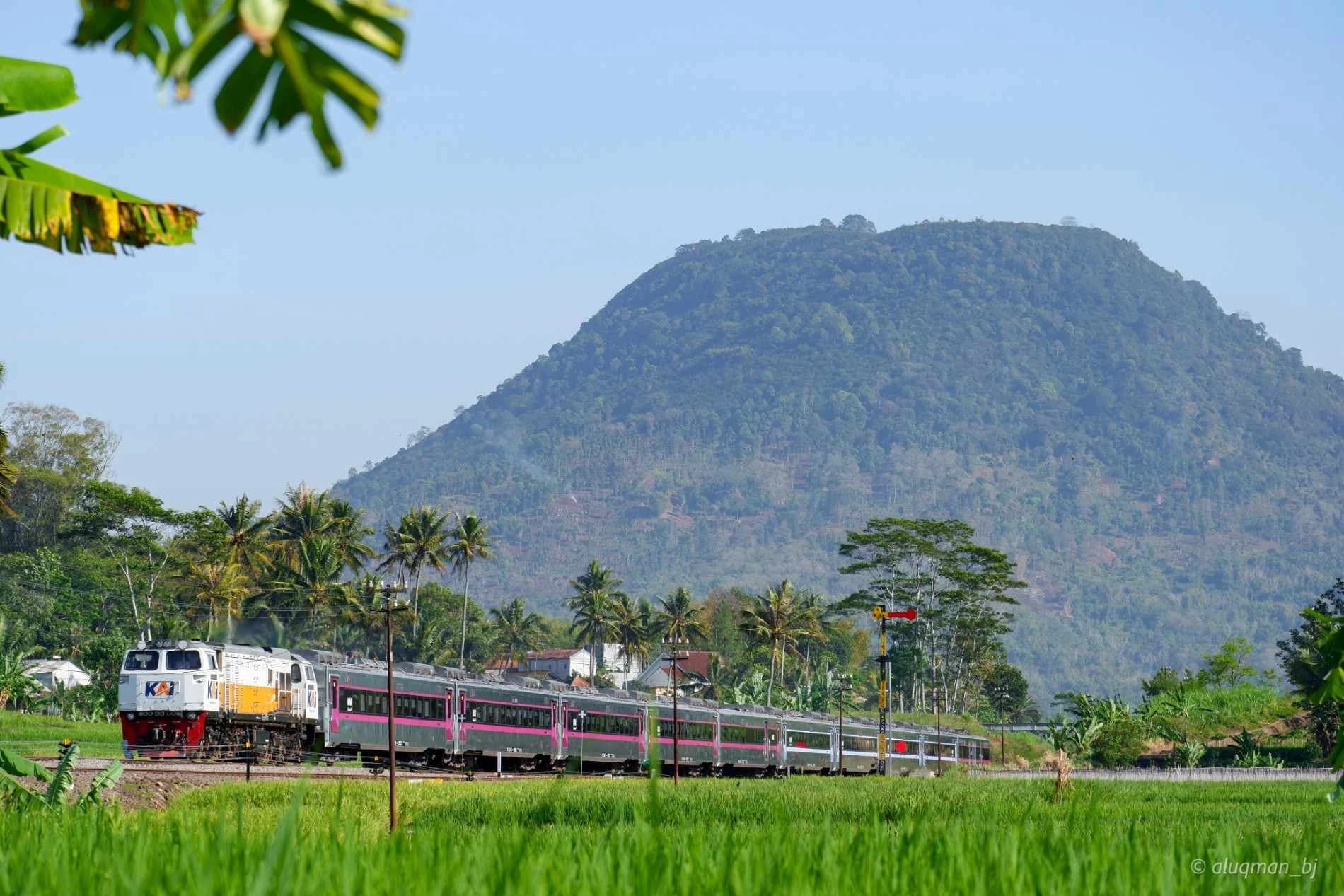
KAI Customer Journeys Continue to Evolve from Daily Mobility to Tourism Experiences
Some customers take the train every morning to go to work, students travel to campus, traders bring their business goods, while families choose trains for their holidays. Each has a different destination, but all need a safe, comfortable, and accessible journey.
As PT Kereta Api Indonesia (Persero) celebrates its 81st anniversary on September 28, 2026, KAI continues to develop its services to meet the changing travel needs of the public. From intercity and local trains, the KAI Group ecosystem now also serves urban travel, airport access, high-speed trains, and tourism journeys.
KAI Vice President Corporate Communication Anne Purba said that the development of railway transportation is closely related to changes in people’s activities over time.
“In the past, train journeys were often seen as a means of traveling to another city or returning to one’s hometown. Today, trains have become part of people’s daily activities. People use them to go to work, school, trade, and spend time with their families. We continue to study these changing needs to develop our services,” said Anne.
This development is reflected in the performance of KAI Group from January to August 2026, which reached 351,602,397 customers. This figure increased by 7.09 percent compared with 328,311,868 customers in the same period in 2025.
The largest contribution came from KAI Commuter, which served 277,272,682 customers, an increase of 6.32 percent compared with 260,797,109 customers from January to August 2025. KAI’s Intercity and Local Train services also recorded 40,379,062 customers, growing 8.69 percent compared with 37,152,345 customers in the same period of the previous year.
Urban mobility was also reflected in LRT Jabodebek, which served 21,809,797 customers, an increase of 19.05 percent compared with 18,320,610 customers from January to August 2025.
Anne explained that the high use of commuter and LRT services shows the importance of mass transportation in supporting people’s activities in urban areas.
One example can be seen on the Bogor Line, which recorded 105,704,913 customers from January to August 2026, with an average of around 435,000 customers per day. This mobility growth has also become one of KAI’s considerations in increasing service capacity and facilities, including the development of platforms at Bogor Station to support SF12 train operations.
Beyond daily travel, people’s needs for rail-based transportation are also becoming more diverse. From January to August 2026, Whoosh served 4,078,168 customers, an increase of 0.68 percent compared with 4,050,791 customers in the same period in 2025.
KAI Bandara recorded 4,647,947 customers, an increase of 0.19 percent compared with 4,639,062 customers. In South Sumatra, LRT Sumsel served 2,965,997 customers, while the Makassar–Parepare Railway served 231,764 customers, growing 13.13 percent compared with 204,856 customers in the same period of the previous year.
Meanwhile, services managed by KAI Wisata recorded 216,980 customers, an increase of 49.09 percent compared with 145,537 customers from January to August 2025.
“Each service has different customer characteristics. Commuter journeys require frequency and punctuality, intercity trains provide travel options between regions, while tourist trains offer a more personal travel experience. We want the development of KAI Group services to increasingly meet these different needs,” explained Anne.
Changes in customer needs have also encouraged KAI to provide travel options with more specific characteristics. One of these is the Kereta Ekonomi Kerakyatan, which has served 182,208 customers since it began operating in 2026 through September 9, 2026.
This figure consists of 181,900 K3 Kerakyatan customers and 308 customers of the long-distance Kereta Petani dan Pedagang service on the Garut–Pasar Senen and Pasar Senen–Garut routes.
Meanwhile, in Banten, the Kereta Petani dan Pedagang service on the Merak–Rangkasbitung route served 43,780 customers from its operation on December 1, 2025, to September 14, 2026, with a fare of Rp3,000 per trip. This service supports people’s mobility for work, trading, and daily activities.
Changes in how people travel can also be seen in the use of digital technology. In the past, customers came to station ticket counters to obtain information and purchase tickets. Today, various travel needs can be managed through Access by KAI.
In the first half of 2026, Access by KAI recorded 17,009,374 ticket sales transactions for Mainline and Local Trains, equivalent to 76.34 percent of the total 22,281,645 transactions through all sales channels.
In terms of ticket volume, Access by KAI handled the purchase of 24,544,468 tickets, or 73.68 percent of the total 33,313,364 Mainline and Local Train tickets sold during the period.
As of June 30, 2026, Access by KAI had 30,449,049 registered users, with 3,154,132 users added during the first half of 2026. The number of active users in the last 30 days reached 9,058,935, while cumulative downloads reached 41,011,320. A total of 4,893,743 users had also become premium members, equivalent to 16.07 percent of registered users.
According to Anne, these developments reflect changes in the customer experience, from planning a journey to accessing services after purchasing tickets.
Through Access by KAI, customers can search for schedules, purchase and manage tickets, use e-boarding passes, utilize the Trip Planner, and obtain travel information through Live Tracking.
Digital convenience is also available through the Face Recognition Boarding Gate, which was used by 5,555,034 Intercity Train customers during the first half of 2026. The facility allows customers who have registered through the consent mechanism to complete the boarding process through facial recognition.
“The way people use trains will continue to evolve. KAI needs to understand these changes, from the need for affordable access and convenient transfers between services to increasingly practical digital experiences. For us, technology and service development should help customers have an easier journey,” said Anne.
Ahead of its 81st anniversary, KAI is also inviting the public to be part of the company’s journey through their trust, feedback, and experiences while using railway services.
“For 81 years, trains have accompanied the journeys of people across Indonesia. Going forward, we want more people to enjoy rail-based transportation that meets their needs. We would like to thank all customers who have grown together with KAI. With the Spirit of Serving Each Other, we will continue to improve service quality so that every journey provides an even better experience,” Anne concluded.
VP Corporate Communication KAI