
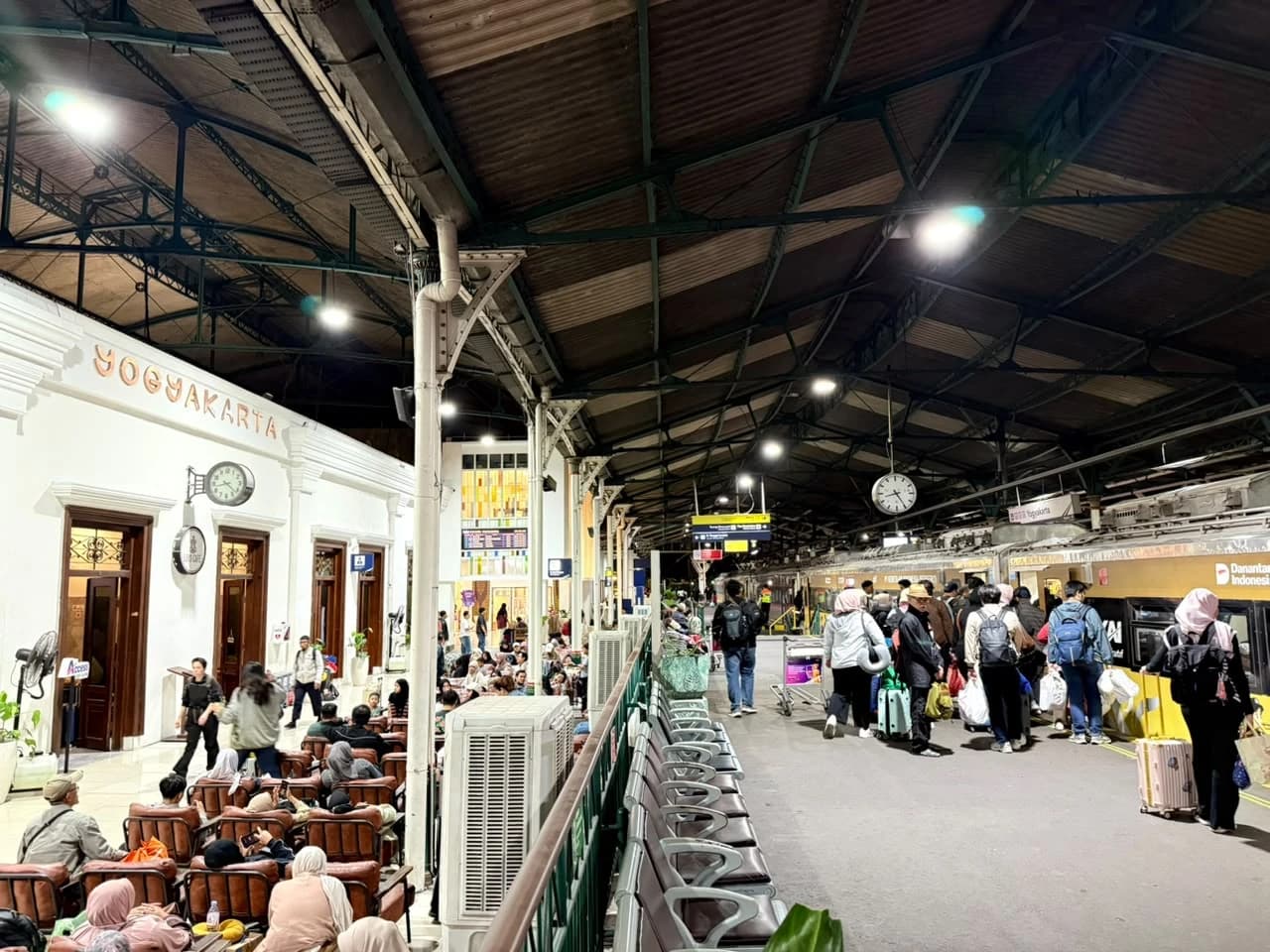
Busy Departures, Busy Returns
Every journey has two directions. Some people set off for work, university, family visits, scheduled events, or simply to experience a change of scenery. Once their plans are fulfilled, the journey moves in the opposite direction: heading home, returning to daily routines, or continuing on to the next city.
This pattern can be seen in train travel from January to September 2026. Data from PT Kereta Api Indonesia (Persero) shows that several intercity corridors recorded strong passenger flows in both directions.
The Gambir–Yogyakarta corridor was among the most notable. Travel from Gambir to Yogyakarta recorded 536,573 passengers, while the return direction reached 500,528 passengers. Combined, both directions accounted for more than 1.03 million passenger journeys in the first nine months of 2026.
A similar pattern emerged on other corridors. The Gambir–Semarang Tawang route and its return direction collectively recorded 775,855 passenger journeys. The Pasarsenen–Lempuyangan route and its return direction reached 694,510 journeys, while the Yogyakarta–Surabaya Gubeng route and its return direction recorded 569,938 journeys.
One city pair even recorded almost perfectly balanced passenger flows. The Gambir–Bandung route recorded 277,526 passengers, while Bandung–Gambir recorded 277,448 passengers. The difference was just 78 passengers out of a total of 554,974 journeys.
KAI Vice President of Corporate Communication Anne Purba said these figures show that connections between cities operate in both directions and are supported by a wide range of travel needs.
“People visit a city for many reasons. Some come for work, education, family visits, events, culinary experiences, or tourism. What is interesting is that passenger flows on several corridors also remain strong in the opposite direction. This means that connections between regions remain active throughout the day,” Anne said.
The Jakarta–Yogyakarta corridor connects the national center of activity with a city known for its education, culture, culinary scene, and tourism. Jakarta–Semarang links two cities with business, government, trade, and tourism activities. Meanwhile, Jakarta–Bandung sees travel associated with work commitments, family visits, culinary experiences, creative activities, and short getaways.
This balance in passenger flows also illustrates that people's journeys do not always move from a single center toward one destination. Cities exchange travelers in both directions, creating connections that remain active from day to day.
“Behind two figures that are almost balanced lies a simple story that is closely connected to our daily lives. People leave because they have somewhere to go, then return with new experiences. A city welcomes travelers and then sends journeys back in another direction. Trains are part of all these movements, helping maintain connections between cities and ensuring that every journey has a way home,” Anne concluded.
VP Corporate Communication KAI