
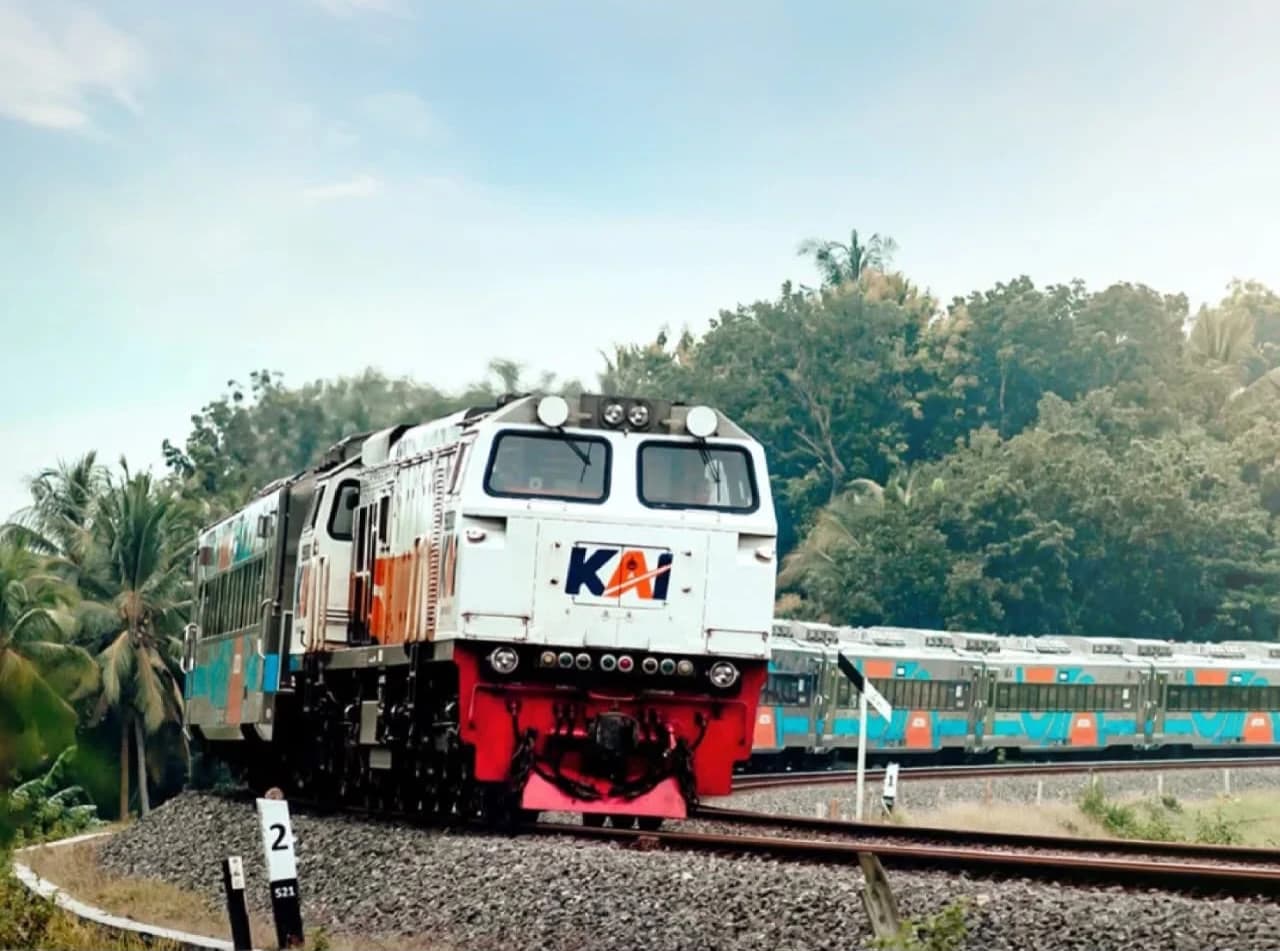
KAI Group Revenue Reaches IDR 17.96 Trillion, Operating Profit in the First Half of 2026 Increases by 25.79 Percent
PT Kereta Api Indonesia (Persero) recorded strengthened core business performance throughout the first half of 2026. Based on the unaudited financial statements of KAI Group, total revenue reached IDR 17.96 trillion, representing a 6.61 percent increase compared to IDR 16.85 trillion in the first half of 2025.
This revenue growth was accompanied by an 18.81 percent increase in gross profit, rising from IDR 5.72 trillion in the first half of 2025 to IDR 6.79 trillion in the first half of 2026. During the same period, operating profit increased by 25.79 percent, from IDR 3.71 trillion to IDR 4.66 trillion.
Vice President of Corporate Communication KAI, Anne Purba, stated that these achievements demonstrate the continued strengthening of KAI Group’s core business activities, driven by service growth, increased productivity, cost management, and synergy across all company entities.
“Revenue and operating profit growth provide an important foundation for KAI to maintain travel safety, readiness of rolling stock and infrastructure, as well as service quality for the public. Strong business performance also supports the sustainable development of both passenger and freight services,” said Anne.
Throughout the first half of 2026, KAI Group served 258,993,359 passengers, an increase of 7.55 percent compared to the same period in 2025, which recorded 240,805,920 passengers. These services include Public Service Obligation (PSO) schemes, Pioneer Trains, government assignments, and commercial services.
Based on passenger volume grouping across entities and services that also implement PSO, Pioneer Train operations, or government assignments, a total of 235,137,908 passengers were recorded in the first half of 2026, equivalent to approximately 90.79 percent of KAI Group’s total passengers.
Anne explained that this data highlights the significant role of KAI Group in providing public transportation services. Government support through PSO schemes, pioneer services, and various assignment mechanisms enables the public to access railway services at affordable fares while reaching a wide range of regions.
“Government trust through PSO, Pioneer Trains, and various assignments allows KAI to serve the public more broadly. KAI ensures that these services remain safe, reliable, orderly, and aligned with customer needs,” she added.
In addition to passenger services, freight transportation continues to support KAI’s business operations. Throughout the first half of 2026, KAI transported 32,498,043 tons of cargo, consisting of 26,534,095 tons of coal and 5,963,948 tons of non-coal commodities.
These services support the distribution of strategic commodities for energy, industry, plantations, containers, cement, fuel, and various other logistics needs. Rail transport offers large capacity and scheduled operations, contributing to the smooth flow of the national supply chain.
Strengthening of freight services has also been carried out through the addition of rolling stock. As of the first half of 2026, a total of 1,080 flat wagons have arrived to enhance freight capacity in Sumatra. KAI has also developed the Brumbung Cargo Train service with a capacity of up to 800 tons per trainset.
During the first half of 2026, KAI’s container transport volume reached approximately 2.62 million tons. This development is aimed at providing rail-based distribution options that offer large capacity, scheduled operations, and connectivity to industrial and logistics hubs.
“Freight services play an important role in supporting national economic activities. Continuous improvements in facilities and services are being carried out so that rail transport can serve business needs more efficiently while ensuring the smooth distribution of strategic commodities,” said Anne.
From a financial position perspective, KAI Group’s total assets as of June 30, 2026, stood at IDR 104.79 trillion. Total liabilities reached IDR 65.11 trillion, decreasing from IDR 66.14 trillion as of December 31, 2025. Meanwhile, total equity increased from IDR 39.29 trillion to IDR 39.69 trillion.
Current assets increased from IDR 19.40 trillion at the end of 2025 to IDR 21.04 trillion as of June 30, 2026. During the same period, short-term liabilities decreased from IDR 16.20 trillion to IDR 15.17 trillion, indicating that current assets remain higher than short-term obligations.
In the first half of 2026, KAI Group recorded profit before tax of IDR 842.69 billion and net profit for the period of IDR 314.03 billion. In comparison, profit before tax in the first half of 2025 stood at IDR 1.86 trillion, with net profit for the period at IDR 1.18 trillion.
The change in net profit was primarily influenced by an increase in the recognition of net losses from associates and joint ventures, rising from IDR 948.20 billion in the first half of 2025 to IDR 3.00 trillion in the first half of 2026. Despite this, KAI Group’s core business activities continued to generate growth in revenue, gross profit, and operating profit.
KAI continues to align its corporate initiatives with the State-Owned Enterprises (SOE) transformation agenda in collaboration with Danantara Indonesia. Strengthening efforts are focused on improving productivity, operational efficiency, governance, modernization of facilities and services, technology utilization, and synergy within the SOE ecosystem.
Transformation is also being implemented through human capital development. KAI is enhancing technical competencies, leadership, safety culture, digital capabilities, and workforce readiness to respond to industry developments and customer needs.
According to Anne, workforce readiness is a critical factor in ensuring that transformation is effectively implemented at both operational and service levels. Technology, infrastructure, and business processes must be supported by competent personnel with a strong commitment to safety.
“Transformation and synergy with Danantara encourage KAI to be more disciplined in improving productivity, strengthening governance, and developing workforce competencies. Every effort to enhance company performance is ultimately directed toward delivering safe, reliable, accessible transportation services that provide value to the public and the national economy,” Anne concluded.
VP Corporate Communication KAI