
Surging Demand for Regional Rail: West Java Local Train Passengers Grow 67.95% Within Three Years
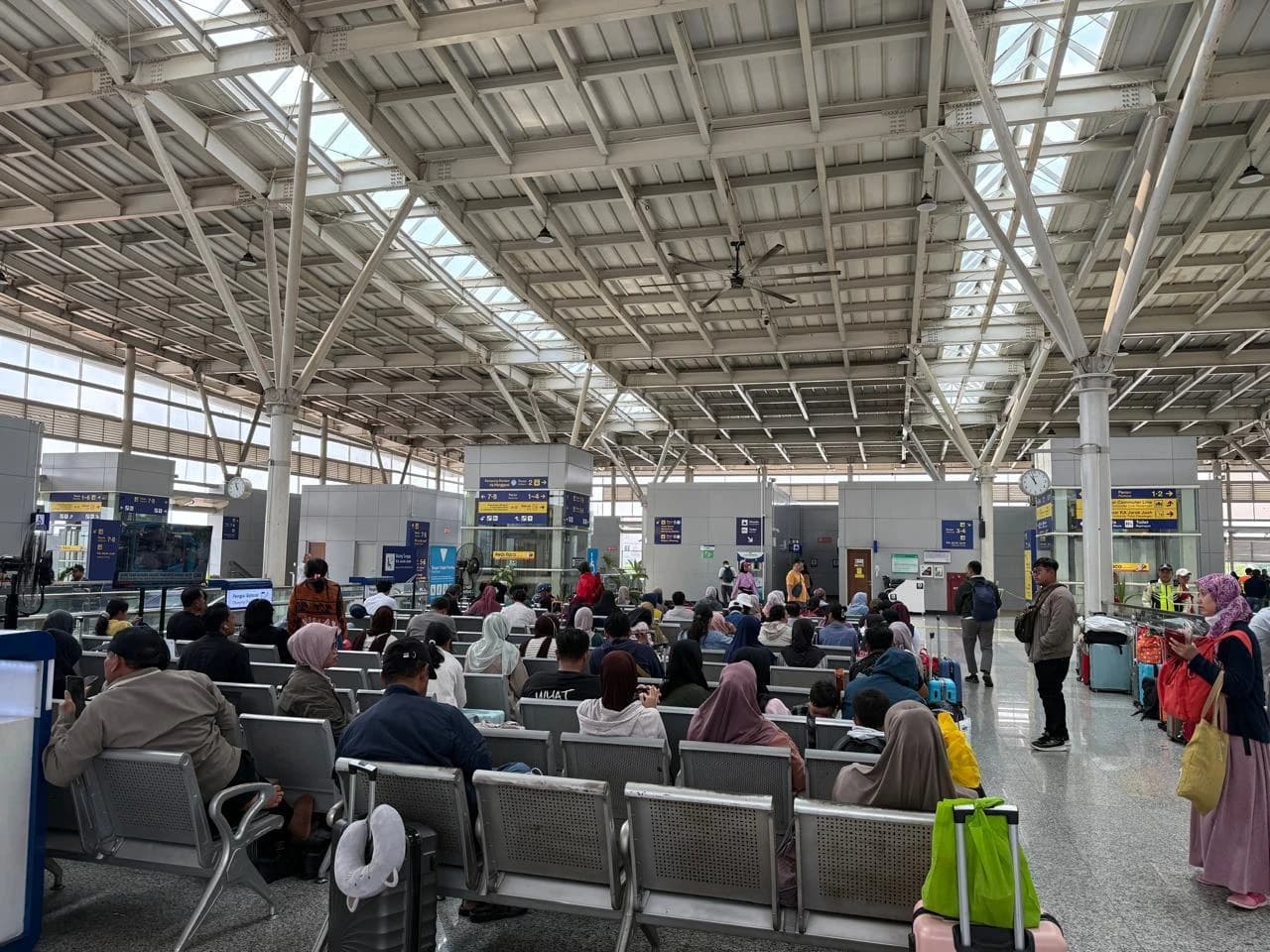
There are journeys that do not span immense distances, yet they fundamentally shape the rhythm of daily life. Commutes to workplaces, campuses, schools, traditional markets, hospitals, and public service centers make up the daily routines of millions. In West Java, these vital needs are anchored by local train (KA Lokal) services, which continue to expand and integrate closely with the public’s daily activities.
This critical role is clearly illustrated by the steady climb in passenger numbers over recent years. According to KAI data, local train services—which include the Walahar, Jatiluhur, Garut/Cibatuan, and Bandung Raya lines—served 11,150,189 passengers in 2022. This volume rose to 14,721,896 passengers in 2023, climbed to 16,159,460 passengers in 2024, and reached 18,727,225 passengers in 2025. Within a three-year span, annual ridership increased by 7,577,036 passengers, representing a 67.95 percent growth.
This upward trajectory has sustained into the current year. From January to May 2026, West Java’s local train services have already carried 8,425,230 passengers. This figure marks a 103.66 percent increase compared to the 4,136,904 passengers recorded during the same period in 2022. This expansion underscores that an increasing number of people are adopting the railway as their primary choice for daily mobility.
KAI’s Vice President of Corporate Communication, Anne Purba, stated that local trains hold a vital position in supporting grassroots productivity due to their high-frequency schedules and highly affordable fares.
"For many passengers, local trains are a key component of their daily productive routines. Rail transit helps the community reach offices, schools, commercial hubs, and public services with more predictable travel times and efficient transportation costs,"
From January to May 2026, the Bandung Raya Local Train emerged as the largest volume contributor, serving 4,724,036 passengers. This substantial volume highlights the Bandung Raya line's role as the backbone of mobility across the Greater Bandung area. The service reliably accommodates commuters operating within an urban environment characterized by rising mobility demands.
Meanwhile, the Walahar Local Train served 1,807,649 passengers through May 2026. Compared to the 691,782 passengers recorded in the same period of 2022, the Walahar line's passenger volume surged by 161.29 percent. This growth reflects a strengthening public dependence on rail networks connecting residential zones and economic centers across Karawang, Cikarang, and Purwakarta.
The Garut/Cibatuan Local Train service also demonstrated consistent growth. Through May 2026, it carried 1,317,737 passengers, up from 615,111 passengers in January–May 2022—a 114.23 percent increase. This expansion showcases the expanding role of railways in supporting public mobility across the Eastern Priangan region while broadening access to economic, educational, and tourism centers.
Concurrently, the Jatiluhur Local Train registered the highest relative growth rate. In January–May 2022, the service carried 67,843 passengers, whereas in January–May 2026, the volume soared to 575,808 passengers. With an exponential growth of 748,74 percent, the Jatiluhur line serves as a prime example of how optimized rail services can unlock broader mobility access and accelerate the public shift toward rail-based mass transit.
Anne added that the socioeconomic benefits of local train networks extend far beyond the mechanical movement of passengers from one point to another. The presence of these subsidized routes directly helps communities lower commuting expenses, widens access to employment and education, and stimulates economic activities across the regions traversed by the tracks.
"The passenger growth indicates that the public is increasingly experiencing the tangible benefits of rail transport in their day-to-day lives. KAI will continuously maintain the reliability of local train services so that these positive impacts can be felt even more broadly by communities throughout West Java,"
VP of Corporate Communication KAI