
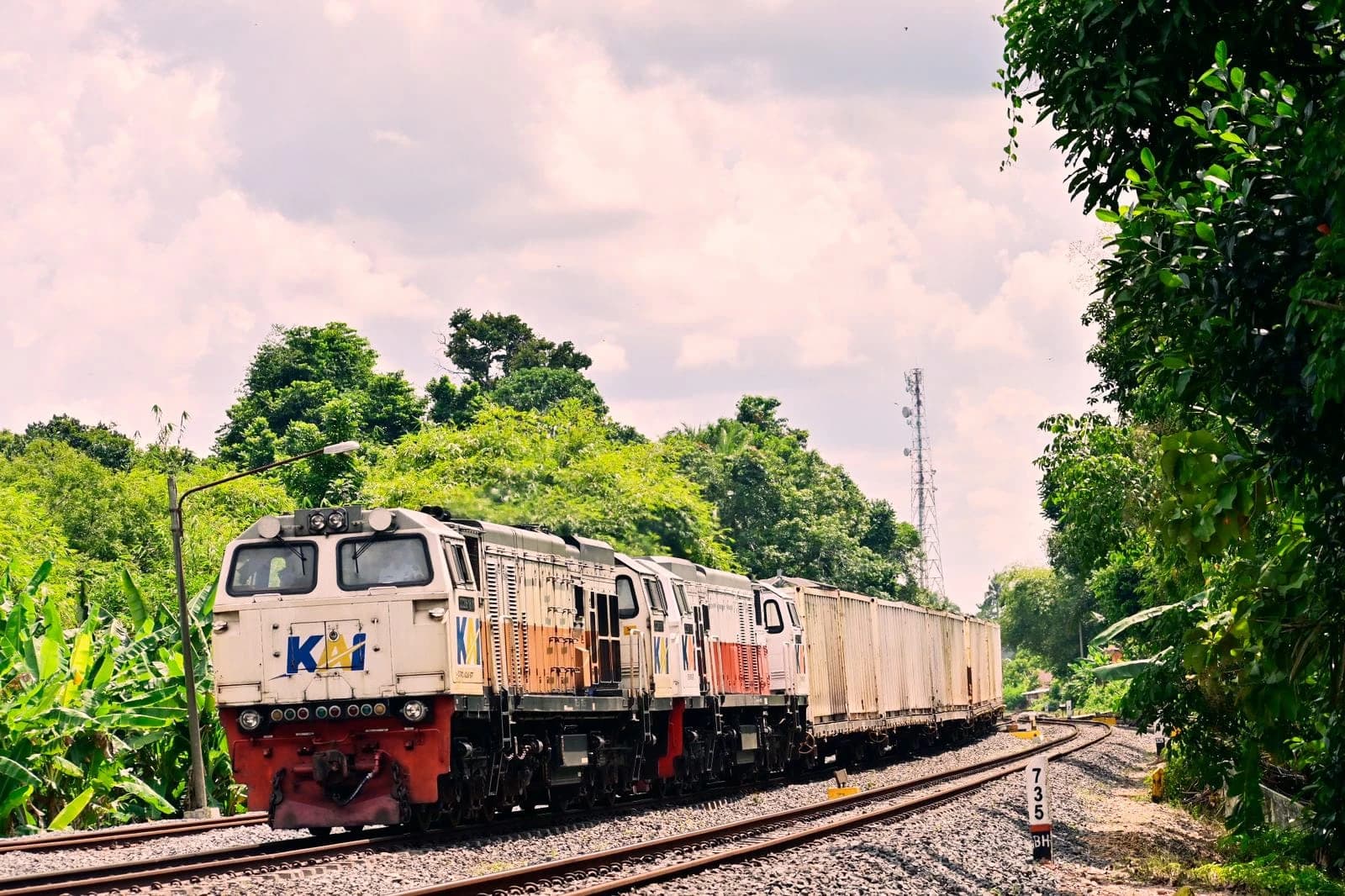
Planting Season Awaits, Fertilizer Moves by Rail
The planting season always brings new hope. For farmers, the arrival of rain is one of the signs to prepare the land again, plant seeds, and plan for the next harvest. However, a successful planting season also requires the readiness of various agricultural supplies, including fertilizer that must be available according to needs and when it is needed.
Behind these preparations, there is a logistics journey that takes place long before fertilizer is used on agricultural land. PT Kereta Api Indonesia (Persero) also plays a role through rail-based freight transportation. Throughout January–September 2026, KAI transported 21,180 tons of fertilizer, an increase of 31.47 percent compared with 16,110 tons in the same period in 2025. In the first nine months of this year, an additional 5,070 tons of fertilizer were transported by train compared with the previous year.
Vice President Corporate Communication KAI Anne Purba said the increase in fertilizer transportation is part of agricultural supply chain activities that are closely linked to community needs. Fertilizer is one of the production inputs needed in the cultivation process, from plant maintenance to supporting plant growth according to land requirements.
“Every planting season brings hope to many farming families. There is land being prepared again, seeds beginning to be planted, and harvest plans that serve as a source of livelihood. For this process to run smoothly, agricultural needs must be properly prepared. KAI plays a role by transporting fertilizer from its point of origin to its destination according to customer needs,” said Anne.
This readiness is increasingly relevant in light of the 2026/2027 rainy season forecast from the Meteorology, Climatology, and Geophysics Agency (BMKG). The start of the rainy season is predicted to occur gradually across various areas of Java and Sumatra from late October to December 2026. Seasonal shifts due to climate dynamics are a concern for the agricultural sector because planting times need to be adjusted to rainfall, water availability, and local land characteristics.
In Central Java, for example, the rainy season is forecast to begin in November–December 2026. Meanwhile, in parts of South Sumatra, the rainy season is expected to begin gradually from late October to early December 2026. These differences in conditions make planting season planning increasingly important, including estimating agricultural supply needs and fertilizer deliveries to distribution areas.
According to Anne, food security requires the coordination of many mutually supportive activities. Producers prepare fertilizer, transportation services handle deliveries, distributors carry out distribution, while farmers adjust cultivation activities to seasonal conditions. Within this chain, KAI provides fertilizer transportation along corridors supported by rail networks and logistics facilities.
“For farmers, timing is important. Land preparation, planting, and fertilization follow plant needs and natural conditions. Therefore, every party in the supply chain needs to carry out its role properly. Through freight services, we ensure that fertilizer entrusted to KAI can be delivered safely, on schedule, and according to needs,” said Anne.
The increase in fertilizer transportation volume also illustrates the role of transportation in supporting productive activities in various regions. KAI continues to create opportunities to use rail-based transportation for agricultural commodities, while taking into account travel safety, facility readiness, network capacity, and coordination with stakeholders in the distribution chain.
“When the planting season begins, what grows is the hope of many people. There are farmers waiting for the results of their land, families depending on agricultural income, traders waiting for supplies, and communities that need food every day. The journey of fertilizer by rail is one part of that long process. KAI wants to continue supporting the smooth distribution of fertilizer so that agricultural activities can proceed and the hope planted today has the opportunity to grow into tomorrow’s harvest,” concluded Anne.
VP Corporate Communication KAI