
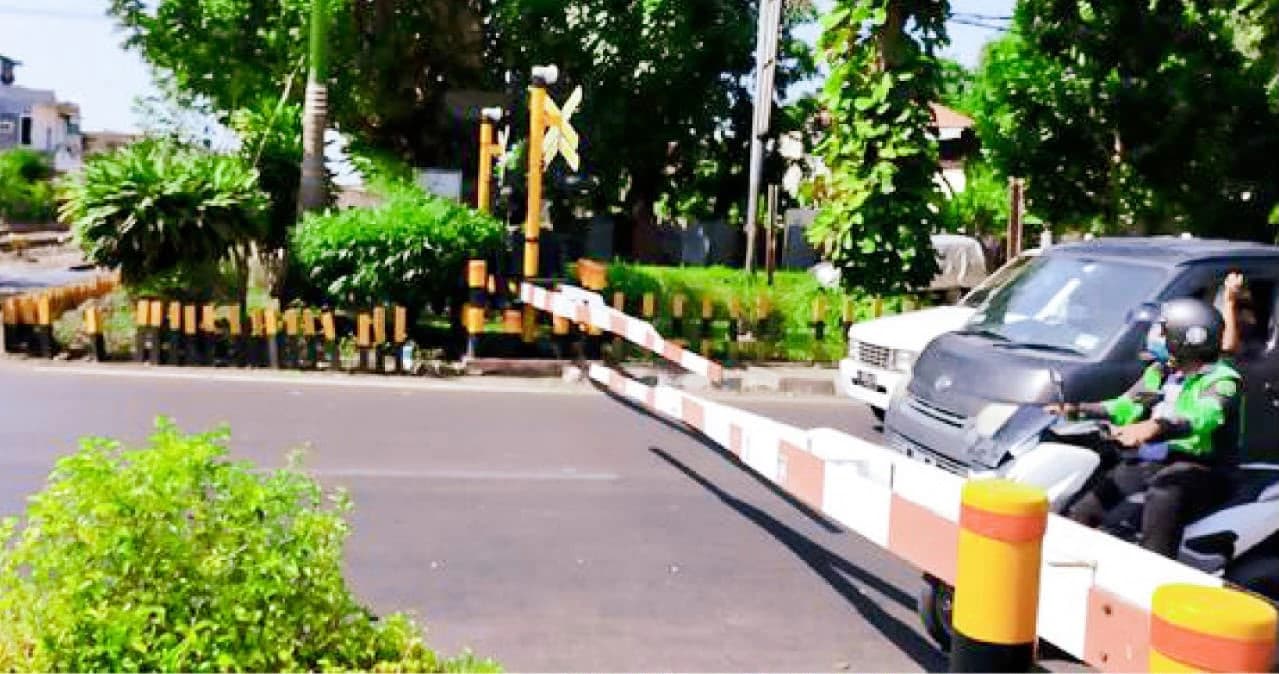
Maintaining a Safe Space for Railways and Communities, KAI Manages Level Crossings
Railway lines are part of community mobility across various regions. In some areas, railway lines directly intersect with community activities through level crossings, which require ongoing safety management.
Vice President of Corporate Communication KAI Anne Purba said that safety at level crossings requires synergy among railway operators, regulators, local governments, and the community. As a railway operator, KAI continues to carry out its role through staff readiness, the provision of safety facilities, and coordination with relevant parties.
“Level crossings are part of train journeys and require shared attention. KAI continues to carry out its role in ensuring safe train journeys while maintaining the safety of communities around railway lines,” said Anne.
One of KAI’s efforts is to ensure the readiness of level crossing guards (PJL). In 2026, a total of 748 PJL officers participated in a certification program through six competency testing centers across 13 operational areas.
Through the certification program, the officers receive competency recognition in accordance with the standards required to carry out safety functions at level crossings.
In addition to improving staff competency, KAI is also upgrading safety facilities at priority locations. Based on data updated as of September 8, 2026, the construction of JPL guard posts had reached 166 of the 190 priority locations, representing 87.37 percent completion.
JPL guard posts support level crossing guards in carrying out their duties to ensure the safety of train operations at designated priority locations.
As part of its efforts to make train journeys increasingly safe, KAI is also managing level crossings through collaboration with relevant stakeholders. From 2021 through April 2026, a total of 1,329 unauthorized level crossings had been closed across KAI’s operational areas.
Anne said that level crossing management is carried out gradually by taking into account field conditions, safety needs, and coordination among relevant agencies.
“KAI continues to improve railway safety through measures that are part of the company’s role. Collaboration with various parties is an important part of maintaining the safety of train journeys,” said Anne.
Through staff competency development, the provision of safety facilities, and collaboration with relevant stakeholders, KAI continues to carry out its role in maintaining the safety of train journeys while supporting community activities around railway lines.
VP Corporate Communication KAI