
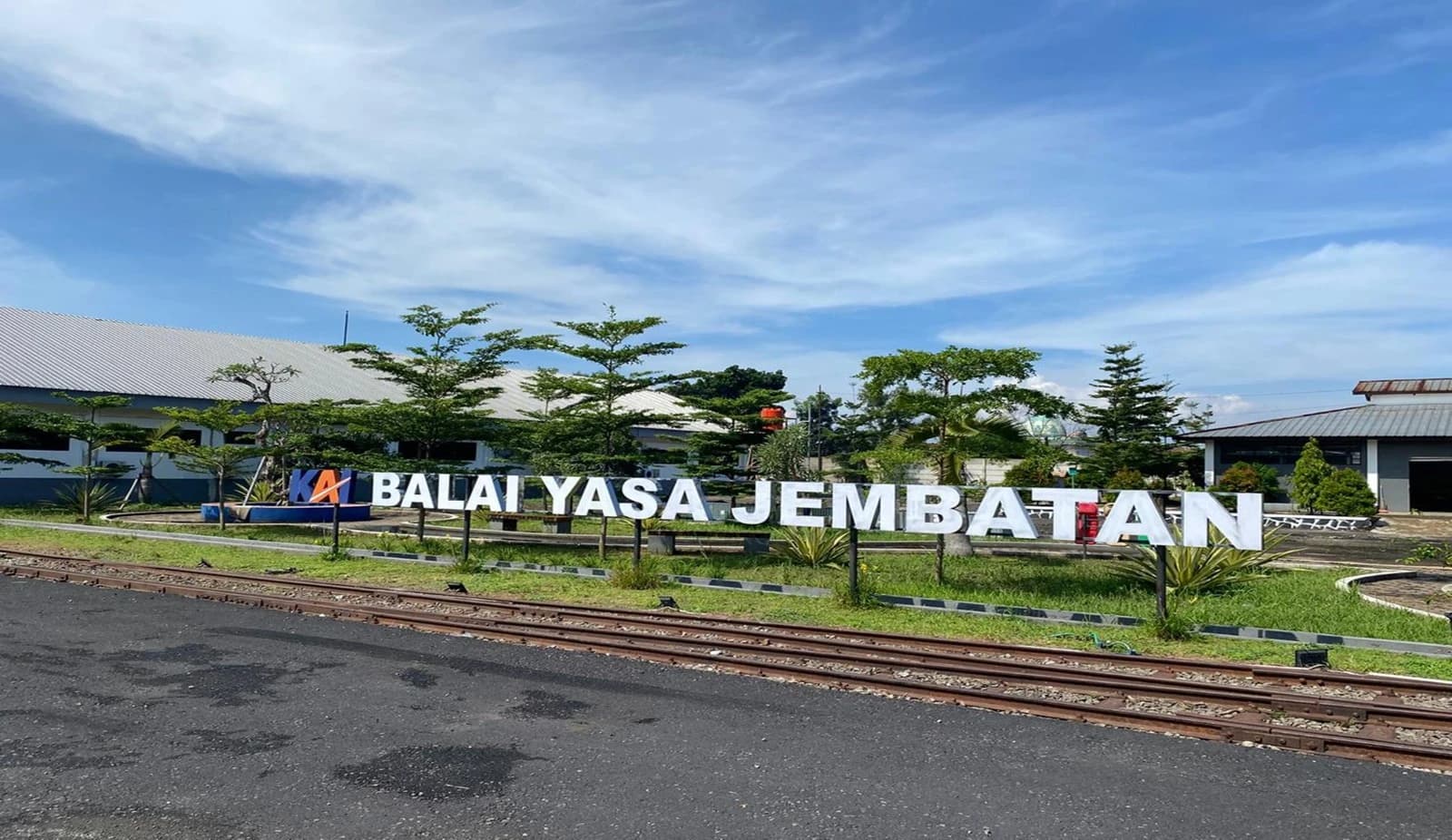
For More Than a Century, Kiaracondong Bridge Workshop Has Strengthened the Reliability of KAI's Railway Tracks and Bridges
About 500 meters from Kiaracondong Station stands one of KAI's longest-serving facilities, which has been supporting railway safety for more than a century. Here, steel materials are cut, shaped, assembled, inspected, and coated before being transformed into railway bridges and a wide range of track maintenance equipment.
The facility is Kiaracondong Bridge Workshop (Balai Yasa Jembatan Kiaracondong), located at Jalan Kiaracondong No. 92, Bandung. Established in 1921, the workshop is responsible for manufacturing and repairing steel railway bridges, as well as producing maintenance equipment for railway infrastructure across Java and Sumatra.
KAI Vice President of Corporate Communication Anne Purba said the work carried out at Kiaracondong Bridge Workshop plays a direct role in ensuring railway safety.
"Every product manufactured here is designed with one purpose—to keep railway tracks and bridges safe for train operations," said Anne.
Producing 9,899 Products and Components
According to production data from 2023 to 2025, Kiaracondong Bridge Workshop produced 9,899 products and components across 26 different categories. These products are used for railway inspection, maintenance, repairs, and emergency response for tracks and bridges.
The largest production output was 2,970 ballast tamping heads, components used in ballast tamping equipment that compacts crushed stone beneath and around railway sleepers.
Properly compacted ballast helps maintain track stability as trains pass over it.
The workshop also produced 587 temporary rail clamps, which are used to secure damaged rails before permanent repairs can be carried out.
To support accurate track inspections, the workshop manufactured 464 track gauge measuring and adjustment tools, 399 rail defect inspection rulers, and 290 rail wear gauges. These instruments enable maintenance personnel to assess track conditions with high precision.
"Railway safety begins with accurate inspections. That's why measurement instruments and maintenance equipment must be reliable, durable, and designed to meet the needs of field personnel," Anne explained.
Other products include trolley wheels, rail lifting pulleys, rail shifting tools, rail fastening installation tools, and rail transfer equipment. Maintenance trolleys are small work vehicles used by crews to transport tools and materials to maintenance sites.
Manufacturing Emergency Bridge Support Systems Between 2023 and 2025, the workshop produced 312 emergency bridge support systems in various configurations. Several models are capable of supporting loads of up to 46 tonnes, while the Type 50 support can withstand loads of up to 83 tonnes.
These support systems help stabilize bridge structures requiring special maintenance or emergency intervention. Their availability enables rapid response whenever bridge conditions require immediate safety measures.
During the same period, the workshop also manufactured 603 rail fasteners for emergency bridge structures and 132 tetrapod moulds. Tetrapods are concrete structures installed around bridge piers and abutments to reduce river scour and protect bridge foundations.
Anne noted that KAI's in-house manufacturing capability enables the company to produce components tailored to specific operational requirements.
"Our in-house production capability strengthens operational readiness by allowing components to be manufactured according to the specific needs of each railway line, ensuring maintenance teams have the right equipment when carrying out repairs and safety measures," she said.
Handling a 137.91-Tonne Steel Railway Bridge
As part of its 2026 work program, Kiaracondong Bridge Workshop has completed work on a 40-metre steel railway bridge weighing 137.91 tonnes.
The workshop also completed 16 bridge components for four railway bridges along the Pekalongan–Sragi section, with a combined weight of 3.236 tonnes. In addition, 760 ballast tamping heads have been manufactured this year.
Production of 75 sets of emergency bridge supports has reached 57.76 percent based on the reporting period. These products will support both routine maintenance activities and emergency railway infrastructure works.
The manufacturing process begins with cutting steel materials to size, followed by forming, drilling, assembly, and welding. The finished structures then undergo surface cleaning and protective coating to minimize corrosion and extend their service life.
The workshop is equipped with metal cutting machines, drilling machines, metal forming equipment, lathes, welding equipment, and dedicated facilities for steel surface preparation and protective coating.
To handle large steel structures, the facility operates six overhead cranes, each with a lifting capacity of 10 tonnes, as well as two forklifts with a lifting capacity of three tonnes each.
Supported by Certified Professionals As of 1 June 2026, Kiaracondong Bridge Workshop employed 26 personnel, comprising 21 KAI employees, two cleaning staff, and three security personnel.
Its employees hold professional competency certifications issued by Indonesia's National Professional Certification Agency (BNSP), along with technical certifications relevant to their respective fields. The workshop also implements the ISO 9001:2015 quality management system.
Every stage of production includes equipment inspections, mandatory use of personal protective equipment, workplace safety arrangements, and risk management procedures, from the arrival of raw materials through to final product completion.
Developing Digital Inspection Equipment In addition to manufacturing bridges and maintenance equipment, Kiaracondong Bridge Workshop is developing several prototype technologies.
One of these is a rail jack capable of lifting loads of up to 12 tonnes, designed to support track maintenance and component replacement activities. The workshop is also developing a digital rail surface wear measurement device, which helps monitor rail wear patterns that may affect ride comfort and the condition of railway infrastructure.
Other innovations include a switch wear measuring device, track gauge calibration equipment, and a lightweight inspection vehicle to assist maintenance personnel in conducting track inspections. Railway switches are track components that allow trains to move from one track to another.
These developments form part of KAI's long-term plan to transform Kiaracondong Bridge Workshop into the Railway Track and Bridge Workshop (Balai Yasa Jalan Rel dan Jembatan), expanding its role to support both bridge infrastructure and railway track maintenance equipment.
"The development of new measuring instruments and maintenance equipment is intended to help our personnel detect track conditions earlier, enabling safety measures to be implemented more effectively," Anne concluded.
From steel railway bridges weighing hundreds of tonnes to precision measuring instruments used by maintenance crews, every product manufactured at Kiaracondong Bridge Workshop serves the same purpose: ensuring the reliability and safety of railway tracks and bridges before every train journey.
VP Corporate Communication KAI