
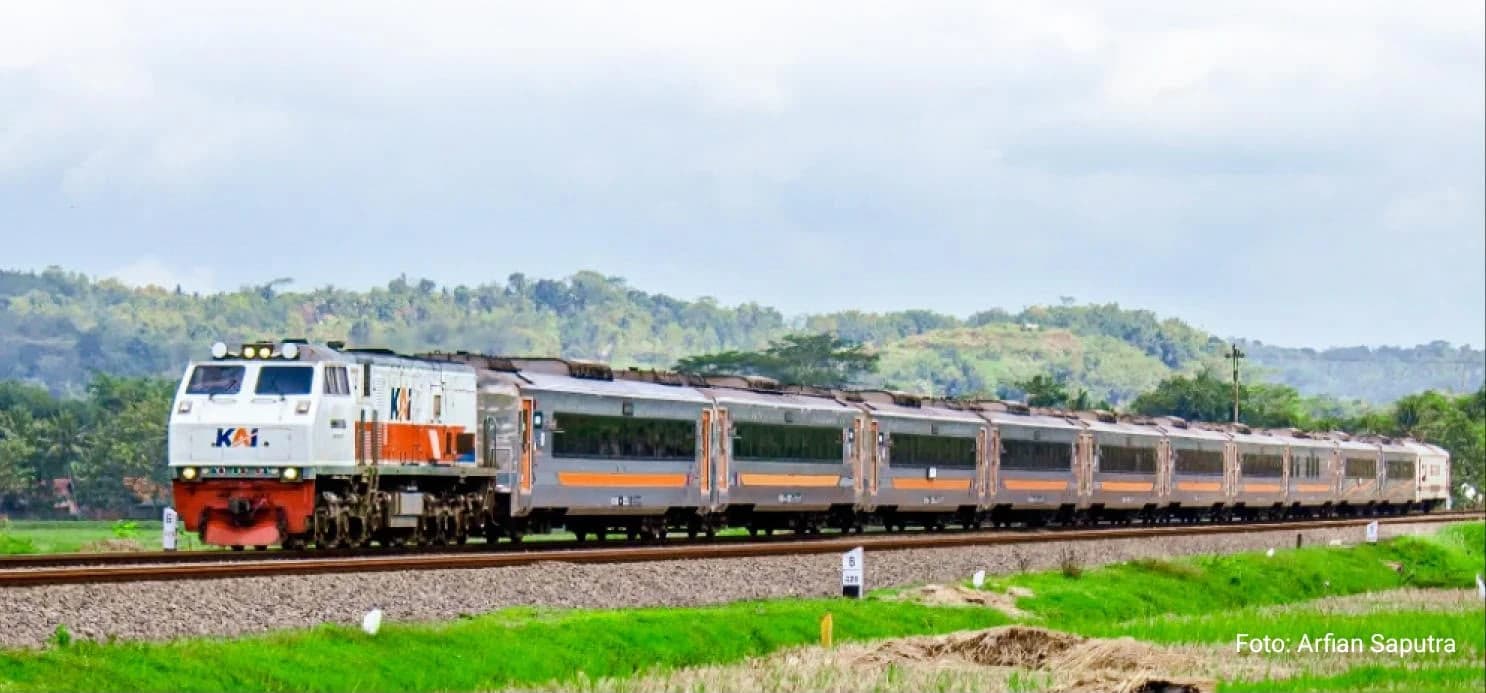
More Than Four Decades of Serving Passengers, 5 Historic Train Services Carry 1.26 Million Customers
Some train names have been familiar to the public since long before tickets could be booked using mobile phones. These names have accompanied journeys back to hometowns, to cities where people work or study, and to reunions with family. Decades have passed, yet several train names remain in use and continue to be part of people’s journeys across Indonesia.
PT Kereta Api Indonesia (Persero) recorded five train services with a long history: Mutiara Selatan, Fajar Utama Solo, Senja Utama Solo, Fajar Utama Yogyakarta, and Senja Utama Yogyakarta. Together, these services carried 1,258,364 customers from January to September 2026.
KAI Vice President of Corporate Communication Anne Purba said the long history of these services reflects how the development of railway transportation continues alongside changing public needs.
“Every train name has its own story. Some have been familiar to parents and their children across generations. Behind these names are long journeys, technological changes, and customer experiences that continue to evolve with the times,” said Anne.
One example is KA Mutiara Selatan, which began operating on August 17, 1972. More than five decades later, this service connecting Bandung and Surabaya via Java’s southern route continued to serve 342,036 customers from January to September 2026, an increase of 0.98% compared with the same period last year.
Another historic milestone came with KA Senja Utama Solo, which began serving the Solo–Jakarta route on October 14, 1978. The Senja Utama name subsequently became part of the identity of journeys along this corridor, followed by Fajar Utama Solo, which offered an additional travel-time option.
Nearly 48 years after Senja Utama Solo first began operating, the two services together carried 320,037 customers from January to September 2026. Fajar Utama Solo served 164,342 customers, an annual increase of 6.80%, while Senja Utama Solo carried 155,695 customers, growing by 4.65% compared with the same period last year.
A similar story can be found in Fajar Utama Yogyakarta and Senja Utama Yogyakarta, which have been familiar names since the 1980s. Both names reflect their respective travel times, dawn and dusk, which have become familiar to customers traveling along the Jakarta–Yogyakarta corridor.
From January to September 2026, Fajar Utama Yogyakarta served 306,328 customers, while Senja Utama Yogyakarta recorded 289,963 customers. Together, the two services carried 596,291 customers during the first nine months of the year.
According to Anne, the continued operation of these long-established services shows that railway development also carries stories and identities that have grown alongside the community.
“Train services continue to evolve to meet customer needs. Trainsets are becoming more modern, facilities are increasingly diverse, and booking systems are becoming easier to use. Amid these developments, the history and identity of each service remain important and deserve to be appreciated,” said Anne.
This transformation can be seen, among others, in Fajar Utama Solo and Senja Utama Solo. When it first began operating, Senja Utama Solo used business-class coaches manufactured by Goša in Yugoslavia. Today, both services use the latest-generation stainless steel trainsets manufactured by PT INKA in Madiun.
The evolution of rolling stock over the years illustrates how a single train service can pass through various stages of progress in the national railway industry, while its familiar name continues to connect people with its travel history.
On a broader scale, KAI Group served 394,443,300 customers from January to September 2026, an increase of 7.06% compared with 368,429,917 customers during the same period last year. KAI’s Long-Distance Train and Local Train services alone served 43,959,327 customers, representing annual growth of 8.33%.
Anne added that Indonesia’s railway history encompasses many elements, from station buildings and locomotives to historic rolling stock and train names that have been familiar to the public for decades. All of these form part of the national transportation journey, which continues to evolve with changing times.
“Train names preserve stories of people’s journeys from one generation to the next. KAI values this historical legacy while continuing to develop services that remain relevant to customer needs. We hope that the long history of Indonesia’s railways will continue to be recognized and passed down to future generations,” Anne concluded.
VP Corporate Communication KAI