
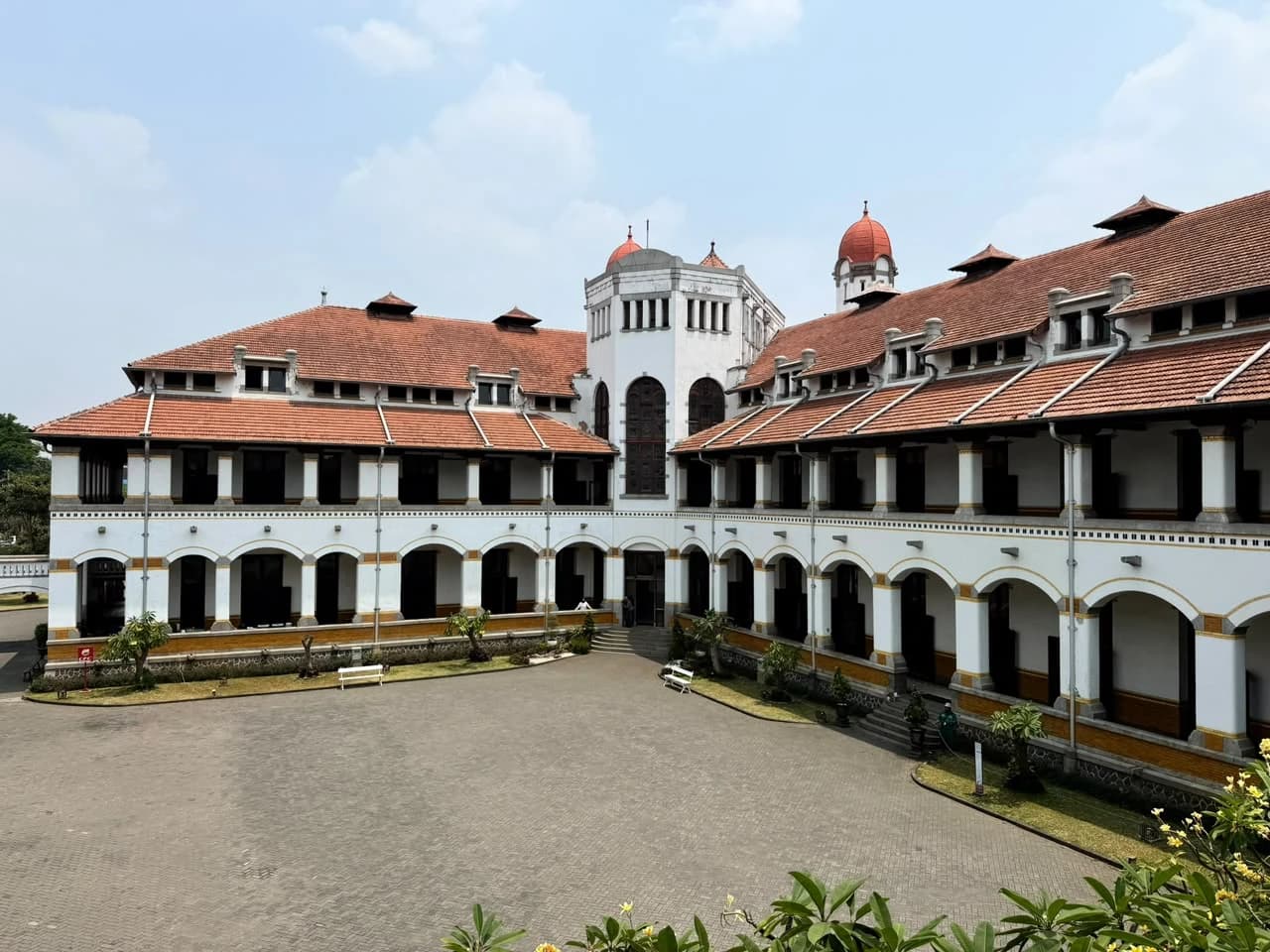
Over 2.1 Million Visits to Lawang Sewu and Ambarawa Railway Museum, KAI Invites the Public to Explore Railway Heritage
PT Kereta Api Indonesia (Persero) continues to develop the management of its heritage assets as spaces for education, historical preservation, and public tourism destinations. A number of historic buildings, stations, and railway rolling stock across Java and Sumatra have become places where people of different generations can learn about the long history of Indonesia’s railways.
Public interest in historical tourism can be seen in visitor numbers at two of KAI’s heritage destinations in Central Java. From 2024 to August 2026, Lawang Sewu in Semarang and the Ambarawa Railway Museum in Semarang Regency recorded a total of 2,127,125 visits.
Of this total, Lawang Sewu recorded 1,636,638 visits, while the Ambarawa Railway Museum welcomed 490,487 visits. These figures reflect the public’s strong interest in visiting destinations that offer first-hand experiences of history.
KAI Vice President of Corporate Communication Anne Purba said that railway history is closely connected to the lives of Indonesian people. For more than a century and a half, railways have been part of the development of cities, economic activities, technological progress, and various important events in the nation’s history.
“Behind every old station, steam locomotive, and historic building, there are stories about the people and the journey of Indonesia. We want KAI’s museums to be places where children, families, and younger generations can learn about history in a way that feels accessible, engaging, and memorable,” said Anne.
KAI offers several destinations that provide historical experiences with distinct characteristics, ranging from Lawang Sewu and the Ambarawa Railway Museum in Central Java, to the Bondowoso Railway Museum in East Java and the Sawahlunto Railway Museum in West Sumatra.
Lawang Sewu is one of the best-known historic buildings in Semarang. The building, which began serving as the administrative headquarters of the Nederlandsch-Indische Spoorweg Maatschappij (NIS) railway company in 1907, is now a destination where visitors can explore the history of railways through collections of historical objects, documentation, and information about the development of rail transportation in Indonesia.
Meanwhile, the Ambarawa Railway Museum offers a different experience through its collection of steam locomotives, historic trains, and traces of railway technology in a mountainous area. The museum occupies the former Willem I Station, which began operating on May 21, 1873, alongside the opening of the Kedungjati–Ambarawa railway line.
In East Java, the Bondowoso Railway Museum preserves historical memories associated with the Gerbong Maut incident, an important part of Indonesia’s struggle for independence.
The Sawahlunto Railway Museum, meanwhile, introduces visitors to the close relationship between railway development and the history of coal mining in West Sumatra. The area is connected to the Ombilin Coal Mining Heritage, which has been recognized by UNESCO as a World Heritage Site, and is also known for its E1060 steam locomotive, or Mak Itam.
“Each museum has a different story to tell. These include technological developments, community life, regional growth, and the nation’s struggle for independence. This diversity offers attractions that can enrich tourism experiences and learning opportunities across generations,” said Anne.
In addition to museums, KAI has recorded 656 heritage assets that have been designated as cultural heritage sites or are currently undergoing the designation process. These assets include stations, buildings, structures, and railway rolling stock spread across various operational areas.
Some of these include Jakarta Kota Station, Bandung Station, Semarang Tawang Station, and Yogyakarta Station, as well as various historic bridges, tunnels, workshops, depots, and locomotives.
This diversity illustrates how the development of the railway network has also shaped residential areas, commercial centers, industrial zones, and tourism destinations in various regions.
One historically significant railway section is the Kedungjati–Tuntang–Ambarawa line in Central Java. Connected to the development of the railway network since 1873, this line forms part of the early history of rail transportation in Indonesia and holds potential for history-based tourism development.
As part of its efforts to introduce and preserve railway history, KAI will hold the Rail Heritage Forum 2026 on November 9, 2026, at Lawang Sewu in Semarang, under the theme 1867 & Beyond: Preserving the Past, Shaping the Future.
The forum will provide a platform to discuss the historical value of railways, the utilization of heritage assets, and opportunities for collaboration to create educational and tourism experiences that remain relevant to the public.
The year 1867 holds particular significance as it marked the start of operations on the Semarang–Tanggung railway line on August 10, 1867. From this initial route, Indonesia’s railway network continued to expand and has become an important part of public mobility to this day.
“Historical heritage needs to be continuously introduced so that future generations can understand the journey that shaped Indonesia as it is today. Through the Rail Heritage Forum 2026, we want to create more opportunities for collaboration so that KAI’s museums and historic assets can become more accessible to the public,” said Anne.
KAI hopes that more people will choose railway museums as family tourism destinations, educational activity venues, and places to learn about Indonesian history from the perspectives of transportation, culture, and urban development.
“Railway history is part of our shared story. We invite the public to visit, explore, learn, and help preserve this heritage so that it can continue to be enjoyed by future generations,” Anne concluded.
VP Corporate Communication KAI