
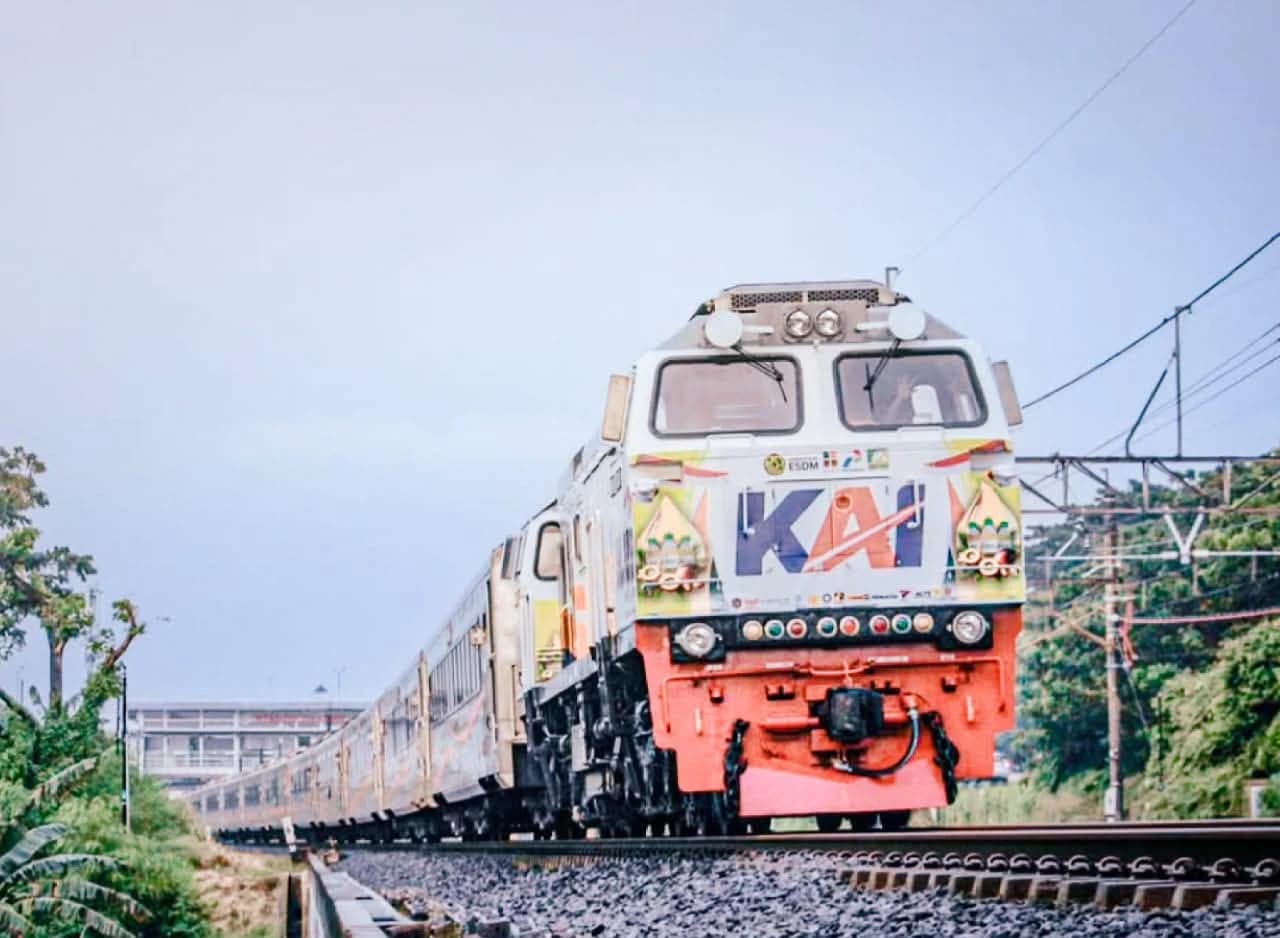
KAI Group's Tax Contribution Reached Rp6.98 Trillion in 2025
PT Kereta Api Indonesia (Persero) recorded a Rp6.98 trillion tax contribution from KAI Group throughout 2025. The figure represents a 66.05% increase compared to the Rp4.20 trillion contributed in 2024.
The contribution was generated through the business activities of KAI as the parent company together with all of its subsidiaries. It includes Corporate Income Tax, Value Added Tax (VAT), Land and Building Tax, regional taxes, and Non-Tax State Revenue (PNBP), all of which are reported as part of KAI Group's contribution to the government.
Vice President Corporate Communication KAI Anne Purba said the contribution reflects the collective efforts of the KAI Group ecosystem, involving the company, employees, customers, business partners, and communities across Indonesia.
"Behind every passenger journey, freight shipment, station business activity, and KAI Group service lies economic value that contributes to state revenue. These contributions are then managed by the government to support public services and national development," Anne said.
Of KAI Group's total contribution in 2025, KAI as the parent company contributed Rp6.19 trillion, while its subsidiaries contributed Rp795.89 billion.
The total contribution consisted of Rp3.05 trillion in Income Tax, Rp1.47 trillion in Value Added Tax (VAT), and Rp2.27 trillion in Non-Tax State Revenue (PNBP). KAI Group also paid approximately Rp113.96 billion in Land and Building Tax.
The company's subsidiaries also generated regional government revenue through Rp28.66 billion in restaurant tax, Rp456.90 million in hotel tax, and Rp47.84 billion in other regional taxes.
Anne noted that the company's contribution to the nation grows from economic activities carried out collectively. It reflects the dedication of employees who keep services running, customers who use KAI's services, business partners who support operations, and communities connected to the KAI Group ecosystem.
"Behind the Rp6.98 trillion contribution are the economic activities driven by our employees, customers, business partners, and every KAI Group entity. Each plays a role in creating value that ultimately becomes revenue for both the national and regional governments," Anne said.
Employees remain a vital part of that ecosystem. Every day, they perform a wide range of responsibilities, from serving customers and ensuring operational safety to maintaining railway assets and infrastructure, managing service systems, and supporting the company's business activities.
As an employer, KAI also fulfills its tax administration responsibilities related to employees in accordance with applicable regulations. The 2025 tax contribution report presents Income Tax as a consolidated figure and does not separately disclose employee income tax.
"Our contribution to the country is built through collective effort. It includes employees who begin their shifts while many people are still asleep, frontline staff who welcome passengers early in the morning, and technicians who ensure every journey operates safely," Anne added.
According to Anne, a company's economic activities gain meaning because they are driven by people. Their work generates household income, creates transactions with business partners, and fulfills obligations to the state in accordance with prevailing regulations.
"Behind these contribution figures are jobs, responsibilities, and the livelihoods of countless families. KAI is committed to ensuring that every aspect of its business creates increasingly broader benefits for society," Anne said.
Railway stations and train services also connect passengers, employees, businesses, suppliers, and surrounding communities. These activities stimulate economic circulation across cities and regions, ultimately generating fiscal contributions for both central and local governments.
"Whenever customers travel by train, many lives are connected through that journey. Employees earn a living, businesses serve travelers, suppliers provide essential goods and services, and local communities benefit from the surrounding economic activity," Anne explained.
These revenues form part of the government's fiscal capacity to finance public services and development priorities through the national and regional budgeting mechanisms.
KAI emphasized that decisions regarding the allocation of these revenues rest entirely with the government. The funds become part of the national and regional revenue system and are managed in accordance with prevailing regulations, government policies, and development priorities.
"These contributions are not managed directly by KAI for specific programs. They become part of government revenue and contribute to the state's capacity to provide public services and support national development," Anne explained.
Throughout 2025, KAI also reported full compliance with applicable tax regulations and confirmed that it had not received any significant tax warnings or sanctions as of 31 December 2025. This compliance is maintained through proper tax administration, reporting, payment, and strengthened tax risk management.
Anne added that increasing contributions should go hand in hand with the company's financial health, service sustainability, and employee welfare. Strong corporate performance enables the economic benefits created by the company to reach even more people.
"Railways carry millions of journeys, and behind every trip are jobs, business opportunities, family incomes, and contributions that ultimately return to the nation. KAI will continue to strengthen its performance and governance so that the benefits of the company's presence can be felt by even more communities," Anne concluded.
VP Corporate Communication KAI