
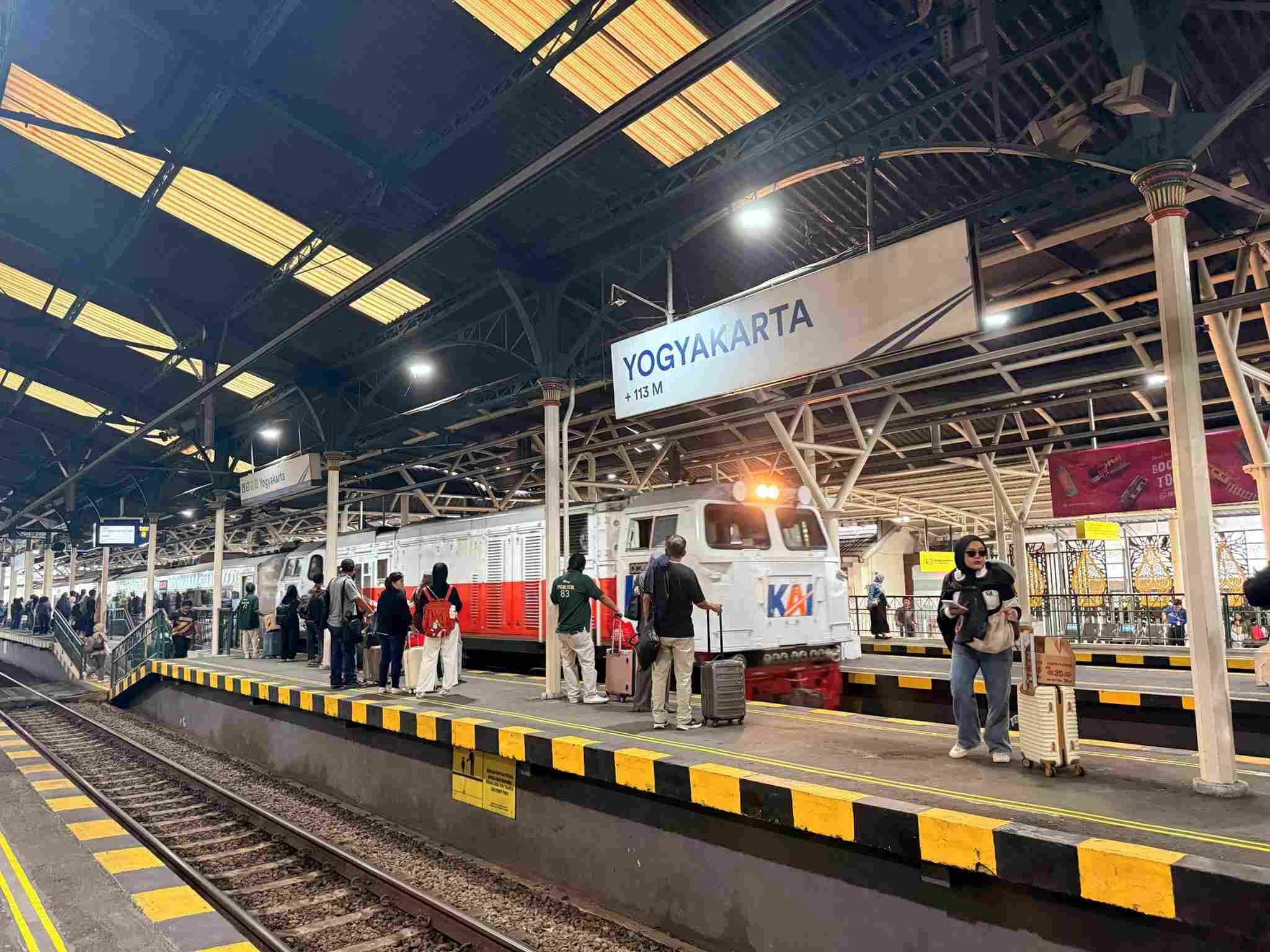
Strengthening Regional Connectivity, KAI Serves 24.37 Million Long-Distance and Local Passengers
PT Kereta Api Indonesia (Persero) recorded that long-distance and local train services managed by KAI served 24,372,733 passengers throughout January–May 2026. This number represents a 9.9 percent increase compared to the same period in 2025, which recorded 22,168,570 passengers.
This growth highlights the strengthening role of railways in connecting communities across regions. Trains have become the preferred choice for commuting, education, family visits, tourism, healthcare services, and business activities spanning various cities in Java and Sumatra.
KAI Vice President of Corporate Communications Anne Purba stated that passenger growth across all Regional Operations (Daop) and Sub-Regional Operations (Divre) demonstrates that railway connectivity is increasingly aligned with public needs.
“KAI observes that public travel demands continue to grow in many regions. Railways connect core public activities, ranging from economic zones, educational hubs, tourist destinations, and public services to family travel,”
Based on the service category, Commercial Long-Distance Trains were the largest contributor with 15,605,465 passengers, up 10.7 percent compared to January–May 2025. PSO Long-Distance Trains served 4,951,267 passengers or grew by 5.1 percent, PSO Local Trains served 2,930,898 passengers or grew by 13.0 percent, and Commercial Local Trains served 885,103 passengers or grew by 15.1 percent.
In terms of service classes, Executive Class served 6,128,848 passengers or rose by 19.1 percent compared to the same period last year. Economy Class served 14,173,952 passengers or rose by 7.5 percent, while Local Economy Class served 3,643,146 passengers or rose by 13.9 percent.
“This composition shows that customer needs are highly diverse. Some passengers require long-distance travel, while others rely on Local Trains for daily activities and closer intercity trips,”
Passenger growth was also recorded evenly across all operational areas. In Java, Daop 1 Jakarta served 4,908,052 passengers, Daop 2 Bandung 2,246,868 passengers, Daop 3 Cirebon 884,118 passengers, Daop 4 Semarang 2,933,516 passengers, Daop 5 Purwokerto 2,004,147 passengers, Daop 6 Yogyakarta 3,178,503 passengers, Daop 7 Madiun 1,084,718 passengers, Daop 8 Surabaya 2,576,727 passengers, and Daop 9 Jember 1,420,355 passengers.
In Sumatra, Divre I North Sumatra served 1,155,256 passengers, Divre II West Sumatra 915,603 passengers, Divre III Palembang 500,303 passengers, and Divre IV Tanjungkarang 564,567 passengers throughout January–May 2026. The highest growth was recorded in Divre IV Tanjungkarang at 17.7 percent, followed by Divre II West Sumatra at 14.2 percent and Divre III Palembang at 12.7 percent.
According to Anne, growth in Sumatra is an important part of strengthening regional connectivity. Railways help communities reach city centers, public services, educational areas, tourist destinations, and other transportation hubs in a more scheduled manner.
“In Sumatra, the railway's service characteristics are closely tied to local community needs. Passenger growth in the Divre regions indicates that this service remains highly relevant as a connector for public social and economic activities,”
The strong demand for interregional travel was also evident from several high-volume Commercial Long-Distance Trains. The Jayakarta Train recorded 305,542 passengers, consisting of 153,251 passengers on Train (KA) 251 and 152,291 passengers on Train (KA) 252. The Kertajaya Train recorded 283,888 passengers, with 143,807 passengers on Train (KA) 254 and 140,081 passengers on Train (KA) 253.
Additionally, the Logawa Train served 139,440 passengers, Ambarawa Ekspres 136,681 passengers, Malabar 134,370 passengers, and Ranggajati 132,259 passengers throughout January–May 2026. This lineup demonstrates the role of railways in connecting numerous cities with diverse travel characteristics.
In terms of capacity utilization, several trains also recorded high occupancy rates, including Blambangan, Jayabaya, Wijayakusuma, Malabar, and Pandalungan. Occupancy rates exceeding 100 percent indicate that seats can be used sequentially by passengers on different segments within a single journey, thereby extending service benefits to more communities along the route.
This positive performance continued into May 2026. During that month, long-distance and local trains managed by KAI served 5,154,293 passengers, a 15.6 percent increase compared to May 2025's 4,458,901 passengers. The average passenger volume in May 2026 reached 166,268 passengers per day, with long-distance trains averaging 139,485 passengers per day.
Anne added that this rising passenger volume motivates KAI to continuously maintain its service quality. KAI is reinforcing travel readiness through operational safety, fleet reliability, station and train cleanliness, and seamless ticket purchasing via Access by KAI.
“KAI wants every journey to bring value to the community. Families are reunited, students pursue their education, workers maintain productivity, tourists revitalize local destinations, and businesses drive economic activities,”
KAI advises passengers to plan their trips early, check schedules regularly, and purchase tickets through official KAI channels. Proper planning helps passengers secure travel options that match their needs, especially during high-demand periods.
“KAI will continue to maintain railways as a safe, comfortable, scheduled, and relevant mode of public transportation. This passenger growth fuels our spirit to strengthen regional connectivity and deliver services that are increasingly closer to our customers' needs,”
VP Corporate Communications KAI