
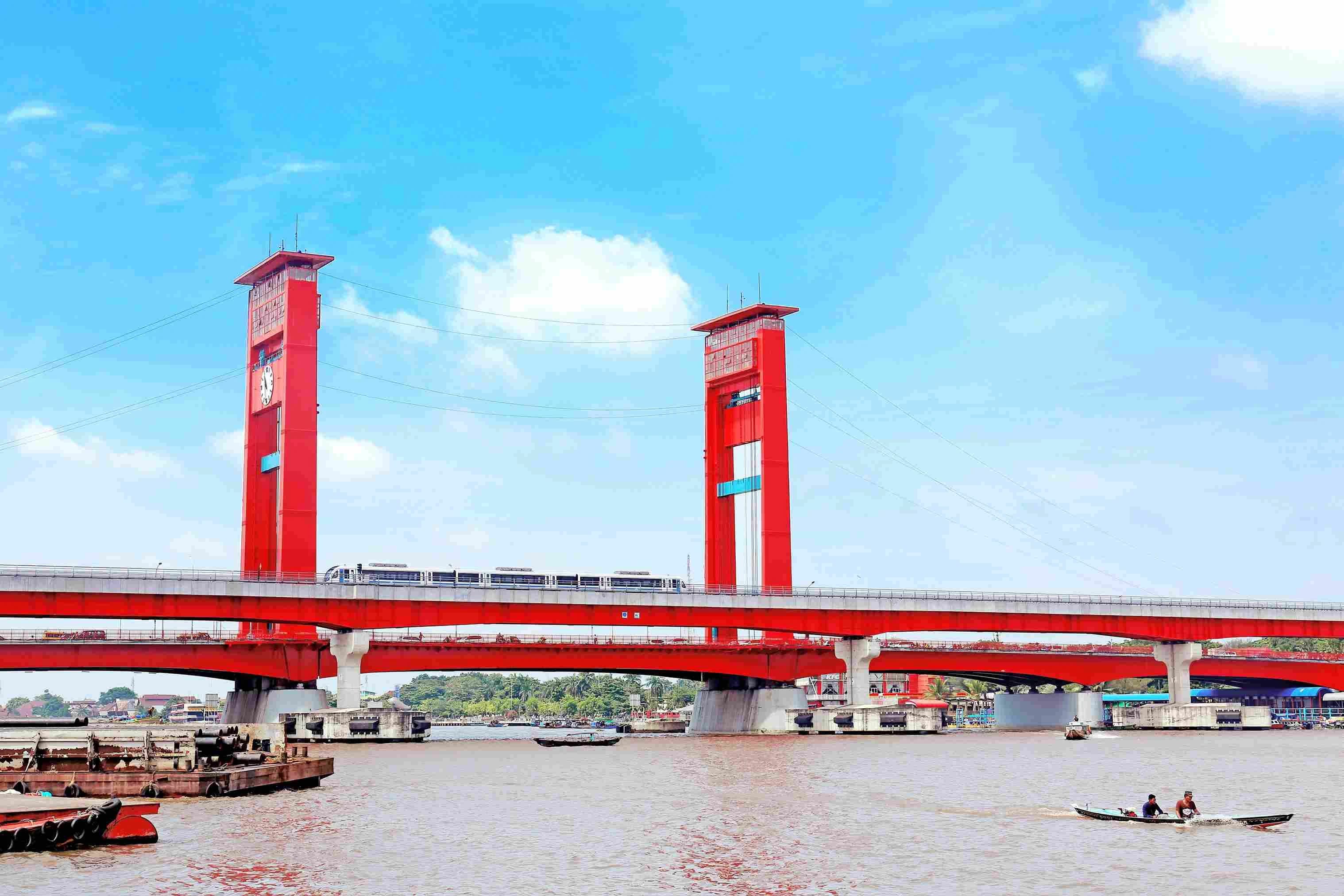
From Historic Tracks to Modern Services: KAI Reinforces the Strategic Role of South Sumatra’s Rail Network
The President’s directive to strengthen national connectivity serves as a vital reminder that rail-based transportation plays a crucial role in expanding public accessibility, streamlining goods distribution, and linking regional growth centers. In South Sumatra, this role has flourished for over a century through a rail network that interconnects Palembang, Prabumulih, Muara Enim, Lahat, Lubuklinggau, and spans forward into Lampung.
KAI’s Vice President of Corporate Communication, Anne Purba, stated that the history of South Sumatra’s railways demonstrates that the tracks were originally established to link urban centers, hinterlands, production zones, and deep-water ports. This foundational role continuously thrives within KAI Group’s modern services today, encompassing passenger rail links, industrial freight logistics, and the South Sumatra LRT, which secures seamless transit access to Sultan Mahmud Badaruddin II International Airport.
The historical timeline of South Sumatra’s rail infrastructure commenced in 1914 under the Dutch colonial administration. The initial network construction was executed by the Zuid-Sumatra Staatsspoorwegen (ZSS), with the explicit objective of linking Panjang Port in Lampung with the interior heartlands of South Sumatra. This was designed to optimize the mobility of agricultural yields, forest products, and rich natural resources, most notably coal.
A pivotal milestone occurred on November 1, 1915, marked by the commissioning of the 78-kilometer Kertapati–Prabumulih corridor. Kertapati Station subsequently evolved into a primary railway hub in Palembang, while Prabumulih became a critical junction bridging the transit lines heading toward Lampung, Muara Enim, Lahat, and Lubuklinggau.
Network expansion progressed steadily to tap into industrial mining fields and core economic hubs across South Sumatra. The Prabumulih–Gunung Megang line entered operations in 1916, which was subsequently extended toward Muara Enim and Tanjung Enim. Following this, downstream corridor development advanced to Lahat, Tebing Tinggi, Muara Saling, and ultimately reached Lubuklinggau by 1933.
Following national independence, the railway network—previously managed by the colonial government—was transitioned to the Indonesian people under the state-run railway agency (Djawatan Kereta Api). Across successive generations, this network has remained a vital artery for public mobility, commodity distribution, and inter-regional connectivity throughout southern Sumatra.
In the modern era, the role of South Sumatra's railways has become increasingly diversified. KAI serves passenger demands through the KA Sindang Marga (Kertapati–Lubuklinggau PP mainline), the KA Bukit Serelo (Kertapati–Lubuklinggau PP economy link), and the KA Rajabasa (Kertapati–Tanjungkarang PP intercity line). From January to May 2026, passenger train services under Regional Division III (Divre III) Palembang carried 500,563 passengers.
Urban transit solutions also form an essential component of South Sumatra's rail connectivity ecosystem. Through the South Sumatra LRT, KAI Group interlinks commuters with various centers of activity in Palembang, including direct access to Sultan Mahmud Badaruddin II International Airport. Throughout January to May 2026, the South Sumatra LRT served 1,815,017 passengers. Consequently, KAI Group’s aggregate rail-based passenger services in South Sumatra reached a total volume of 2,315,580 passengers.
On the logistics front, the railway network maintains a highly strategic role in securing the seamless distribution of primary industrial commodities. From January to May 2026, freight services under Divre III Palembang successfully moved 11.66 million tons of cargo. The commodities transported spanned coal, fuel (BBM), pulp, and other industrial products that anchor the regional economy and manufacturing sectors.
This massive volume of freight logistics underscores the critical importance of railways within southern Sumatra's logistical ecosystem. Characterized by high-volume capacities, strictly planned scheduling, and direct structural connections to production plants and ports, the railway effectively drives down distribution costs per ton. This efficiency empowers business entities to sustain seamless supply chains, strengthen industrial competitiveness, and foster far more stable and controlled consumer commodity prices for the general public.
Anne explained that the core strength of South Sumatra's perkeretaapian lies in its combination of a profound historical legacy, a network interconnected with active economic zones, and a continuously rising demand for public mobility. With its tracks linked directly to downtown districts, energy centers, commercial ports, and airport terminals, the railway possesses immense potential to bolster public mobility while maximizing freight distribution efficiency across southern Sumatra.
"The rail network in South Sumatra has a long-standing history as a vital conduit for the community and the regional economy. Backed by massive carrying capacities and direct structural links to production hubs, the railway drives higher logistical efficiency, safeguards supply chains, and supports price stability for essential goods,"
Moving forward, KAI Group will continuously reinforce the role of South Sumatra's railway network in strict alignment with the strategic direction of national connectivity development.
"With a powerful historical foundation and a steadily growing demand for mobility, the tracks in South Sumatra remain an indispensable asset in bridging communities, industrial zones, public service centers, and major transport hubs,"
VP of Corporate Communication KAI