
KAI Strengthens Mobility Across Metropolitan Areas Nationwide
PT Kereta Api Indonesia (Persero) continues to strengthen its railway services to support community mobility across various metropolitan areas throughout Indonesia. Rail transportation helps connect major cities with surrounding regions, residential areas, educational institutions, commercial centers, industrial zones, tourist destinations, and airports.
Metropolitan areas are formed when multiple cities and regencies share strong economic and social interactions. People may live in one area, work or study in another, and commute back home on the same day. Within this travel pattern, railways play an important role by providing scheduled, affordable, and high-capacity transportation capable of accommodating large volumes of intercity travel.
KAI Vice President of Corporate Communication Anne Purba stated that the development of railway services in each region is designed to reflect the unique travel patterns and mobility needs of local communities.
“Administrative boundaries are no longer the limits of people’s daily activities. Travel for work, education, commerce, tourism, and access to public services increasingly extends across cities and regencies. KAI provides services that are tailored to the mobility needs of each region,” said Anne.
In West Java, the Bandung Raya Commuter Line has become one of the primary drivers of mobility within the Greater Bandung metropolitan area and its surrounding regions. During the first half of 2026, KAI Commuter services in the Bandung area served 10,106,912 customers, an increase of 9.17 percent compared with 9,258,327 customers during the same period in 2025.
Passenger numbers in the Bandung area have continued to grow over the past three years. Ridership reached 14,720,252 customers in 2023, increased to 16,159,458 in 2024, and climbed further to 18,727,224 in 2025. This represents a 27.22 percent increase in 2025 compared with 2023.
The Bandung network connects the city’s activity centers with Cimahi, Padalarang, Cicalengka, Rancaekek, and several areas across Bandung Regency, West Bandung Regency, Purwakarta, and Garut. This connectivity supports daily travel for workers, students, traders, and tourists throughout the Greater Bandung area.
In the Yogyakarta–Solo metropolitan corridor, the Yogyakarta–Palur Commuter Line served 4,719,593 customers during the first half of 2026, up 6.93 percent from 4,413,690 customers in the same period last year. The service connects Yogyakarta, Klaten, Solo, and Palur—areas that share strong linkages in education, employment, commerce, and tourism.
Mobility on the western side of Yogyakarta is supported by the Prameks Commuter Line operating between Yogyakarta and Kutoarjo. Throughout the first half of 2026, the service carried 582,541 customers, an increase of 6.41 percent compared with 547,449 customers in the first half of 2025.
Combined, the Yogyakarta–Palur Commuter Line and Prameks served 5,302,134 customers during the first half of 2026, representing a 6.87 percent increase from 4,961,139 customers in the same period of 2025. Together, the two services create a continuous rail network stretching from Kutoarjo in the west to Palur in the east, with Yogyakarta and Solo serving as the region’s primary activity centers.
Connectivity across the Greater Solo area is further strengthened through the Adi Soemarmo International Airport Rail Link (BIAS). During the first half of 2026, the service carried 461,482 customers, an increase of 24.73 percent compared with 369,996 customers in the first half of 2025.
The BIAS Airport Rail Link connects the Greater Solo region with Adi Soemarmo International Airport and several activity centers along the route. The service provides convenient airport access while complementing the rail-based transportation network across the Yogyakarta–Solo metropolitan area.
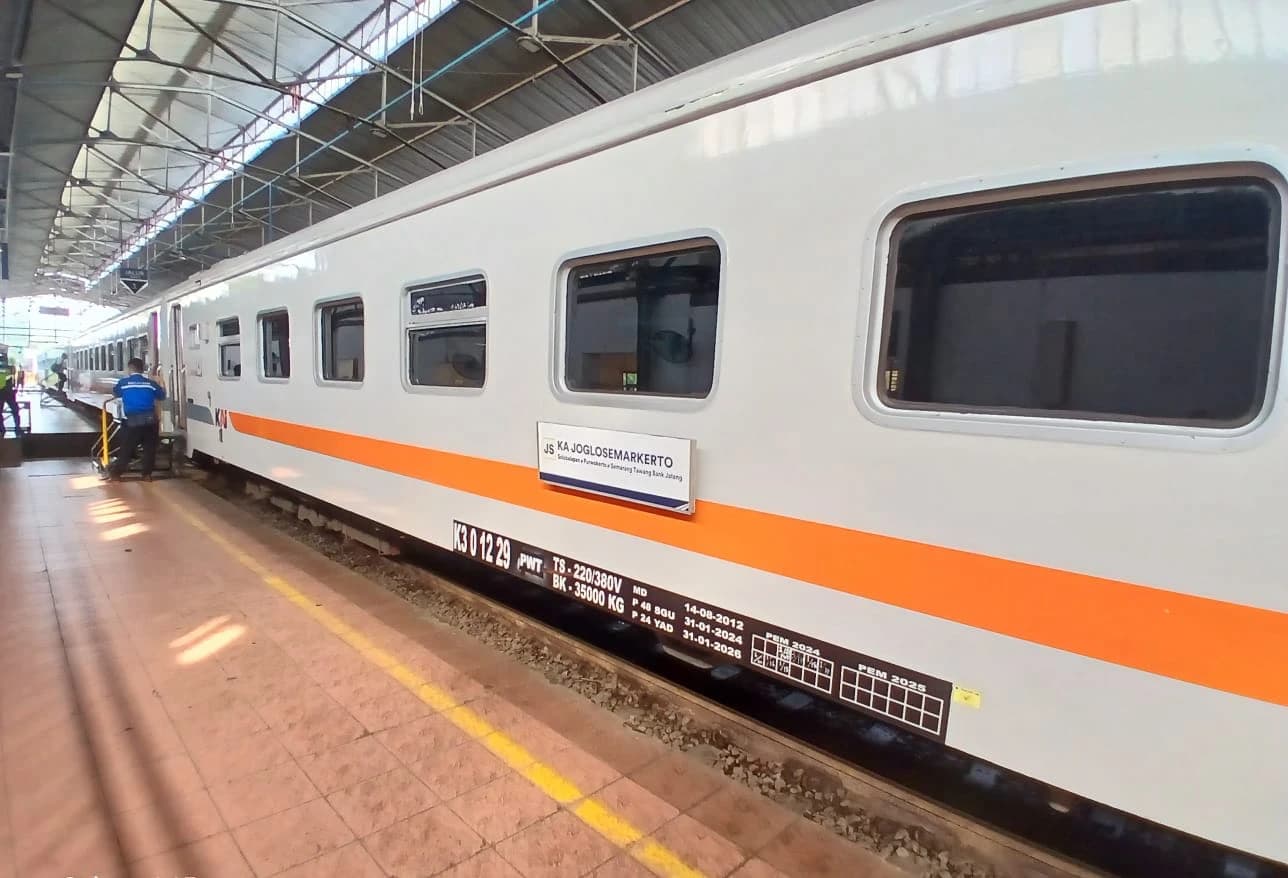
To further expand connectivity among major activity centers in Central Java and Yogyakarta, KAI also operates the Joglosemarkerto Train. The service links major cities including Semarang, Solo, Yogyakarta, Purwokerto, Tegal, Pekalongan, and surrounding areas.
During the first half of 2026, the Joglosemarkerto Train served 730,576 customers, an increase of 10.29 percent compared with 662,409 customers during the same period last year. The service plays an important role as a regional railway connecting multiple urban areas and economic centers across Central Java and Yogyakarta.
In East Java, the KAI Commuter network served 8,528,571 customers during the first half of 2026, an increase of 8.23 percent from 7,879,862 customers in the first half of 2025. Ridership in the region also continued to rise from 13,360,638 customers in 2023 to 14,731,053 in 2024, before reaching 16,016,534 in 2025.
The network includes the Dhoho, Penataran, Supas, Jenggala, Blorasura, and Tumapel Commuter Lines. These services connect Surabaya with Sidoarjo, Gresik, Lamongan, Mojokerto, Jombang, Malang, Blitar, and numerous other destinations throughout East Java.
“The railway network in East Java demonstrates that people’s travel demand is not concentrated in a single city. Rail services connect government centers, educational institutions, industrial zones, commercial areas, and tourism destinations spread across multiple cities and regencies,” Anne explained.
In Banten, the Merak Commuter Line supports travel along the Rangkasbitung–Serang–Cilegon–Merak corridor. During the first half of 2026, the regular service carried 2,414,115 customers, an increase of 9.40 percent compared with 2,206,671 customers during the first half of 2025.
The route connects residential areas with government centers, industrial estates, commercial districts, and Merak Port. KAI Commuter also operates the Farmers and Traders Train on the Rangkasbitung–Merak route, which served 26,074 customers during the first half of 2026.
Within the Greater Jakarta metropolitan area, the Commuter Line served 176,575,981 customers throughout the first half of 2026. The network connects Jakarta with Bogor, Depok, Bekasi, Tangerang, Rangkasbitung, and other surrounding cities through an integrated commuter rail system.
Access to Soekarno-Hatta International Airport is further supported by the Soekarno-Hatta Airport Commuter Line (Basoetta). During the first half of 2026, the service carried 1,197,413 customers, up 12.71 percent from 1,062,415 customers during the same period in 2025.
In West Sumatra, the Minangkabau Express connects Padang City with Minangkabau International Airport in Padang Pariaman Regency. The service supports airport travel while connecting various activity centers in Padang and surrounding areas.
Rail connectivity in West Sumatra has also been expanded through the Lembah Anai Train. During the first half of 2026, the service carried 162,428 customers—more than three times higher than the 51,035 customers served during the first half of 2025. Together, the Minangkabau Express and Lembah Anai services complement each other in expanding rail-based transportation access throughout Padang and Padang Pariaman.
KAI also operates local and regional train services in various other regions, including the Pangrango Train connecting Bogor and Sukabumi, the Siliwangi Train serving the Sukabumi–Cianjur–Cipatat corridor, the Cut Meutia Train in Aceh, the Srilelawangsa and Datuk Belambangan Trains in North Sumatra, as well as the Kuala Stabas and Rajabasa Trains in southern Sumatra.
Each service serves a different purpose based on the characteristics of its region. Some support commuter travel within metropolitan areas, others connect cities with airports, while the remaining services expand connectivity between regencies and regional economic centers.
Anne explained that KAI will continue strengthening its services through continuous evaluations of operating patterns, train capacity, service schedules, station facilities, and integration with other modes of transportation. These improvements are implemented while considering customer needs, operational safety, infrastructure readiness, and long-term sustainability.
“Railways help bring major cities closer to their surrounding regions. Stronger connectivity provides broader opportunities for communities to work, study, conduct business, travel, and access public services across different parts of Indonesia,” Anne concluded.
VP Corporate Communication KAI