
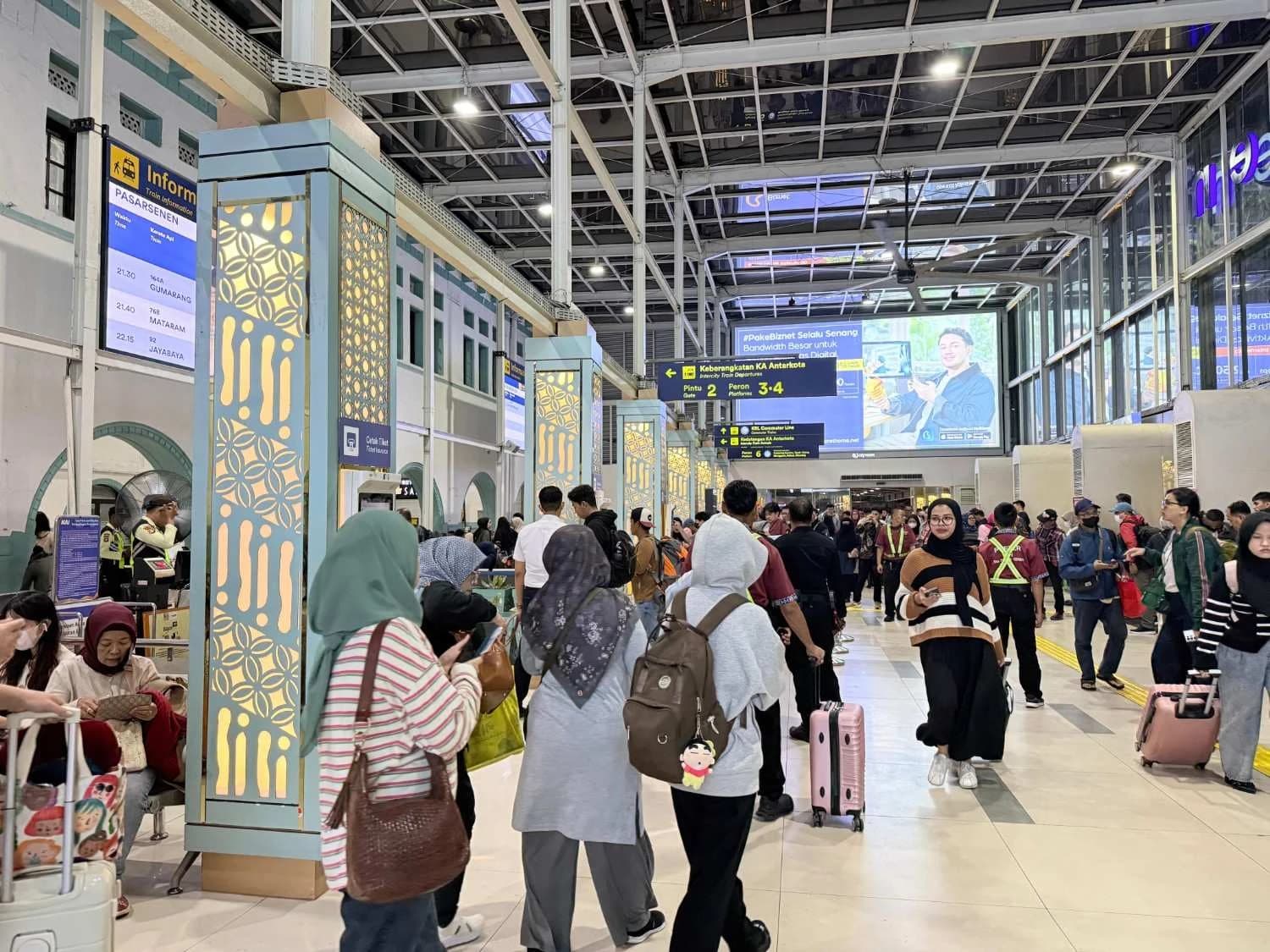
KAI Serves 1.30 Million Commercial Economy Class Passengers with 30% Discount Fares During the 2026 School Holiday VP Corporate Communication Anne Purba
PT Kereta Api Indonesia (Persero) recorded that 1,303,191 Commercial Economy Class passengers took advantage of the government's 30% discounted fare during the 2026 school holiday period from 20 June to 5 July 2026.
During the school holiday period, KAI served a total of 3,451,031 passengers. Of this number, passengers using the 30% discounted Commercial Economy Class fare accounted for 37.8%, while the remaining 2,147,840 passengers traveled using other fare categories.
Vice President Corporate Communication KAI, Anne Purba, said this achievement shows that rail transport has become one of the preferred travel options during the school holiday. Customers used train services for vacations, returning to their hometowns, visiting family, as well as meeting intercity and agglomeration mobility needs.
"We would like to thank all customers who chose to travel by train during the school holiday. The high level of customer interest serves as a reminder that our services must continue to become more accessible, more comfortable, and better able to meet the public's travel needs," said Anne.
Compared with the 2025 school holiday period, the number of passengers utilizing the 30% discount increased from 1,173,612 passengers to 1,303,191 passengers. Overall, the total number of passengers served by KAI also increased from 3,326,281 passengers to 3,451,031 passengers.
KAI recorded that the highest number of passengers using the discounted fare occurred on 5 July 2026, with 94,977 passengers. On the same date, KAI served a total of 254,939 passengers, marking the highest daily passenger volume during the school holiday period.
In terms of departure stations, the highest volume of discounted-fare passengers was recorded at Pasar Senen Station with 136,136 passengers, followed by Yogyakarta Station with 87,836 passengers, Semarang Poncol Station with 69,952 passengers, Semarang Tawang Station with 64,451 passengers, and Surabaya Pasarturi Station with 51,887 passengers.
Meanwhile, the destination stations with the highest volume of discounted-fare passengers were Pasar Senen Station with 127,571 passengers, Yogyakarta Station with 89,801 passengers, Semarang Poncol Station with 67,181 passengers, Semarang Tawang Station with 63,695 passengers, and Surabaya Pasarturi Station with 54,567 passengers.
The most popular routes among passengers using the discounted fare during the school holiday were Lempuyangan–Pasar Senen with 17,726 passengers, followed by Pasar Senen–Lempuyangan with 16,913 passengers, Surabaya Gubeng–Yogyakarta with 16,029 passengers, Solo Balapan–Semarang Tawang with 15,398 passengers, and Semarang Tawang–Solo Balapan with 15,383 passengers.
The trains with the highest number of discounted-fare passengers were Joglosemarkerto Train with 67,556 passengers, Ambarawa Ekspres Train with 67,298 passengers, Kaligung Train with 55,256 passengers, Pangrango Train with 49,085 passengers, and Kamandaka Train with 48,921 passengers.
Anne stated that travel data during the school holiday serves as an evaluation tool for KAI to better understand customer travel patterns and needs. KAI will continue improving its services, including rolling stock readiness, cleanliness, travel information, digital accessibility, and customer complaint handling.
"KAI listens to every customer input. Customer complaints, suggestions, and travel experiences are valuable references for continuously improving our services. We will continue making improvements so that customers feel safer, more comfortable, and better supported from the moment they plan their journey until they reach their destination," said Anne.
KAI also expressed its appreciation to customers who provided feedback through official customer service channels and station personnel. According to Anne, two-way communication with customers plays an important role in maintaining service quality, especially during peak travel periods such as the school holiday.
"We want customers to experience train travel that is increasingly well-organized, informative, and enjoyable. The trust of our customers motivates KAI to continue improving and delivering services that better meet the needs of the public," Anne concluded.
VP Corporate Communication KAI