
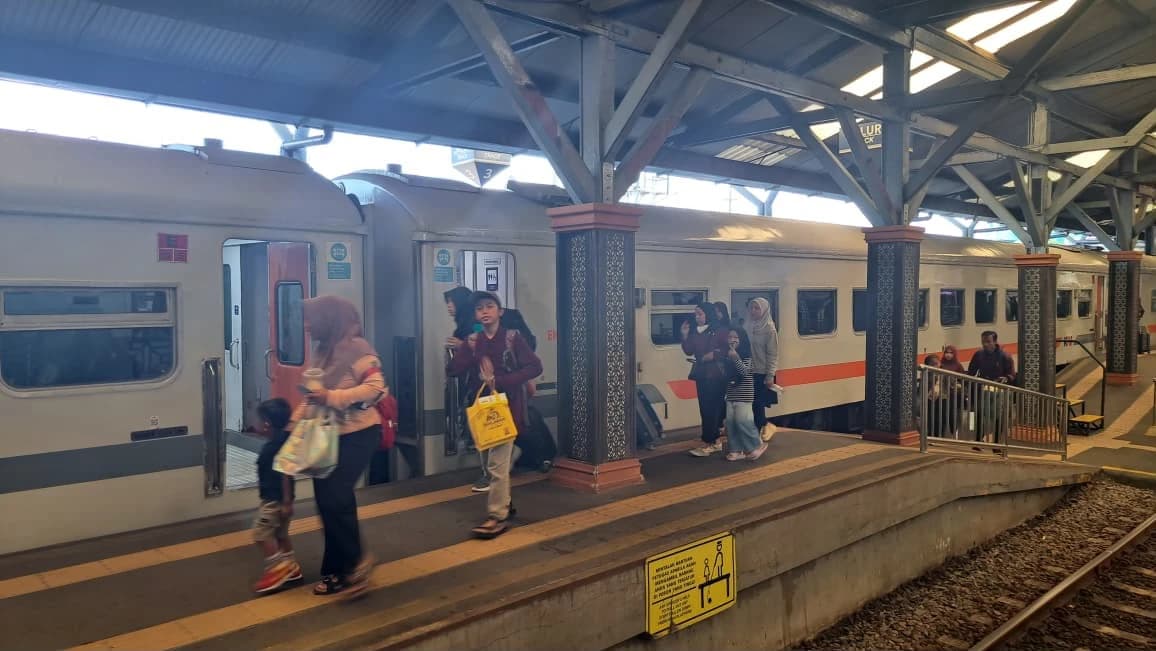
KAI Serves 10 Million Commuter Line Passengers in Area VIII Surabaya through July 2026
As the weekend approaches, local trains have become one of the preferred transportation options for people in East Java traveling between cities, visiting family, exploring local cuisine, and enjoying tourist destinations. The Commuter Line Area VIII Surabaya network connects Surabaya with several cities through scheduled daily services.
PT Kereta Api Indonesia (Persero) recorded that Commuter Line Area VIII Surabaya, operated by KAI Commuter, served 10,009,552 passengers from January to July 2026. This figure represents an 8.15 percent increase compared with the same period in 2025, when the service recorded 9,255,362 passengers, or an additional 754,190 passengers.
The growth is also reflected in the annual figures. In 2023, the service recorded 13,360,638 passengers, which increased by 10.26 percent to 14,731,053 passengers in 2024. In 2025, the number increased again by 8.73 percent to 16,016,534 passengers.
Over the two-year period, the number of passengers increased by approximately 2.66 million, or 19.88 percent compared with 2023. This growth highlights the increasing demand for intercity travel in East Java, where cities are closely connected through employment, education, trade, family activities, and tourism.
KAI Vice President of Corporate Communication Anne Purba said local train services play an important role in people's daily activities.
“During the first seven months of 2026, more than 10 million passengers have used the Commuter Line Area VIII Surabaya. Behind this figure are people commuting to work, pursuing their education, running businesses, visiting family, and traveling to enjoy their weekends. The railway network is making it easier for people to access different cities,” said Anne.
Currently, the Commuter Line Area VIII Surabaya network operates 50 trips daily, consisting of Commuter Line Dhoho, Penataran, Jenggala, Arjonegoro, Supas, and Blorasura. The network connects Surabaya with Sidoarjo, Mojokerto, Jombang, Kediri, Tulungagung, Blitar, Malang, Pasuruan, Probolinggo, Lamongan, Bojonegoro, and Cepu.
Commuter Line Dhoho connects Surabaya with Kertosono, Kediri, Tulungagung, and Blitar. This route provides convenient travel options to Kediri, known for its urban attractions and culinary offerings, as well as Blitar, which is home to several historical destinations, including the Bung Karno Memorial Complex.
Meanwhile, Commuter Line Penataran connects Surabaya with Malang and Blitar. Malang is one of the popular weekend destinations, offering a wide range of urban attractions, culinary experiences, the historic Kayutangan area, and access to various destinations across the Greater Malang region.
Commuter Line Jenggala, on the other hand, serves the Surabaya–Sidoarjo–Mojokerto route. Mojokerto serves as one of the gateways to the archaeological remains of the Majapahit Kingdom in Trowulan, while Sidoarjo offers a variety of culinary destinations and economic activities that are closely connected to Surabaya.
Along the northern route, Commuter Line Arjonegoro connects Sidoarjo and Surabaya with Lamongan and Bojonegoro. In addition to supporting daily commuting and other activities, this route provides access to a variety of culinary, cultural, and local tourism destinations along East Java's northern coastal corridor.
To the east, Commuter Line Supas connects Surabaya with Pasuruan and Probolinggo. Probolinggo is widely known as one of the gateways to the Bromo area, while Pasuruan offers a variety of natural, cultural, and culinary attractions.
Meanwhile, Commuter Line Blorasura connects Surabaya Pasar Turi with Lamongan, Bojonegoro, and Cepu. The service extends connectivity from Surabaya's main activity centers to western East Java and onward to the border area of Central Java.
Surabaya itself remains one of the key destinations for passengers traveling from these cities. From stations located in the city center, passengers can continue their journeys to Tunjungan, Peneleh, Surabaya's Old Town, museums, culinary destinations, and various public spaces.
According to Anne, these travel patterns demonstrate how the local railway network helps bring communities and activities across regions closer together. Journeys that were once considered intercity trips can now become part of people's daily routines, as well as an option for spending quality time with family on weekends.
“Each route serves different communities and reflects different travel needs. Some passengers commute to work, students return to their hometowns, families visit one another, while others simply want to explore another city over the weekend. We want railway services to remain a transportation option that is closely connected to people's everyday lives,” Anne concluded.
VP Corporate Communication KAI