
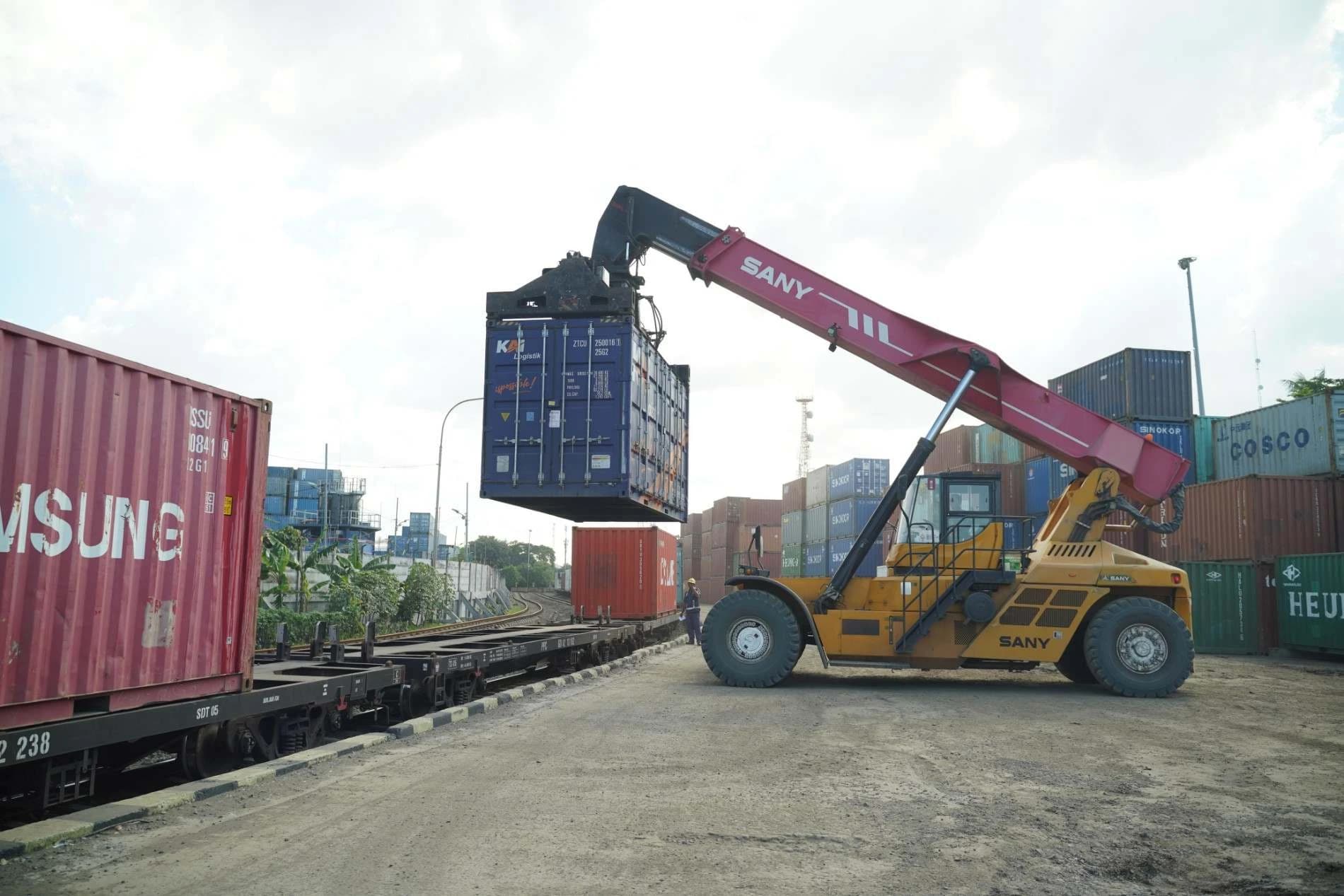
KAI Studies KITB Batang Connectivity to Main Port, Strengthens National Logistics Infrastructure
PT Kereta Api Indonesia (Persero) is studying the strengthening of freight transportation connectivity to and from the Batang Integrated Industrial Estate (KITB)/Industropolis Batang as part of the development of an increasingly integrated logistics ecosystem on the island of Java.
The discussion on connectivity development involves PT Kereta Api Indonesia (Persero), PT Pelabuhan Indonesia (Persero), PT Sarana Pembangunan Jawa Tengah (Perseroda) or SPJT, Batang Regency Regional Public Company Aneka Usaha or Perumda Aneka Usaha Batang, as well as PT Kawasan Industri Terpadu Batang or KITB/Industropolis Batang. The study focuses on connecting the industrial estate with dry ports, seaports, railway networks, warehouses, trucking services, as well as main ports.
KAI Vice President of Corporate Communication Anne Purba said that logistics infrastructure plays a strategic role in determining the smooth flow of goods from industrial estates to domestic and international markets.
“Industrial estates need a logistics network that can efficiently connect production centers with distribution centers and ports. KAI sees significant room for trains to strengthen this network, particularly for the movement of goods in large volumes and over increasingly longer distances,” said Anne.
This role is supported by the scale of KAI’s freight transportation services. From January to July 2026, KAI transported 38,648,919 tons of goods. Of this amount, 31,661,769 tons consisted of coal, while 6,987,150 tons came from non-coal commodities such as containers, cement, fuel, plantation commodities, retail goods, and other commodities.
According to Anne, experience in managing the movement of goods in large volumes is an important asset in assessing the potential of new industrial estates. The growth of production activities at KITB could generate new freight flows if they are connected to terminals, ports, and distribution networks that are suited to the characteristics of each commodity.
In the initial discussion, connectivity to Tanjung Priok in Jakarta, Tanjung Perak/Kalimas in Surabaya, as well as Patimban are among the routes to be studied further. Tanjung Priok can strengthen access for goods from KITB to international trade networks, while connectivity to Tanjung Perak/Kalimas can provide access to distribution and shipping networks through the eastern part of Java. Patimban is also included as an alternative network to be analyzed based on the origins and destinations as well as the needs of KITB tenants.
The utilization of trains will be determined based on distance, volume, type of commodity, shipping frequency, travel time, handling processes, as well as the overall efficiency of the logistics chain. Routes with distances of approximately 150–200 kilometers and above are among the ranges to be studied further. Meanwhile, for relatively closer destinations such as Semarang/Tanjung Emas, transportation modes need to be compared to determine the most effective distribution scheme.
This development is in line with the Industropolis Batang logistics ecosystem plan, which includes a seaport, dry port, warehouse, container yard, truck parking bay, as well as other supporting facilities. The seaport in the area began operating in 2025, while under the initial development roadmap, the dry port is planned to gradually enter the operational stage in 2028.
KAI also considers that the integration of trains with the dry port needs to take into account technical conditions in the field, including the elevation difference between the railway network and the planned dry port area. The study will examine various connectivity alternatives, both through rail access and other intermodal schemes, so that the infrastructure configuration can adapt to operational requirements and growing freight volumes.
The next discussion will also involve KAI Logistik to strengthen demand mapping, cargo consolidation, terminal handling, first mile–last mile, as well as end-to-end logistics services. Data and studies from KAI, Pelindo, SPJT, Perumda Aneka Usaha Batang, KITB, and related parties will subsequently be integrated to determine the most feasible connectivity model.
“When industrial estates, railway networks, dry ports, and seaports are connected within a single system, the scope of goods distribution becomes increasingly broader. KAI is ready to provide railway capabilities to support the establishment of a stronger and more competitive logistics network,” concluded Anne.
VP Corporate Communication KAI