
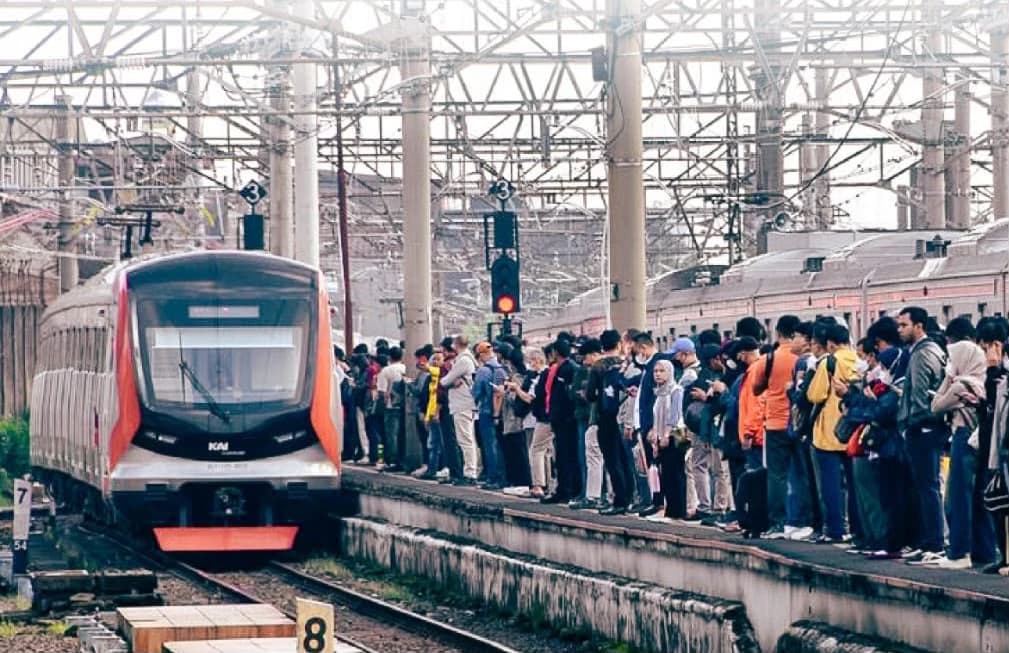
KAI Keeps Mobility Affordable, Public Transportation Helps People Manage Travel Costs
PT Kereta Api Indonesia (Persero) continues to strengthen the role of public transportation in helping people manage their daily mobility costs. Through intercity, local, and urban railway services with a diverse fare structure, the KAI Group provides travel options that can be adjusted to travel distances, needs, and the mobility patterns of the community.
KAI Vice President of Corporate Communication Anne Purba said transportation costs are one of the expenses associated with people's activities, including working, studying, trading, accessing public services, and maintaining connections between regions. Therefore, the affordability of public transportation has an economic dimension that directly affects people's daily lives.
“When people have access to mass transportation at affordable fares, travel costs become easier to plan. Public transportation gives people the option to manage their mobility expenses while staying connected to employment, education, trade centers, and various other activities,” said Anne.
On the Jabodetabek Commuter Line, the distance-based fare structure allows people to travel by mass transportation at relatively affordable costs. The applicable fare is IDR 3,000 for the first 25 kilometers, with an additional IDR 1,000 for every subsequent 10 kilometers. This scheme provides access for people from various surrounding areas to activity centers across Jabodetabek through rail-based mass transportation.
Affordable travel options are also available on the Jabodebek LRT. Fares start from IDR 5,000 based on travel distance. On weekdays during peak hours, the maximum fare is IDR 20,000, while during off-peak hours, Saturdays, Sundays, and national holidays, the maximum fare is IDR 10,000. This fare structure based on distance and travel time gives people the flexibility to adjust their journeys according to their needs and activity patterns.
Beyond urban services, the Government, through the Public Service Obligation (PSO) scheme, also maintains the affordability of economy-class railway services. PSO is a public service obligation that enables people to access services at fares determined by the Government. The current PSO economy-class railway fare policy refers to Minister of Transportation Decree No. KM 165 of 2024 concerning Passenger Railway Transportation Fares for Implementing Public Service Obligations.
Anne explained that the scheme is important because people's mobility needs have different characteristics. Daily travel within agglomeration areas requires efficient fares for repeated use, while intercity and local journeys require fare options that can accommodate people with varying levels of economic capacity.
KAI also provides reduced fares for customer groups that meet the applicable requirements, including senior citizens and other groups in accordance with prevailing policies. From January to July 2026, a total of 1,267,255 customers used reduced fares. During the same period, 3,080,830 customers used special fares, while 138,897 customers benefited from discounted fares and other promotional offers. These figures demonstrate the public's growing need for more diverse travel pricing options.
Special fares serve a different function from PSO and reduced fares. KAI utilizes available seats that remain on certain routes to offer special fares. Through this approach, customers receive alternative pricing options for selected journeys while also increasing the utilization of available seating capacity. From January to July 2026, customers using special fares contributed approximately 9% of KAI's Long-Distance and Local Train customer volume.
In addition, KAI periodically offers discount programs during certain occasions. From January to July 2026, the total value of fare discount programs reached approximately IDR 242.96 billion, consisting of IDR 55.3 billion in January, IDR 96.7 billion in March, and IDR 90.96 billion in June–July. These programs serve as an instrument to expand opportunities for people to travel while optimizing capacity during available periods and services.
“Fare options are important because every customer has different travel needs and spending capabilities. Some people use trains every day to commute to work, some travel between cities, while others require reduced fares. The more options available, the more room people have to manage their mobility costs,” said Anne.
This affordability goes hand in hand with increased use of railway services. From January to July 2026, KAI's Long-Distance and Local Trains served 35,257,646 customers, an increase of 7.63% compared with 32,758,315 customers during the same period the previous year. Across the KAI Group, the number of customers reached 307,860,743, an increase of 8.32% compared with the January–July 2025 period.
Anne added that public transportation has a broader economic role than simply the cost of a single ticket. People's ability to reach workplaces, schools, trade centers, healthcare facilities, and various activity centers at predictable costs also determines the extent of economic opportunities they can access.
“Affordable public transportation gives people greater room to manage their travel expenses. KAI will continue to strengthen its services so that more people have access to efficient, measurable, and needs-based mobility options,” Anne concluded.
VP Corporate Communication KAI