
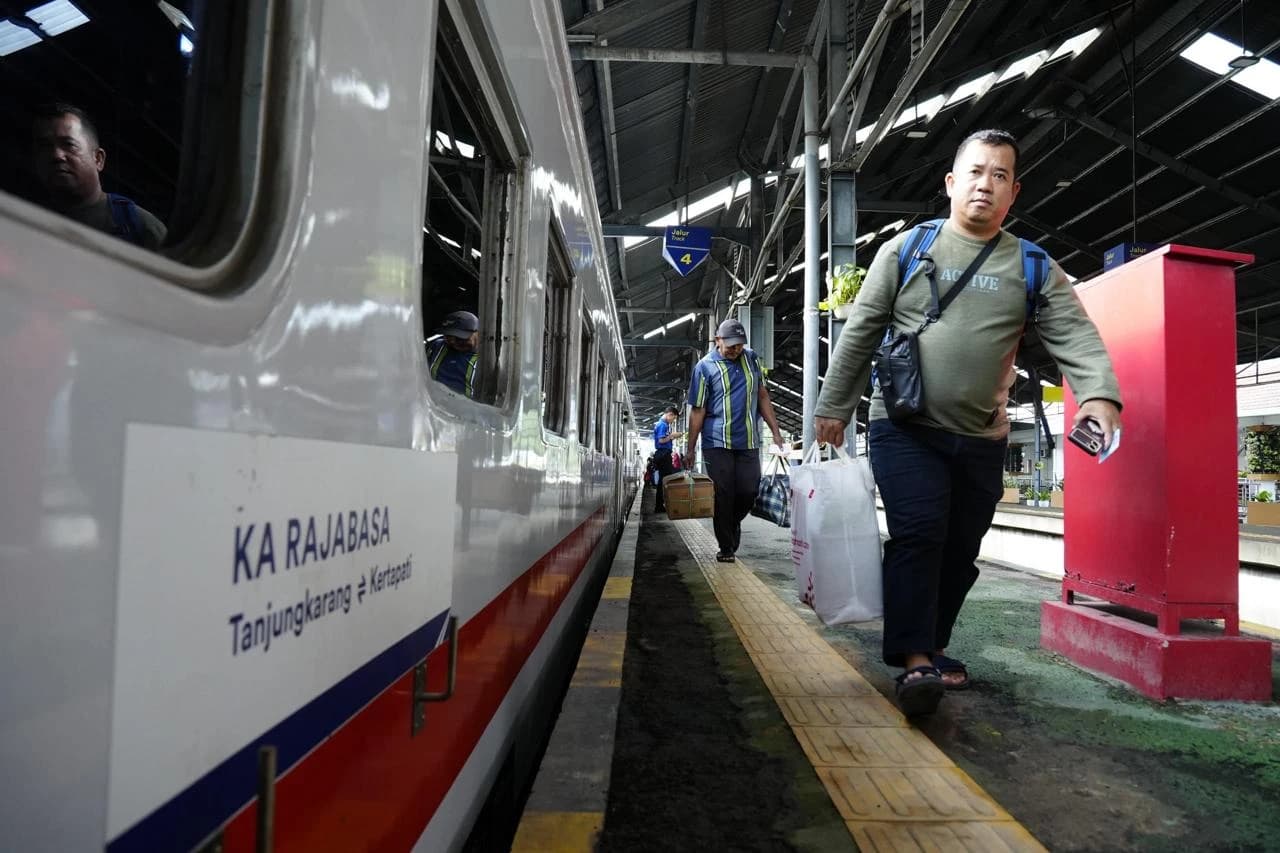
KAI Group Prepares an Integrated Railway Solution as INKA Integration Creates Opportunities to Strengthen the National Rail Industry
PT Kereta Api Indonesia (Persero) (KAI) has begun mapping the capabilities across the KAI Group ecosystem as the foundation for developing integrated railway solutions for railway operators, regional governments, industrial estates, and transportation companies. This strategic direction has gained momentum with the commencement of the integration process between KAI and PT Industri Kereta Api (Persero) (INKA).
The integration process officially began with the KAI–INKA Integration Kick-Off held at the Jakarta Railway Center Ballroom, Jakarta, on Tuesday (July 21, 2026). The event was attended by representatives of Danantara Asset Management, the Boards of Directors of KAI and INKA, the Project Management Office (PMO), consultants, and senior executives from both companies.
KAI Vice President of Corporate Communication Anne Purba stated that the integration process creates opportunities to combine KAI Group's extensive operational and service experience with INKA's expertise in railway vehicle design, engineering, manufacturing, and rolling stock development.
"The integration is still in its early stages and will be carried out progressively through comprehensive assessments, governance alignment, and capability mapping across both companies. Safety, reliability, product quality, and customer needs will remain our primary priorities throughout the process," Anne said.
KAI Group's operational expertise has been built through its extensive scale of services. During the first semester of 2026, KAI Group served 258,993,359 passengers, an increase of 7.55 percent compared to 240,805,920 passengers during the same period in 2025. Over the same period, KAI transported 32,498,043 tons of freight.
These operations are supported by 627 railway stations and an active rail network spanning 7,765 kilometers of track across Java and Sumatra. As of June 2026, KAI also managed 12,856 railway assets, consisting of 551 locomotives, 1,064 Electric Multiple Unit (EMU) trainsets, 2,238 passenger coaches, 8,907 freight wagons, and 96 Diesel Electric Multiple Units (DEMUs) and Indonesian Diesel Rail Cars (KRDI).
According to Anne, operating at this scale has enabled KAI Group to build extensive expertise covering timetable planning, rolling stock maintenance, spare parts management, safety management, workforce competency development, customer service, and the implementation of digital systems.
"Each type of rolling stock has different technologies, operational characteristics, maintenance requirements, and service life cycles. Managing this diverse fleet has provided valuable operational knowledge that can be developed into a more integrated national railway capability," Anne explained.
KAI Group's business activities are currently supported by six subsidiaries and several affiliated companies, each contributing specialized expertise that complements the overall railway value chain.
KAI Bandara, for example, has developed its Maintenance, Operation, Spare Parts and Services (MOSS) business, covering rolling stock maintenance, railway operations, spare parts supply, technical training, signaling systems, and the Airport Railway Ticketing System (ARTS).
In railway infrastructure, KAI Properti provides construction services, railway track and bridge maintenance, and trading activities. KAI Services manages onboard services, security, parking operations, cleaning services, workforce solutions, restaurants, catering, and facility management.
Meanwhile, KAI Logistik offers integrated multimodal logistics services supported by end-to-end rail-based distribution. KAI Commuter contributes extensive experience in urban and regional railway operations, while KAI Wisata develops rail-based tourism, MICE services, and heritage destination management.
Anne explained that these capabilities are currently distributed across different business entities according to their respective areas of expertise. A comprehensive capability mapping process is therefore required to establish standardized service offerings, define business scopes, strengthen competencies, allocate resources, address legal considerations, manage risks, and develop governance models before expanding these capabilities into business-to-business (B2B) solutions.
"The development process must be undertaken carefully. Every service must be supported by clear standards, adequate competencies, measurable responsibilities, and governance that complies with applicable regulations," Anne emphasized.
The integration with INKA provides an opportunity to strengthen these capabilities through manufacturing expertise. Operational experience gathered from railway services can provide valuable input for vehicle design, technical specifications, production planning, testing, commissioning, maintenance strategies, and spare parts availability.
During the integration kick-off, KAI presented its preliminary projection indicating a requirement of approximately 156 Electric Multiple Unit (EMU) trainsets by 2040. This estimate does not yet include future demand for diesel railcars, long-distance passenger rolling stock, locomotives, or freight rolling stock.
Anne emphasized that the figure remains an initial projection. Future procurement decisions will continue to depend on operational requirements, financing availability, shareholder policies, Government regulations, and manufacturing readiness.
"These projections illustrate the long-term opportunities for developing Indonesia's railway industry. Meeting future demand will require careful alignment between operators' operational needs, manufacturers' production capabilities, technological readiness, product quality, and long-term maintenance support," Anne said.
Closer integration between railway operations and manufacturing is also expected to accelerate the transfer of operational feedback from the field to manufacturers. Information regarding rolling stock performance, operating patterns, customer needs, maintenance efficiency, component consumption, and geographical conditions can all contribute to the development of future railway products.
In the longer term, these integrated capabilities could evolve into comprehensive railway solutions for transportation operators and industrial zones requiring services such as railway operations, rolling stock maintenance, signaling systems, technical training, ticketing systems, infrastructure construction, railway track and bridge maintenance, facility management, security, cleaning services, and multimodal logistics.
Strengthening this integrated value chain also has the potential to support greater product standardization, improve spare parts availability, enhance workforce competencies, increase the participation of domestic suppliers, and optimize life-cycle cost management for railway assets.
"KAI views this integration process as an opportunity to build a more connected national railway ecosystem. We will continue to develop these capabilities progressively to strengthen Indonesia's railway industry while maintaining safe, reliable, comfortable, and sustainable services for the public," Anne concluded.
VP Corporate Communication KAI