
Driving Low-Emission Transit: KAI Group Reinforces Modern Urban Mobility via Electric-Based Services
Urban mobility continues to rise alongside the growing density of community activities in metropolitan areas. Commutes to workplaces, schools, business districts, educational zones, airports, and public spaces demand a mode of transportation that is high-capacity, strictly scheduled, and environmentally friendly.
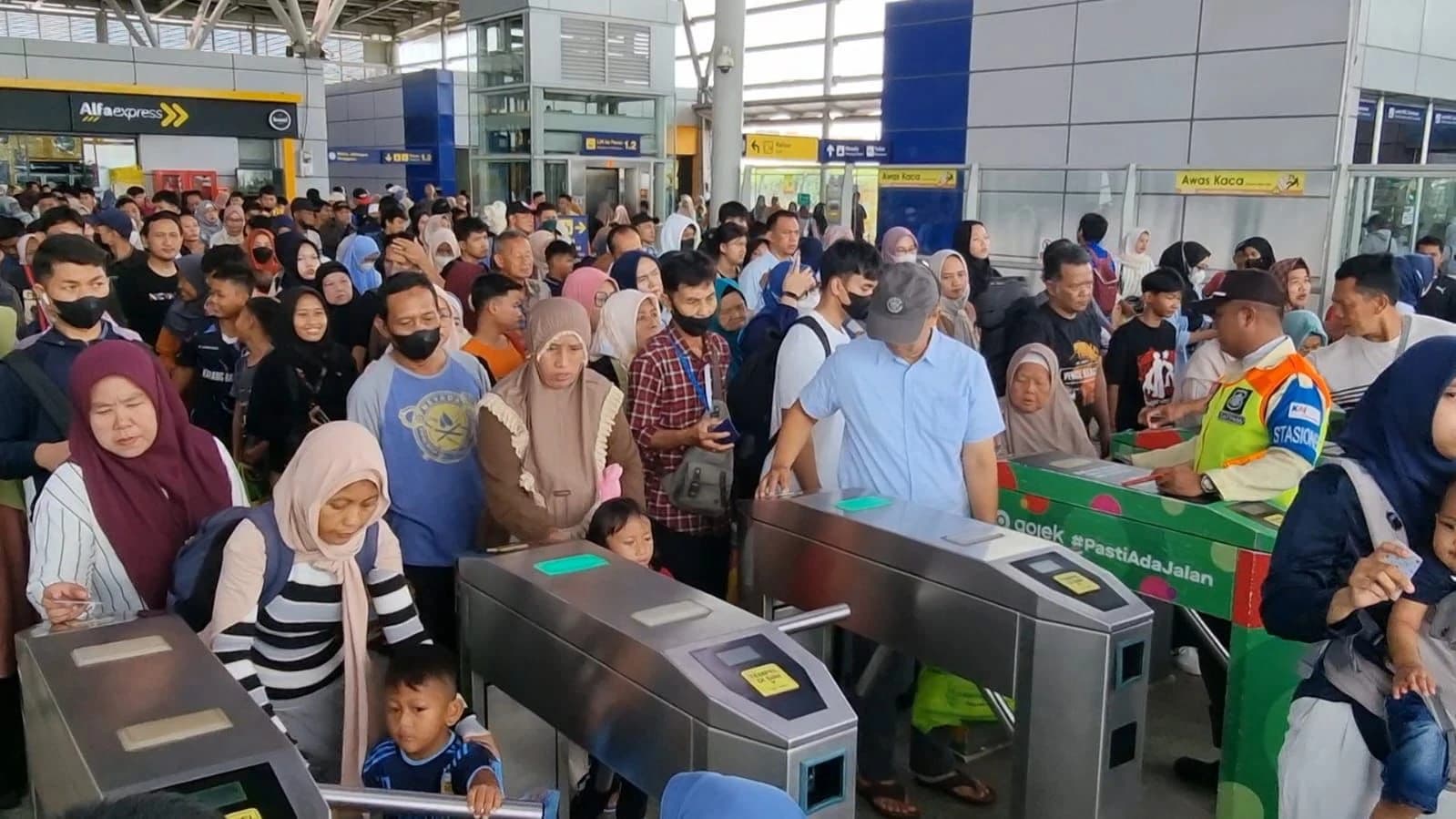
In this context, KAI Group’s electric-based urban rail services have become an essential pillar of modern urban mobility. From January to May 2026, the Jabodebek LRT, Jabodetabek Commuter Line, Soekarno-Hatta Airport Commuter Line, Yogyakarta Commuter Line, and South Sumatra LRT collectively served a total of 166,154,342 passengers.
KAI’s Vice President of Corporate Communication, Anne Purba, stated that electric-powered services play a critical role in addressing the need for efficient, integrated, and low-emission urban transportation.
"Urban electric trains provide immediate benefits to the public. Commutes become more predictable, transit capacity is expanded, and the emissions generated per passenger are significantly lower compared to private vehicles,"
In the modern urban transit segment, the Jabodebek LRT served 13,211,856 passengers from January to May 2026. This figure marks a 23.16 percent increase compared to the 10.727,798 passengers recorded during the same period in 2025.
From an environmental standpoint, the Jabodebek LRT generates an estimated 15 grams of CO₂e per passenger-kilometer. This footprint is significantly lower than that of motorcycles, which emit approximately 37 grams of CO₂e per passenger-kilometer. Based on this comparison, motorcycle emissions are roughly 146.67 percent higher than the Jabodebek LRT, meaning the Jabodebek LRT operates with about 59.46 percent lower emissions than motorcycles.
The largest contributor to KAI Group's electric urban transit network came from the Jabodetabek Commuter Line, which carried 146,259,555 passengers between January and May 2026. This volume represents a 5.81 percent growth compared to the 138,227,725 passengers served in January–May 2025.
The Commuter Line serves as the backbone of daily mobility in Greater Jakarta, bridging residential zones and core economic hubs. With its massive carrying capacity and high-frequency schedules, the Commuter Line effectively reduces reliance on private vehicles within the agglomeration area.
According to a study by the National Research and Innovation Agency (BRIN), the Commuter Line generates approximately 34.03 grams of CO₂e per passenger-kilometer. This is notably lower than private cars, which emit around 42 grams of CO₂e per passenger-kilometer, assuming an average occupancy of four people per vehicle.
Beyond Greater Jakarta, the Soekarno-Hatta Airport Commuter Line plays a vital role in strengthening connectivity to major aviation hubs. Throughout January to May 2026, the airport rail link served 1,013,574 passengers, a 14.78 percent increase over the 883,065 passengers recorded during the corresponding period in 2025.
In the Special Region of Yogyakarta and Central Java, the Yogyakarta Commuter Line served 3,854,340 passengers from January to May 2026, marking a 7.88 percent rise compared to the 3,572,727 passengers in January–May 2025. This service reinforces public mobility along the Yogyakarta–Solo corridor, which connects key educational, commercial, and tourism districts, as well as daily activity hubs.
Concurrently, the South Sumatra LRT carried 1,815,017 passengers from January to May 2026. As the pioneer urban rail transit system in Sumatra, the South Sumatra LRT links vital activity centers in Palembang, spanning residential areas, central business districts, government offices, universities, the Jakabaring Sports City complex, and Sultan Mahmud Badaruddin II International Airport.
The South Sumatra LRT operates entirely on electricity via a 750 V DC bottom-contact third-rail system supplied by power substations. Driven by electric traction motors, this system ensures that the South Sumatra LRT produces zero direct tailpipe emissions during its journeys.
Based on a conservative estimate, if every passenger on KAI Group’s electric urban rail network travels an average distance of 10 kilometers, the combined operations of the Jabodebek LRT, Commuter Lines, and South Sumatra LRT from January to May 2026 have helped mitigate approximately 15,350 tons of CO₂e emissions compared to private vehicle usage. This calculation utilizes passenger volume data coupled with standard transport emission factors.
Anne added that reinforcing electric-based urban transit is central to KAI Group’s commitment to driving low-emission mobility in urban centers.
"Every commuter who shifts to electric public transport directly helps lower the daily transport emission burden. Consequently, KAI Group will continuously expand and optimize our urban services to ensure they are easily accessible, comfortable, and fully aligned with the needs of modern city dwellers,"
VP of Corporate Communication KAI