
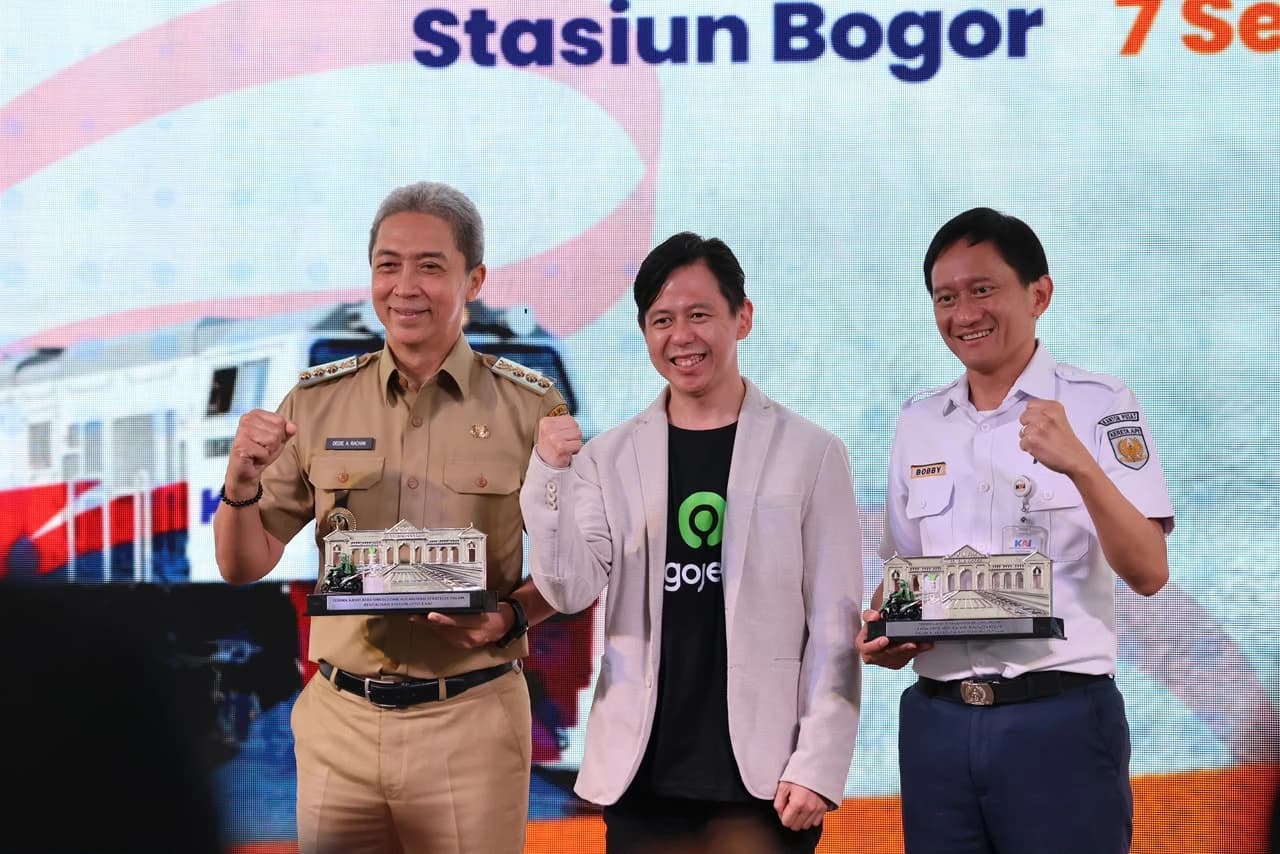
KAI, Gojek, and Bogor City Government Strengthen Integrated Transportation Ecosystem in Bogor
PT Kereta Api Indonesia (Persero), Gojek and GoPay, and the Bogor City Government are strengthening their collaboration to develop an integrated transportation ecosystem in Bogor. The collaboration was realized through the signing of a Memorandum of Understanding between KAI and the Bogor City Government on the development of station areas, as well as KAI’s partnership with Gojek and GoPay to strengthen digital mobility services, held at Bogor Station, Bogor City, on Monday (7/9).
The Memorandum of Understanding between the Bogor City Government and PT Kereta Api Indonesia (Persero) on Synergy in Railway Development, Railway Station Management, and Supporting Areas in Bogor City covers railway development, improvements in transportation services, the management and development of railway stations and supporting areas, intermodal integration, and optimization of resource potential in Bogor City.
The scope of the collaboration includes the development of Bogor Station, Sukaresmi Station, Ciomas Station, and Batu Tulis Station areas. At Bogor Station, the collaboration includes traffic management and the arrangement of MSMEs around the station.
The strengthening of transportation areas in Bogor City is relevant to the high level of community travel activity. KAI data shows that the Bogor Line served 105,704,913 users from January to August 2026, with an average of around 435,000 users per day. In 2025, the Bogor Line recorded 155 million user trips.
KAI President Director Bobby Rasyidin said that the development of the Bogor Station area is based on three main concepts: connectivity, identity, and spatiality.
“Bogor and Bogor Regency have a combined population of around 6.9 million people, with high mobility to Jakarta and surrounding areas. Around 130,000 people per day are served by KRL from the Bogor area. Therefore, the development of the station area needs to strengthen connectivity between railways, onward transportation, and community activities,” said Bobby.
Bobby said that Bogor Station has strong historical value as a heritage area, so its development will continue to take the area’s identity into account.
“In addition to connectivity, Bogor Station has a strong historical identity as a heritage area. Its development will continue to preserve cultural and historical elements while providing spaces that support community economic activities. Through the concept of spatiality, the station area is expected to develop into a center of connectivity and economic activity in Bogor City,” Bobby added.
Through the Memorandum of Understanding with the Bogor City Government, KAI will conduct data identification and inventory, prepare studies, develop the area, integrate different modes of transportation, provide accessibility for service users, and arrange supporting facilities around the station area.
In developing Bogor Station, KAI is also increasing customer service capacity and facilities. The development of Platforms 6, 7, and 8 has increased service capacity by around 30 percent compared to previously. KAI is also preparing to improve safety through facility management and the development of customer access.
“Stations are mobility hubs for the community. Their development needs to be carried out in an integrated manner to support customer needs and the development of the surrounding area,” said Bobby.
Bogor Mayor Dedie A. Rachim said that the management of the Bogor Station area is closely connected to the history and development of Bogor City.
“Bogor Station has very strong historical value for Bogor City. The management of this area is an opportunity to create a more organized area while preserving its historical character,” said Dedie.
Dedie said that the Bogor City Government will continue to strengthen coordination with KAI in managing areas around the station, including traffic management, street vendor management, and the development of public spaces to make the area more comfortable for the community.
Meanwhile, KAI’s collaboration with Gojek and GoPay strengthens the integration of community journeys through the expansion of GoRide Instant and GoCar Instant pickup points, the use of GoPay as a digital payment solution within the KAI Group ecosystem, and the exploration of Gojek and GoPay technology for the Access by KAI application as well as various services and business entities under KAI Group, including KAI Logistik and KAI Services.
GoTo Chief of Partnership Henky Prihatna expressed his appreciation for the joint efforts to make station areas more organized, safe, comfortable, and integrated.
“Gojek is also part of this initiative by providing GoRide and GoCar Instant pickup points at 37 stations, including Bogor Station. We hope this will make people’s journeys easier and more comfortable, from home to the station, continuing their journey by train, and eventually reaching their destination. At the same time, we also hope that this collaboration and integration can create sustainable income opportunities for Gojek Driver Partners,” said Henky.
In addition to station area management and the provision of Instant pickup points, the Gojek and KAI collaboration includes several other initiatives, including providing GoPay as a digital payment solution within the KAI Group ecosystem and exploring the use of Gojek and GoPay technology for the Access by KAI application and various services and business entities under KAI Group, including KAI Logistik and KAI Services.
The collaboration between Gojek and KAI builds on the partnership established in 2022 through GoTransit, a feature that integrates GoRide and GoCar services with the KRL Commuter Line.
Through collaboration between KAI, Gojek, and the Bogor City Government, transportation development is aimed at strengthening connections between rail transportation, urban areas, and digital services.
“Public transportation of the future requires comprehensive connectivity. KAI will continue to strengthen collaboration so that people’s journeys become more connected, from residential areas and stations to their final destinations,” Bobby concluded.
VP Corporate Communication KAI