
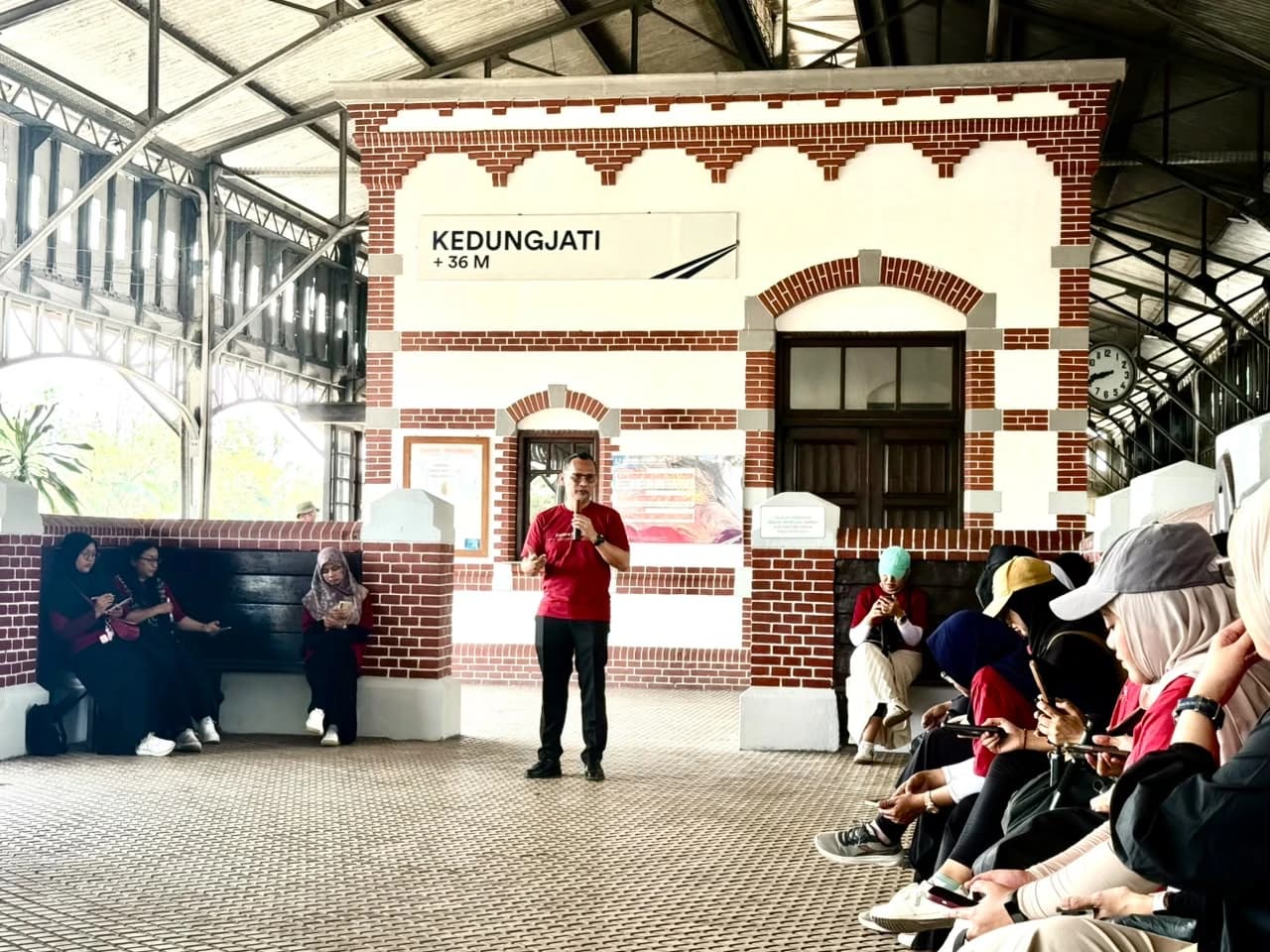
KAI Invites the Public to Explore the History of the Kedungjati–Tuntang Railway Line through KAI Explore
PT Kereta Api Indonesia (Persero), through the KAI Explore: Exploration of Kedungjati Station and Tuntang Station event, invites the public to learn more about the history of Indonesia’s railway journey through the Kedungjati–Tuntang railway line in Semarang Regency, Central Java.
Held on September 8–9, 2026, the activity provided a thematic travel experience for a community of writers, content creators, and history and railway enthusiasts to directly explore historical traces, heritage buildings, and the potential of areas surrounding the Kedungjati–Tuntang railway line.
KAI Vice President of Corporate Communication Anne Purba said that Indonesia’s railway history holds many stories preserved through railway lines, stations, and areas that have played a role in the development of national transportation.
“Through KAI Explore, the public can learn more about the long journey of Indonesia’s railways, including the Kedungjati–Tuntang line, which has historical value dating back to the early development of railways in Indonesia,” said Anne.
The Kedungjati–Tuntang railway line is connected to the history of railway network development in Java. The line is part of the Kedungjati–Ambarawa route, which was built by NIS and began operating on May 21, 1873. At the time, the line served as a link between the Kedungjati area and Ambarawa and its surrounding regions.
As part of commemorating 159 years of Indonesia’s railway history, KAI Explore participants were invited to learn about the development of railway services over time through visits to Kedungjati Station and Tuntang Station, dialogue sessions with stakeholders, and exploration of the potential of areas surrounding the railway line.
Kedungjati Station is one of the important points in the railway network of Central Java. Based on data from January–August 2026, Kedungjati Station recorded 13,132 customer activities, consisting of 6,700 boarding customers and 6,432 alighting customers.
Meanwhile, Tuntang Station holds historical value as one of the oldest railway stations in Indonesia. The station began construction in 1871 and commenced operations on May 21, 1873, featuring distinctive NIS architectural characteristics. Today, the Tuntang area is connected to the development of railway heritage tourism through the Ambarawa Railway Museum area.
Anne added that introducing railway history through activities such as KAI Explore provides an opportunity for the public to understand the connection between transportation, history, culture, and regional development.
“KAI continues to create opportunities for collaboration with the public, communities, and stakeholders to learn about various historical railway assets in Indonesia. Every railway line has a story that can become part of a shared journey and learning experience,” said Anne.
KAI Explore is presented through a series of activities called Experience, Explore, and Express. Participants gain firsthand experiences at the locations, explore assets and areas surrounding the railway line, and then share their perspectives through articles, photographs, and social media content.
Through this activity, KAI introduces the history of the Kedungjati–Tuntang railway line while inviting the public to see the potential of the area from the perspectives of heritage, tourism, regional connectivity, and the economic activities of surrounding communities.
VP Corporate Communication KAI