
KAI Transports 50.76 Million Tons of Freight, Supporting the National Economic Supply Chain
A factory needs a supply of raw materials before starting production. Once goods have been manufactured, their journey continues to warehouses, distribution centers, and markets. This process takes place every day across various regions of Indonesia and involves many business players. Smooth distribution is one of the factors that determines how industrial and trade activities can operate according to demand.
Supply chain considerations are becoming increasingly relevant as global trade continues to change. In its October 2026 forecast, the World Trade Organization (WTO) projected that global merchandise trade volume would grow by 3.9 percent throughout 2026. Changes in international trade patterns, geopolitical uncertainty, and adjustments in industrial needs have made logistics connectivity a concern for many countries, including Indonesia.
Domestically, Statistics Indonesia (BPS) recorded annual economic growth of 5.29 percent in the second quarter of 2026, with gross domestic product (GDP) at current prices reaching IDR 6,552.1 trillion. The transportation and warehousing sector also recorded growth of 5.65 percent during the same period. These developments provide important context for strengthening distribution networks that connect production areas, trading centers, and various consumption regions.
In the national logistics sector, PT Kereta Api Indonesia (Persero), or KAI, recorded freight transportation of 50,756,132 tons from January to September 2026. This volume consisted of 41,607,561 tons of coal and 9,148,571 tons of non-coal commodities. Non-coal freight increased by 2.65 percent compared with the same period in 2025, when it reached 8,912,566 tons, representing an increase of 236,005 tons.
KAI Vice President of Corporate Communication Anne Purba said that freight transportation needs are closely linked to economic activities taking place across various regions. These include the delivery of industrial raw materials, manufactured goods, and commodities used in trade activities and to meet public needs.
“Each commodity has a different journey. Some goods are needed to keep factories operating, some manufactured products must be delivered to distribution centers, and some public necessities depend on a smooth supply. KAI serves part of these journeys through a railway network connected to various economic activities,” Anne said.
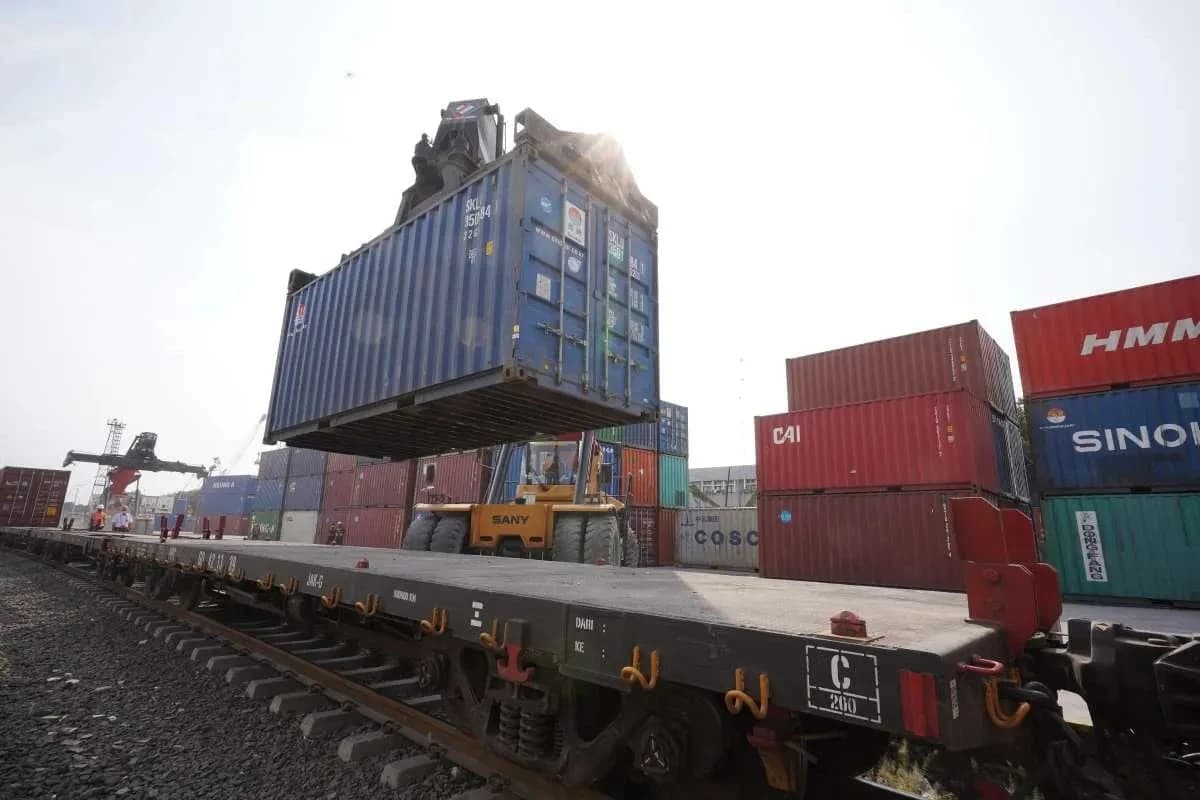
The composition of KAI’s freight transportation reflects the substantial demand for shipments across sectors. Non-coal commodities accounted for 18.02 percent of total freight volume. Within this category, container freight reached 4,438,999 tons, equivalent to 48.52 percent of total non-coal freight, representing an increase of 19.57 percent compared with the January–September 2025 period.
In addition to containers, KAI’s freight services handle various commodities, including fuel, cement and clinker, plantation products, fertilizers, and retail goods. Each type of cargo has different transportation requirements in terms of volume, destination, and handling facilities. This diversity is part of the development of logistics services that respond to the needs of industrial and trade customers.
According to Anne, one of the challenges in freight distribution is ensuring connectivity between the different stages of a journey. Goods transported by train still require support from terminals, warehousing areas, and onward transportation to reach their recipients. Therefore, the development of rail-based logistics services needs to go hand in hand with cooperation among business players and infrastructure operators.
“For businesses, reliable distribution is important for planning production and freight deliveries. Trains can transport large volumes of cargo in a single train formation, while onward transportation helps reach locations beyond the rail network. This connectivity provides industries with more options for managing their supply chains,” Anne explained.
In the long term, logistics infrastructure development is also linked to distribution cost efficiency and energy utilization. Using railways to transport large-capacity shipments can be one option for designing a more efficient freight network, depending on distance, commodity type, cargo capacity, and distribution conditions along each corridor. These benefits become increasingly relevant as businesses need to consider both productivity and environmental impact.
“The economy moves through many interconnected activities, from production to the point when goods are used by the public. KAI continues to develop logistics partnerships so that rail-based services can better meet the needs of industry and trade. We hope that strengthening this connectivity will provide businesses with more distribution options and support Indonesia’s sustainable economic growth,” Anne concluded.
VP Corporate Communication KAI