
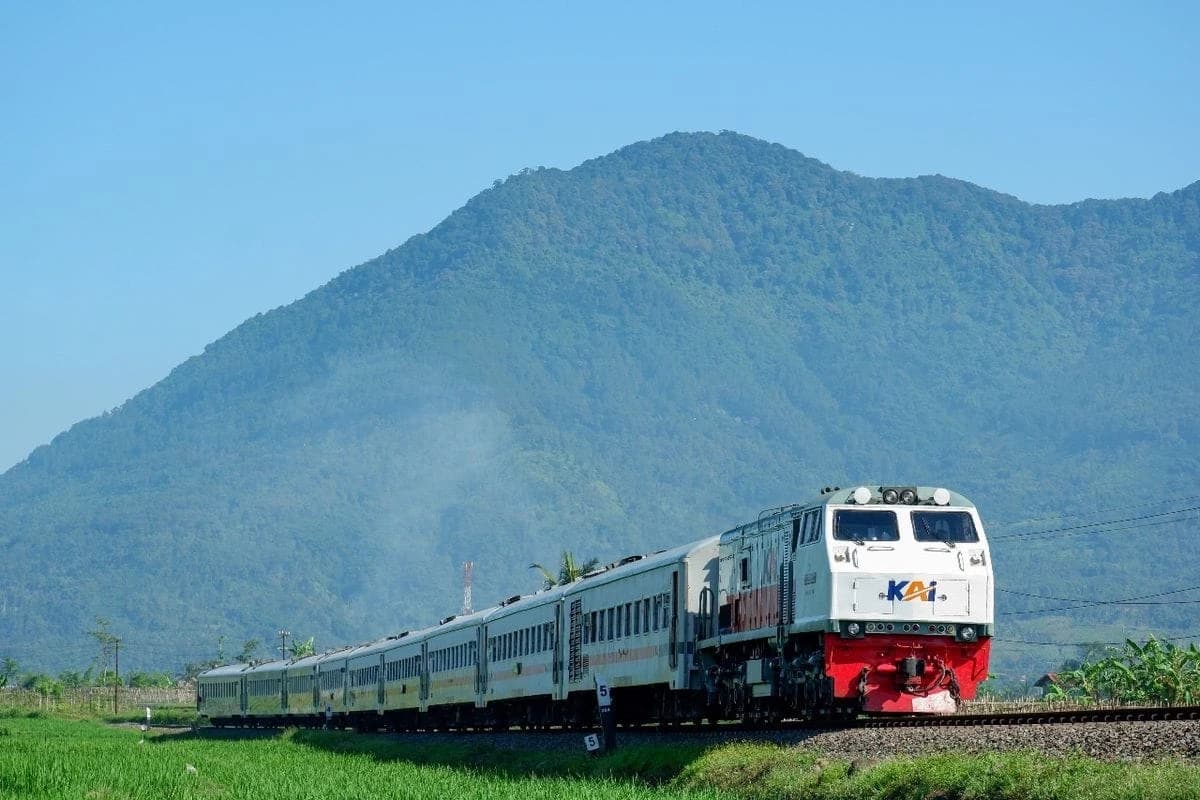
Joglosemarkerto Train Serves 1.22 Million Customers, Intercity Mobility in Central Java–DIY Grows by 10.72 Percent
Intercity mobility among communities in Central Java and the Special Region of Yogyakarta (DIY) continues to grow alongside increasing economic, educational, and tourism activities. PT Kereta Api Indonesia (Persero) recorded that the Joglosemarkerto Train served 1,226,727 customers throughout January–October 2026, an increase of 10.72 percent compared to 1,107,996 customers in the same period in 2025. This growth reflects the need for regional connectivity through train services that connect various cities within a single travel network.
In terms of numbers, the Joglosemarkerto Train gained an additional 118,731 customers compared to the previous year. In October 2026 alone, the number of customers reached 122,308, an increase of 20.47 percent compared to 101,529 customers in October 2025. The higher growth in October compared to the cumulative growth indicates increased service utilization toward the end of the observation period.
KAI Vice President of Corporate Communication Anne Purba said that this growth demonstrates the importance of intercity connectivity for communities in Central Java and DIY.
"Joglosemarkerto served more than 1.22 million customers in ten months. The 10.72 percent growth reflects the continuously growing demand for regional travel," Anne said.
The Joglosemarkerto Train operates on a circular route connecting Solo, Yogyakarta, Purwokerto, Tegal, Pekalongan, and Semarang. Based on KAI's travel patterns, Joglosemarkerto Train KA 187 serves the Solo Balapan–Semarang Tawang–Tegal–Purwokerto–Solo Balapan–Semarang Tawang route, while KA 193 serves the Solo Balapan–Purwokerto–Tegal–Semarang Tawang–Solo Balapan route. This network allows customers to travel between various cities with route and station stop options that suit their needs.
The role of this service is closely related to the characteristics of Central Java and DIY as regions with interconnected educational, trade, service, and tourism activities. Yogyakarta and Solo have concentrations of educational activities and cultural tourism, Semarang is one of the centers of trade and services, while Purwokerto, Tegal, and Pekalongan have economic activities and tourism potential that support intercity mobility. Train connectivity provides travel options for students, workers, businesspeople, tourists, and people visiting their families.
The growth in mobility is in line with tourism activities in Central Java. Statistics Indonesia (BPS) of Central Java Province recorded 13.79 million domestic tourist trips to Central Java in August 2026, an increase of 25.80 percent compared to August 2025. This data illustrates the significant movement of tourists in an area also served by the Joglosemarkerto Train, although it covers all modes of transportation and not exclusively train customers.
The high utilization of Joglosemarkerto is reflected in the performance of its individual services. Throughout January–October 2026, Joglosemarkerto Train KA 187 served 452,057 customers, while KA 193 recorded 427,414 customers. Both ranked first and second on the list of commercial Long-Distance Train services based on customer volume. These figures demonstrate the high demand for travel along regional corridors connecting various cities in Central Java and DIY.
The circular route also allows seats to be used alternately along the route. When customers disembark at a station, their seats can be used by other customers traveling to the next city. This partial-journey pattern provides opportunities for trains to serve more customers across various city pairs within a single journey, making capacity utilization more dynamic.
"One Joglosemarkerto journey can serve many city pairs. The turnover of customers along the route is an important characteristic in managing agglomeration service capacity," Anne explained.
Joglosemarkerto's 10.72 percent growth was also higher than the overall growth of KAI's Long-Distance and Local Train customers, which reached 9 percent throughout January–October 2026. Nationwide, within these service categories, KAI served 49,932,764 customers, increasing from 45,814,275 customers in the same period of the previous year. This comparison shows that Joglosemarkerto's service growth was relatively higher amid the development of intercity mobility.
"Central Java and DIY have strong travel connections between cities. KAI continues to evaluate Joglosemarkerto's demand patterns, capacity, and services so that they increasingly meet customer needs," Anne concluded.
VP Corporate Communication KAI