
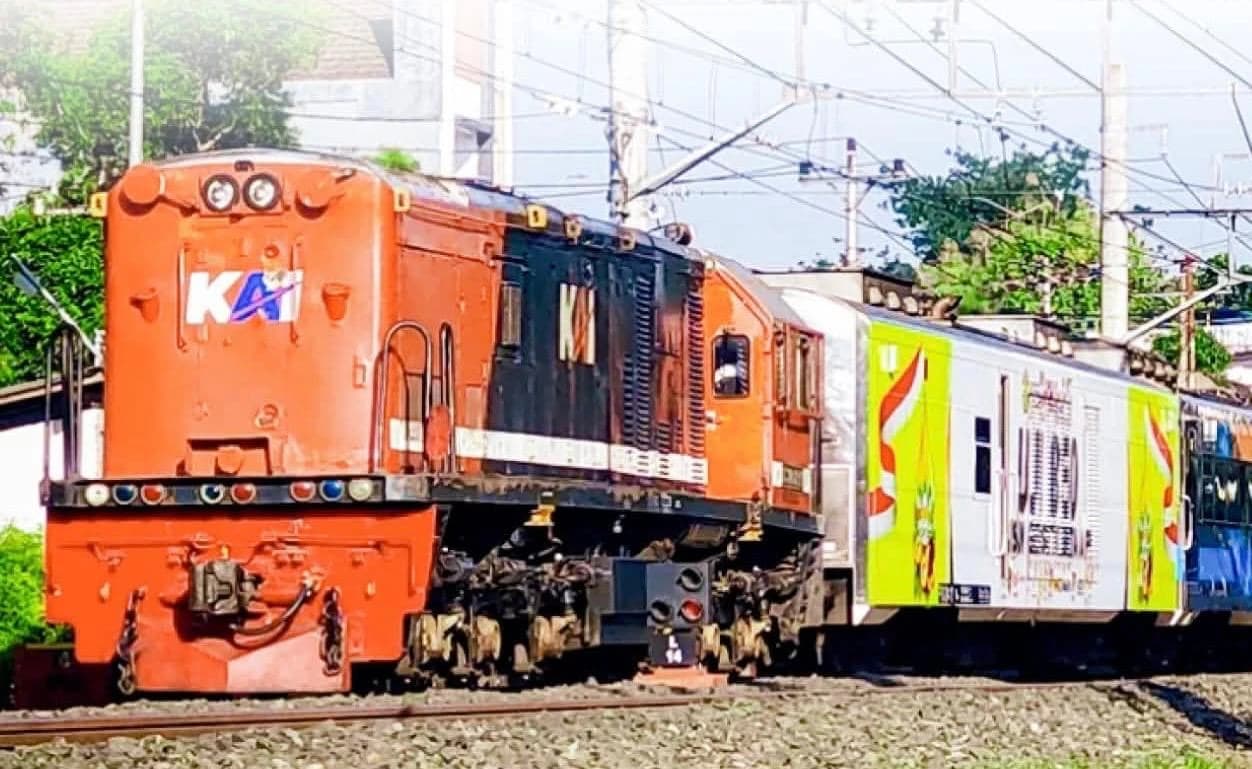
KAI’s Long-Distance and Local Train Services Serve 40.3 Million Customers, B50 Implementation Drives Operational Energy Efficiency
PT Kereta Api Indonesia (Persero) continues to strengthen its operational efficiency through the utilization of more sustainable energy. One of the measures taken is the implementation of B50 biodiesel blended fuel for diesel-powered railway rolling stock operated by KAI.
The implementation of B50 began on July 1, 2026, for KAI’s Long-Distance and Local Train operations. The program is part of KAI’s efforts to improve operational energy efficiency while supporting emission reductions in the transportation sector.
From January to August 2026, KAI’s Long-Distance and Local Train services served 40,379,062 customers. During the same period, operational fuel consumption was recorded at 172,228,585 liters.
Based on estimated calculations, this operational fuel consumption was equivalent to approximately 4.27 liters per customer served by KAI’s Long-Distance and Local Train services from January to August 2026. This figure reflects the intensity of operational energy use in relation to the number of customers served during the period.
KAI Vice President of Corporate Communication Anne Purba said that energy efficiency is part of KAI’s operational development efforts to provide railway services that are increasingly adaptive to future needs.
“Railways play an important role in supporting people’s mobility. KAI continues to introduce various operational innovations to improve service efficiency, including through the utilization of fuel that supports emission reductions,” said Anne.
During the first 55 days of B50 implementation, from July 1 to August 24, 2026, the use of biodiesel blended fuel in KAI’s train operations is estimated to have resulted in an emissions reduction of approximately 9,000 tons of CO₂e.
Nationally, the implementation of the B50 program is part of the government’s strategy to increase the utilization of energy derived from domestic resources while supporting carbon emission reductions. Based on data from the Ministry of Energy and Mineral Resources (ESDM), the implementation of B50 is projected to reduce national emissions by approximately 44.46 million tons of CO₂.
KAI’s energy efficiency efforts are also carried out through various other operational programs. In 2025, KAI’s energy consumption decreased from 11,945,467 GJ to 10,107,302 GJ, representing a reduction of 15.39 percent compared to the previous year. This decrease was accompanied by a 22 percent reduction in energy intensity per customer.
In addition to energy efficiency, KAI continues to expand its use of renewable energy through the installation of 113 Solar Power Plant (PLTS) units across 92 locations, with a total capacity of 4,430.65 kWp. The utilization of these solar power plants contributes to the reduction of more than 5,000 tons of CO₂ emissions per year.
Anne added that energy transformation is part of KAI’s efforts to maintain the sustainability of rail-based transportation services.
“KAI continues to strengthen innovation through energy efficiency, the utilization of renewable energy, and improvements in operational quality. These measures are taken to further improve railway services while supporting people’s journeys in a sustainable manner,” Anne concluded.
VP Corporate Communication KAI