
Java and Sumatra Drive KAI’s Freight Logistics
The movement of goods in Indonesia follows the needs of each region. Industrial areas require raw material supplies, distribution centers depend on smooth deliveries, while various regions serve as origins or destinations for commodities that support economic activity. To connect these needs, freight transportation must be able to handle large volumes while accommodating shipping patterns suited to the characteristics of each region.
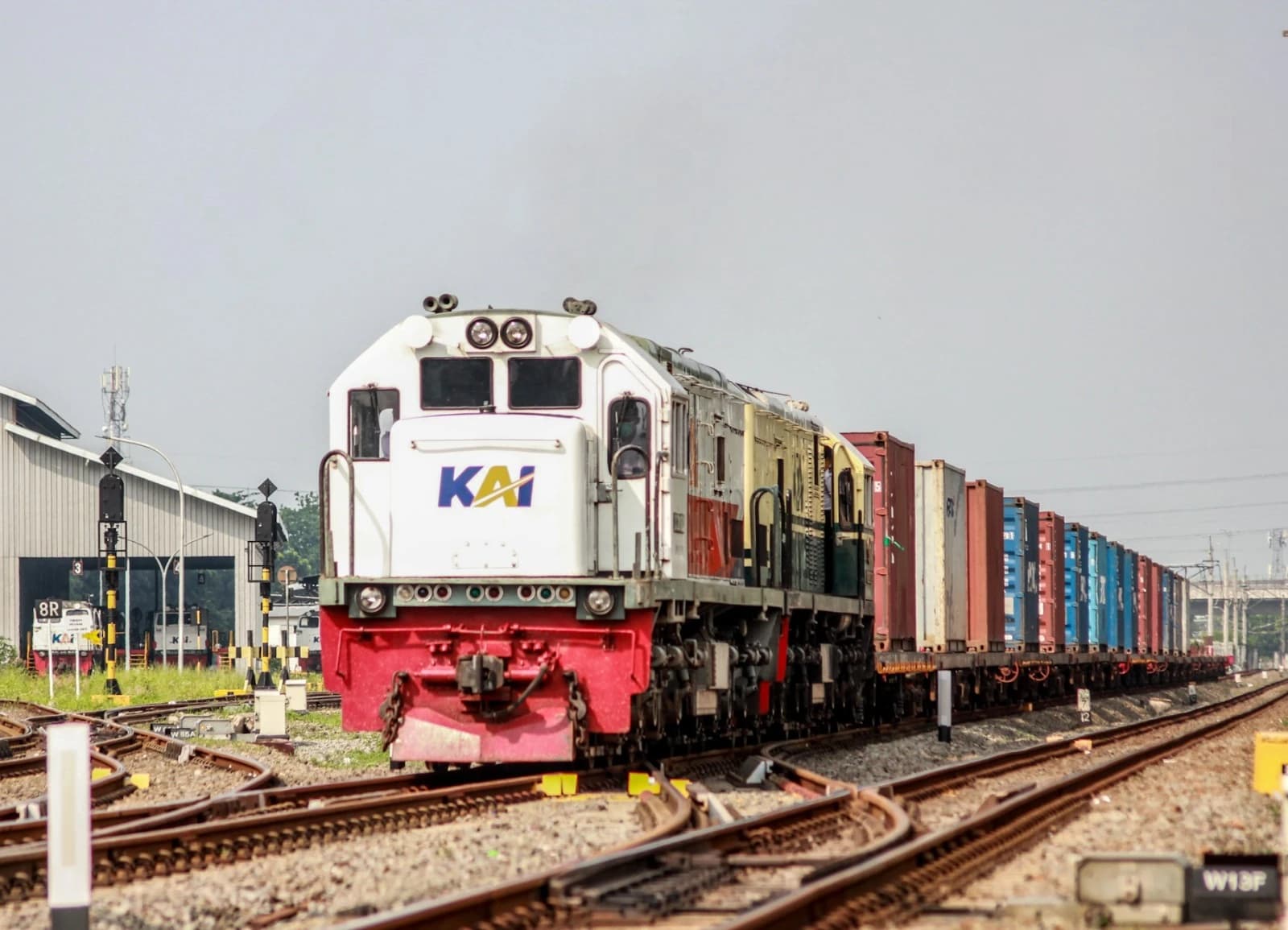
Railways are one of the modes of transportation used to carry various non-coal commodities across networks in Java and Sumatra. These services cover industrial goods, containers, fuel, plantation products, and retail goods.
According to PT Kereta Api Indonesia (Persero)’s freight performance report for January–September 2026, non-coal freight volume reached 9,148,571 tons. This represents an increase of 2.6% compared with 8,912,566 tons during the same period in 2025.
KAI Vice President of Corporate Communication Anne Purba said freight distribution patterns vary across regions, requiring freight services to be managed by considering customer needs, route readiness, and operational capacity.
“Each region has different economic activities and distribution needs. Some areas require industrial material deliveries, while other routes serve the movement of plantation products and consumer goods. The railway network helps connect these needs through freight services tailored to the characteristics of each corridor,” said Anne.
Of the total non-coal freight volume, KAI’s operating regions in Java recorded 6,684,683 tons from January to September 2026. Meanwhile, Sumatra recorded 2,463,889 tons. This means approximately 73% of non-coal freight volume originated from Java and 27% from Sumatra.
In Java, freight services operate across nine regional operations areas. Daop 1 Jakarta recorded the largest volume at 2,567,115 tons, followed by Daop 8 Surabaya with 2,260,233 tons and Daop 5 Purwokerto with 1,006,418 tons. The other regional operations areas also serve various shipping needs according to the characteristics of their respective regions.
In Sumatra, non-coal freight services are managed through four regional divisions. Divre III Palembang recorded 646,893 tons, Divre I North Sumatra 626,185 tons, Divre II West Sumatra 893,635 tons, and Divre IV Tanjungkarang 297,175 tons from January to September 2026.
Anne explained that this distribution highlights the importance of managing services according to regional needs. Rolling stock readiness, route capacity, loading and unloading facilities, and schedule reliability are all part of the planning process to ensure that goods can be transported in line with customer requirements.
“Freight development needs to begin with an understanding of customer needs and each region’s potential. When train capacity, infrastructure readiness, and shipping patterns are properly planned, rail-based transportation has room to serve a wider range of distribution needs,” said Anne.
Going forward, KAI will continue to evaluate opportunities to expand freight services based on regional potential, industrial needs, and network readiness. Service development is aimed at making rail-based transportation an increasingly relevant option for businesses planning interregional freight distribution.
“Every region plays a role in the movement of national logistics. KAI aims to ensure that its railway network and freight services can be utilized according to customer needs through well-measured planning and reliable operations,” Anne concluded.
VP Corporate Communication KAI