
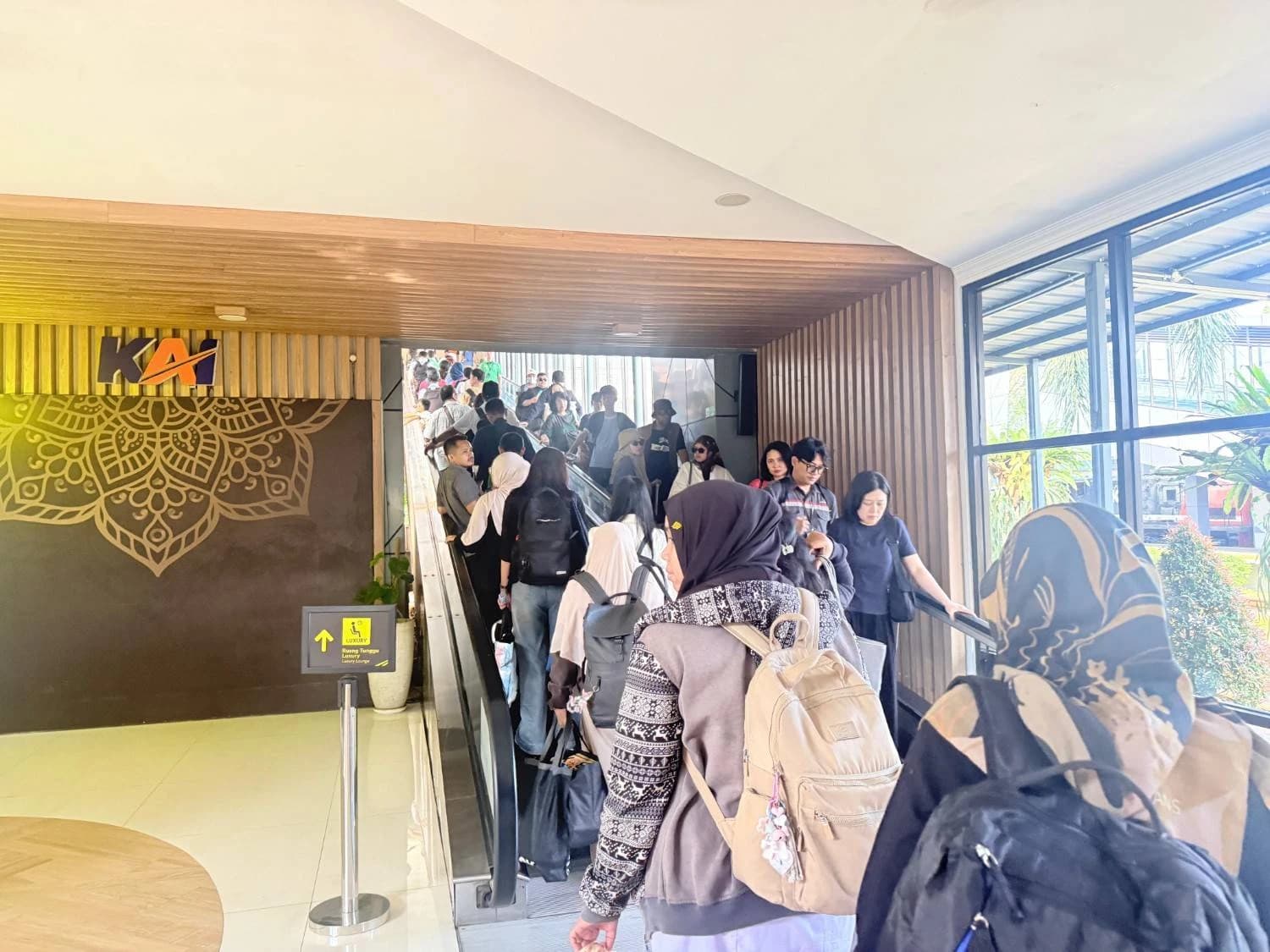
KAI Group Serves 394.44 Million Customers Through the Third Quarter of 2026
During the first nine months of 2026, more people used KAI Group services for a variety of travel needs. PT Kereta Api Indonesia (Persero) recorded a total of 394,443,300 customers served from January to September 2026, an increase of 7.06% compared with 368,429,917 customers during the same period in 2025.
This growth took place amid high levels of mobility nationwide. Statistics Indonesia (BPS) recorded 104.30 million domestic tourist trips in August 2026, while international tourist visits during the same month reached 1.60 million. Cumulatively, international tourist visits to Indonesia from January to August 2026 reached approximately 10.58 million.
Vice President of Corporate Communication KAI Anne Purba said that KAI Group’s growth reflects the increasingly diverse travel needs of the community, ranging from daily mobility and intercity and regional travel to airport access, tourism, and high-speed rail journeys.
“Nearly 394.5 million customers used KAI Group services during the first nine months of 2026. Behind this figure are diverse travel needs, from daily activities and intercity journeys to airport access and tourism. These customer needs continue to guide the development of KAI Group services,” said Anne.
The largest share came from KAI Commuter, which served 312,302,440 customers, an increase of 6.38%. Its network supports community mobility through Commuter Line Jabodetabek, areas in Banten including the Rangkasbitung–Merak corridor, the Bandung area, the Yogyakarta area including Commuter Line Yogyakarta and Prameks, as well as the Surabaya area. Travel patterns vary across these regions, ranging from daily urban commuting to regional connectivity.
For intercity and local train services, KAI served 43,959,327 customers, an increase of 8.33%. In urban areas, LRT Jabodebek served 24,702,905 customers, up 18.94%, while LRT Sumsel served 3,303,595 customers. In South Sulawesi, the Makassar–Parepare Train served 253,547 customers, an increase of 10.78%.
Airport connectivity also forms part of customers’ journeys. From January to September 2026, services managed by KAI Bandara served 5,110,010 customers. These services include the YIA Airport Train and KA Srilelawangsa, which provides connectivity to Kualanamu Airport while also supporting regional mobility in North Sumatra.
Customer travel options have also expanded in the tourism and high-speed rail segments. KAI Wisata served 234,635 customers, an increase of 39.43%, while Whoosh served 4,576,841 customers, up 1.16%. Together, these services contributed to KAI Group’s total of 394,443,300 customers from January to September 2026.
Anne said that KAI Group’s development strategy focuses on making these various services easier to use as part of a single journey. Integration between stations, urban transportation, intercity services, airport access, high-speed rail, and onward transportation is essential to providing customers with more travel options.
“For customers, what matters most is being able to plan their journeys easily and transfer between services more seamlessly. That is why connectivity is an important part of KAI Group’s development, allowing each service to complement the others according to the community’s travel needs,” said Anne.
KAI also continues to maintain operational consistency amid growing travel volumes. Based on performance data from January to September 2026, the average On-Time Performance (OTP) for passenger train arrivals reached 97.31%. Customer demand, punctuality, capacity, and rolling stock and infrastructure readiness serve as the basis for managing services ahead of the year-end travel period.
“Growth of more than 26 million customers compared with the same period last year shows that demand for rail-based transportation continues to develop. KAI Group will continue to monitor customer travel patterns to ensure that its services remain relevant, connected, and easy to use across Indonesia,” Anne concluded.
VP Corporate Communication KAI