
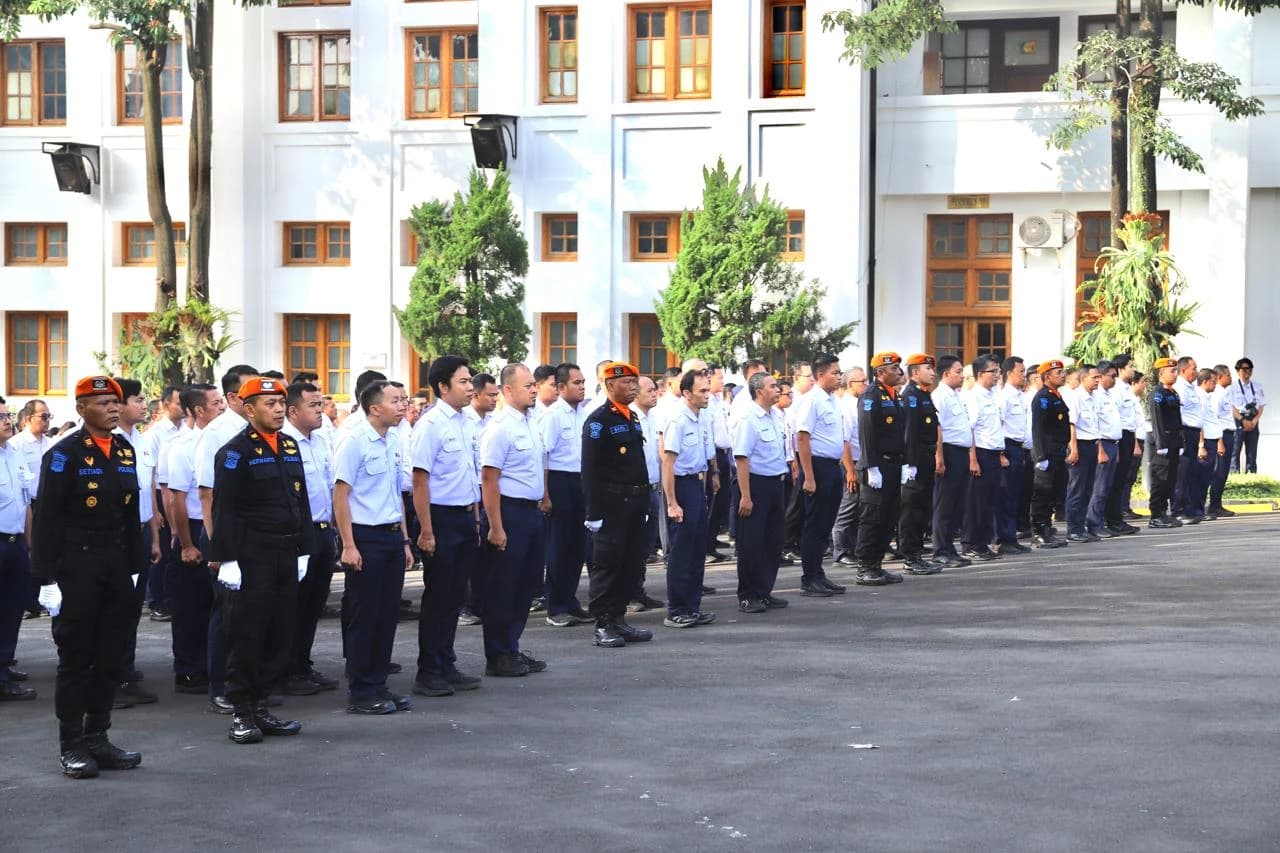
World Youth Skills Day, KAI Strengthens Adaptive Talent for the Future of Railways
Every safe train journey, every digital service used by customers such as Access by KAI, and every inspection of rolling stock and infrastructure is supported by the skills of the workers behind it. Technical competence, precision, communication, creativity, and teamwork are interconnected elements in delivering service to the public.
This aligns with World Youth Skills Day, observed every 15 July. Carrying the theme “Skills for a Shared Future,” this year’s commemoration emphasizes the importance of equipping young people with digital skills, artificial intelligence, green economy knowledge, and socio-emotional capabilities to navigate changes in the world of work.
President Director of KAI, Bobby Rasyidin, stated that technological developments, evolving customer needs, and sustainability demands are making skill requirements in the railway sector increasingly diverse.
“Railways are a system that connects people, technology, rolling stock, infrastructure, and services in one integrated operation. Therefore, every employee must continue to develop competencies, remain adaptive, and collaborate while prioritizing safety discipline,” said Bobby.
As of June 2026, KAI’s parent company is supported by 28,003 employees. A total of 20,446 employees, or around 73 percent, are aged between 18–40 years, comprising 6,684 employees aged 18–30 and 13,762 employees aged 31–40.
Meanwhile, 4,736 employees are in the 41–50 age group, and 2,821 employees are aged 51 and above. By gender, the workforce consists of 26,432 men and 1,571 women.
These figures include permanent employees (PKWTT) and prospective employees within the parent company, excluding those in subsidiaries and affiliates, external employees, and contract-based workers (PKWT).
Bobby explained that intergenerational collaboration is a key strength in sustaining railway knowledge. The experience of senior employees enriches the readiness of younger generations, while younger employees bring technological familiarity, new communication approaches, and ideas aligned with customer needs.
“Knowledge related to safety, operations, and services must be passed from one generation to the next. At the same time, the company provides space for new ideas to be developed in a structured way to deliver benefits for services and the public,” he added.
These skill requirements span various fields, including train operations, customer service, maintenance of rolling stock and infrastructure, information technology, system security, data management, logistics, and other supporting functions.
The development of digital services also requires employees to understand changing customer behavior and use technology responsibly. This transformation is reflected in applications such as Access by KAI and facilities like Face Recognition Boarding Gates.
Throughout the first half of 2026, Face Recognition Boarding Gates were used by 5,555,034 long-distance train passengers. Their use reduced the need for approximately 13,888 rolls of boarding pass paper, with estimated efficiency savings reaching IDR 203.80 million.
In sustainability, employee skills are essential to support renewable energy adoption, resource efficiency, material management, and operational readiness. KAI has operated 113 solar power units across 92 locations, with a total installed capacity of 4,430.65 kilowatt peak.
Since 1 July 2026, KAI has also gradually implemented B50 biodiesel, taking into account fuel quality, equipment readiness, safety, and operational reliability.
Bobby emphasized that KAI’s transformation is guided by a balance between business performance, public benefit, and environmental stewardship through the 3P principle: profit, people, and planet.
“KAI’s transformation is directed toward balancing the 3Ps: profit, people, and planet. The company must maintain performance, deliver benefits to society, and actively contribute to environmental preservation. This principle underpins how KAI operates sustainably,” he said.
In practice, future skills are closely linked to the ability to understand technology, analyze and manage data, use energy efficiently, and consider environmental impacts in every work process—while maintaining safety and service quality.
The spirit of skill development is also reflected in the Railway Sports and Arts Week (Porseni Kereta Api 2026), currently being held in Yogyakarta. Carrying the theme “Spirit of Competition, Power of Sustainability,” the event involves 1,632 participants from 17 contingents across the KAI Group.
Participants from various operational regions, regional divisions, work units, and subsidiaries compete in nine sports: basketball, futsal, football, volleyball, table tennis, tennis, badminton, chess, and Mobile Legends e-sports. In the arts category, participants compete in band and traditional dance performances.
Bobby noted that sports and arts provide a platform for employees to develop skills relevant to the workplace. Sports build discipline, physical and mental resilience, decision-making, and teamwork. Chess enhances strategic thinking, while e-sports train coordination and situational awareness.
Band and traditional dance competitions foster creativity, communication, harmony, and appreciation of diversity. Inter-contingent interactions also create opportunities to build connections, exchange experiences, and strengthen cross-regional and cross-functional collaboration.
“In both competitions and artistic performances, participants learn to understand roles, manage emotions, read situations, and achieve shared goals. These values closely reflect the daily responsibilities of railway employees in maintaining service quality,” Bobby said.
In line with sustainability, Porseni participants are encouraged to bring tumblers and reusable dining utensils to reduce single-use waste. Employees also collect used white R6 uniforms to be processed into new products through circular economy practices.
Environmental initiatives have also included the planting of 25 productive trees at Balai Yasa Yogyakarta on 13 July 2026. Cumulatively, KAI has planted 99,785 trees from 2022 to 13 July 2026, including 4,540 trees planted this year.
The skills and collaboration of employees continue to support KAI Group’s services throughout the first half of 2026. Between January and June 2026, KAI Group served 258,993,359 customers, an increase of 7.55 percent compared to 240,805,920 customers in the same period of 2025.
During the same period, KAI transported approximately 32.50 million tons of goods to support the distribution of energy commodities, industrial goods, plantations, and national logistics. These operations involve employees at stations, onboard trains, control centers, maintenance facilities, depots, rail tracks, and various supporting units.
“Each employee brings different skills and responsibilities, integrating them into a unified service system. Through competency development and collaborative spaces, KAI prepares its people to maintain safety, drive innovation, deliver public value, and advance Indonesia’s railway sector to meet future needs,” Bobby concluded.
VP Corporate Communication KAI