
Nearly Five Decades of Fajar and Senja Utama Solo, Serving the Jakarta–Surakarta Journey Since 1978
Long before the latest-generation stainless steel train sets arrived on the southern Java railway line, a night train departed from Solo Balapan to Jakarta, carrying a new identity for the journeys of people in Surakarta. On October 14, 1978, Senja Utama Solo began operating on the Solo Balapan–Gambir route. Nearly 48 years later, the journey continues through the service now known as Fajar and Senja Utama Solo.
In its early years, Senja Utama Solo operated as a business-class train. Its train sets used coaches manufactured by Goša of Yugoslavia, characterized by eight windows on each side of the coach. This train configuration became part of the face of Indonesia’s business-class train travel during that period.
KAI Vice President Corporate Communication Anne Purba said that the journey of Fajar and Senja Utama Solo reflects the changes in intercity railway services over nearly five decades.
“Since Senja Utama Solo was introduced in 1978, several generations of passengers have grown alongside this service. The train sets, service classes, and facilities have continued to change, while the name Solo has remained an important part of its journey,” said Anne.
When it was launched, Senja Utama Solo connected Solo Balapan with Gambir. The choice of a night travel schedule later became one of the characteristics associated with the name “Senja.” The train carried passengers from Surakarta to Jakarta through the Yogyakarta, Purwokerto, and Cirebon corridors, connecting major activity centers in central Java with the capital.
Over time, the service on this corridor became known through two names based on their travel times: Fajar Utama Solo for the morning journey from Jakarta to Solo and Senja Utama Solo for the evening journey from Solo to Jakarta. Today, both services operate on the Pasar Senen–Solo Balapan route via Yogyakarta and Purwokerto.
The historical record of Fajar and Senja Utama Solo should also be viewed chronologically. Historical sources consistently record that Senja Utama Solo was launched on October 14, 1978, while some records indicate that the morning service, Fajar Utama Solo, developed later. Therefore, October 14, 1978 is more appropriately regarded as the beginning of Senja Utama Solo, which later developed into the pair of Fajar and Senja Utama Solo services known today.
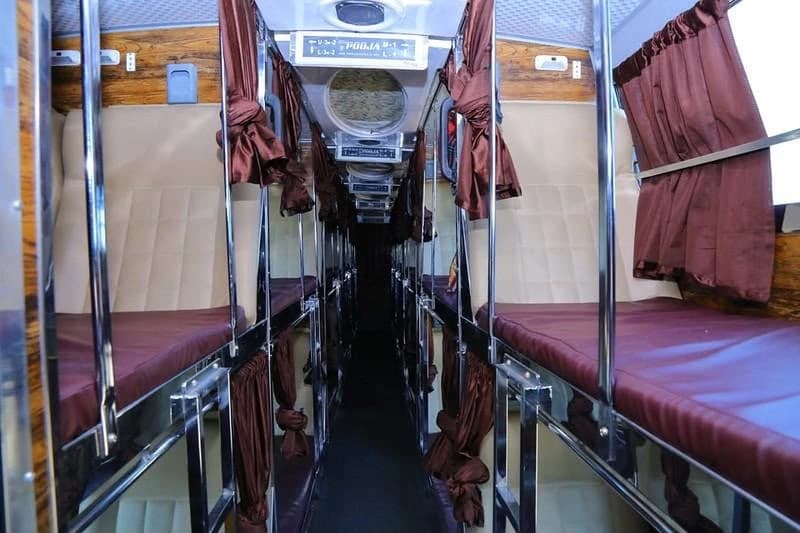
The journey of Senja Utama Solo did not stop with business-class trains. Entering the 1990s, its train composition became more diverse. The train was recorded as having operated with executive-A, executive-B, and couchette coaches, namely sleeping cars equipped with fixed beds.
Records dated November 25, 1994 even list a couchette service fare of Rp33,000. The presence of this facility shows that the Solo–Jakarta night journey during that period once offered passengers the experience of resting onboard a train, different from the configuration of regular seating. After this period, the train set returned to business-class services.
“Each period has had its own service characteristics. The history of Fajar and Senja Utama Solo records phases of business-class services, periods when it operated with executive and couchette services, and its development into a service using the latest-generation rolling stock,” said Anne.
The long journey of this train can also be seen from the origins of its rolling stock. While Senja Utama Solo began its journey in 1978 using Goša train sets manufactured in Yugoslavia, decades later modernization brought domestically manufactured trains to the service.
In 2016, executive-class service became part of Fajar and Senja Utama Solo again. Then, starting May 21, 2018, the train began using stainless steel train sets manufactured by PT INKA, offering executive and premium economy classes.
The next change took place when the 2019 Train Travel Schedule (Gapeka) came into effect on December 1, 2019. The new schedule arranged for the departure from Jakarta to take place in the morning, while the journey from Solo took place at night. The service names were then adjusted to reflect their travel times: Fajar Utama Solo toward Solo and Senja Utama Solo toward Jakarta.
Thus, the words Fajar and Senja in these services have a direct connection to their travel times. The two names have since become identities easily recognized by passengers along the Jakarta–Surakarta corridor.
The next chapter of modernization took place on January 31, 2025. Fajar and Senja Utama Solo began using mixed-class train sets consisting of executive and economy classes, featuring the latest-generation stainless steel coaches manufactured by PT INKA Madiun.
This change creates an interesting contrast in the nearly five-decade journey of the service. In 1978, Senja Utama Solo passengers traveled on business-class coaches manufactured in Yugoslavia. Today, passengers travel using the latest-generation rolling stock produced in Indonesia.
This historical span reflects the development of Indonesia’s railway industry, from the use of rolling stock manufactured overseas in the past to the use of rolling stock developed by the national railway industry.
The long history of Fajar Utama Solo has continued alongside sustained travel demand. According to KAI data, from January to August 2026, Fajar Utama Solo served 148,669 passengers, an increase of 7.65 percent compared with 138,102 passengers during the same period in 2025.
During the first eight months of 2026, the number of passengers was recorded at 17,540 in January, 14,036 in February, 21,068 in March, 18,049 in April, 18,995 in May, 20,335 in June, 19,656 in July, and 18,990 in August.
March was the month with the highest passenger volume from January to August 2026, reaching 21,068 passengers. Cumulatively, there were 10,567 additional passengers compared with the same period in the previous year.
This growth provides new context for a service whose roots date back to 1978. Its name, schedule, service classes, terminal stations, and train sets have changed over time, but the corridor connecting Jakarta and Surakarta continues to have a place in people’s mobility.
From Senja Utama Solo’s journey to Gambir using Goša business-class coaches in 1978, the couchette phase in the 1990s, the return of executive-class service, the use of stainless steel train sets manufactured by INKA, to the latest generation introduced in 2025, nearly five decades of this railway journey have also recorded the development of intercity railway services in Indonesia.
“The long history of Fajar and Senja Utama Solo continues through the passengers who still choose this service today. KAI will preserve its historical identity while continuing to improve the quality of the journey according to passenger needs.”
VP Corporate Communication KAI