
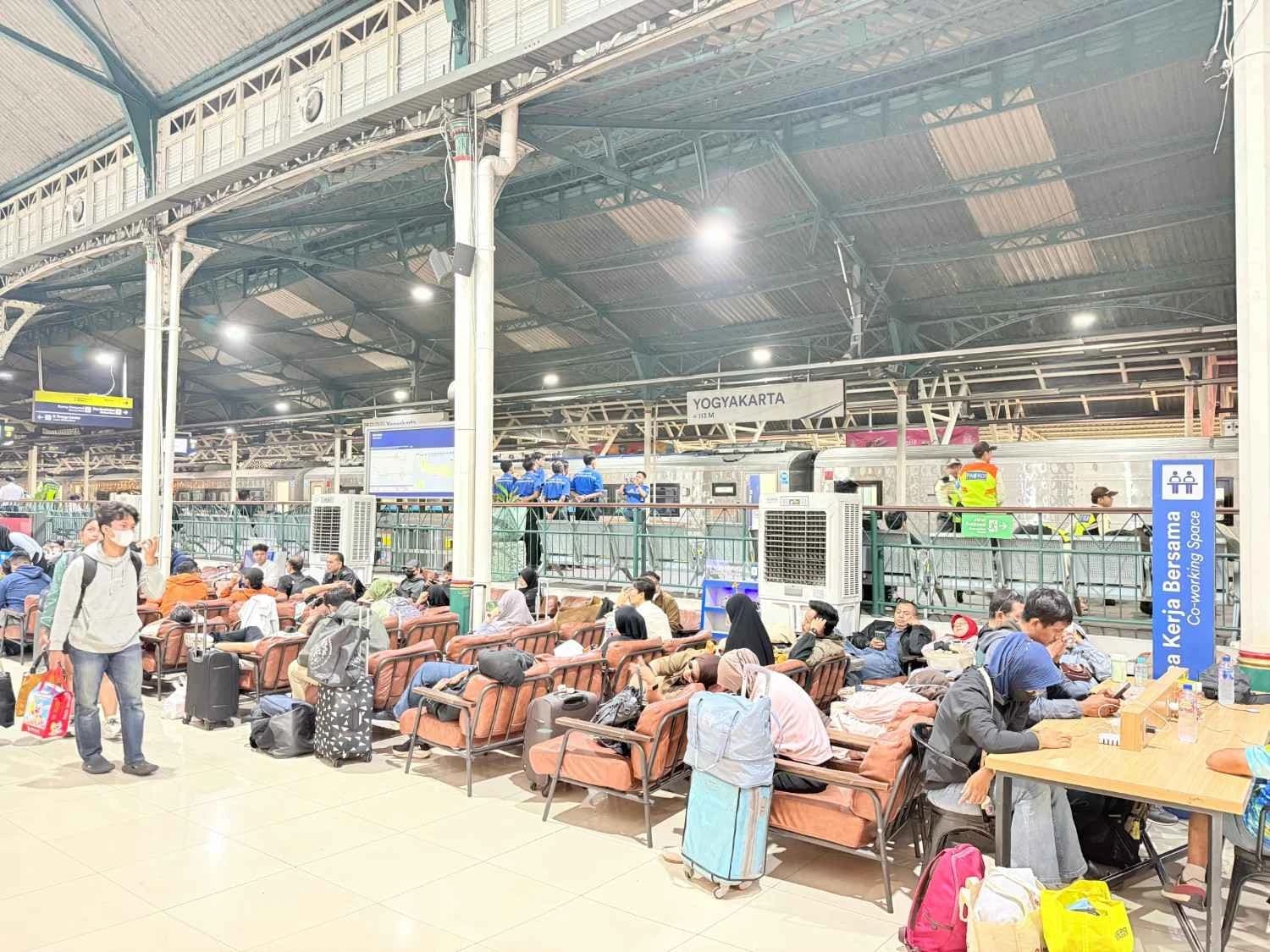
GAPEKA 2026, KAI Adds 8,466 Seats per Day, Expanding Travel Options
PT Kereta Api Indonesia (Persero) is preparing to develop its train services through the implementation of the 2026 Train Travel Schedule (GAPEKA), starting December 1, 2026. These adjustments will bring increased seating capacity, additional train services, and expanded choices of departure and destination stations to address the growing mobility needs of the public.
KAI Vice President of Corporate Communication Anne Purba stated that one of the key changes in GAPEKA 2026 is the increase in passenger train capacity in Java and Sumatra. Overall, the scheduled seating capacity will increase from 168,316 to 176,782 seats per day, an addition of 8,466 seats or 5.03 percent compared with GAPEKA 2025.
“The additional capacity provides the public with more opportunities to plan their journeys by train. We want to offer increasingly diverse travel options, in terms of seat availability, departure schedules, and the stations customers can use,” said Anne.
In Java, intercity train capacity will increase from 132,680 to 137,846 seats per day. This represents an additional 5,166 seats, or an increase of 3.89 percent compared with GAPEKA 2025. Meanwhile, capacity in Sumatra will increase from 35,636 to 38,936 seats per day, an addition of 3,300 seats or 9.26 percent.
Along with the increase in capacity, the number of scheduled passenger train services in GAPEKA 2026 will increase from 1,813 to 1,852, representing an addition of 39 services. This development covers services in Java and Sumatra, including increased frequencies on several routes to provide the public with more departure alternatives.
One of the new services introduced is Train Pandawa on the Semarang Tawang–Solo Balapan–Yogyakarta round-trip route, with four scheduled services. In addition, there will be one additional service for Train Datuk Belambangan and four additional services for Train Sri Lelawangsa in North Sumatra, as well as two services for Train Brawijaya on the Malang–Gambir round-trip route.
“Service development takes into account public travel patterns and the need for interregional connectivity. Additional services are expected to provide departure time alternatives that better suit customers’ activities, while also creating broader mobility opportunities across various regions,” Anne explained.
In addition to increased capacity and frequency, GAPEKA 2026 will expand travel access through additional stops on 84 train services. These additions will allow the public to use intercity train services from more stations, including areas with potential for family travel, economic activities, education, and tourism.
One of the services receiving the highest number of additional stops is Train Sangkuriang on the Bandung–Ketapang round-trip route, with six additional stations in each direction.
For journeys from Bandung to Ketapang, the additional stops include Cibatu, Rajapolah, Kebumen, Tanggul, Kalisetail, and Rogojampi Stations. Meanwhile, for journeys from Ketapang to Bandung, the additional stops include Rogojampi, Kalisetail, Tanggul, Kebumen, Rajapolah, and Klakah Stations.
The expanded access is particularly relevant given the high utilization of Train Sangkuriang, which served 330,186 customers throughout May–September 2026. From July to September 2026, this service recorded an average dynamic occupancy rate of 240.53 percent.
“The additional stops for Train Sangkuriang provide more travel options for people along the Bandung to Banyuwangi route. We hope this easier access will also support people's mobility to tourist destinations, economic activity centers, and their hometowns where their families live,” said Anne.
Similar adjustments will also be made to several other services. Train Manahan will receive additional stops, including at Bekasi, Gombong, and Wates. Train Parahyangan will have additional stops at Plered, Cikarang, Karawang, and Cikampek, while Train Kaligung will have additional stops at Kaliwungu, Comal, and Plabuan on selected journeys.
GAPEKA 2026 will also introduce travel time adjustments on several routes. Based on a comparison with GAPEKA 2025, 74 intercity train services will have shorter travel times.
The largest travel time reduction will be on Train Kahuripan on the Blitar–Kiaracondong route, at 92 minutes. This will be followed by Train Pasundan on the Surabaya Gubeng–Kiaracondong route, which will be 53 minutes faster; Train Airlangga on the Surabaya Pasarturi–Pasar Senen route, 52 minutes faster; and Train Batavia on the Solo Balapan–Gambir route, 51 minutes faster.
Train Airlangga on the Pasar Senen–Surabaya Pasarturi route will also have its travel time reduced by 51 minutes. Meanwhile, Train Sangkuriang traveling from Ketapang to Bandung will be 46 minutes faster.
According to Anne, travel time changes are arranged by taking into account route characteristics, infrastructure and rolling stock readiness, as well as journey arrangements and stopping patterns.
“GAPEKA arrangements are carried out comprehensively. Some journeys will become faster, some will retain the same travel time, while others will require adjustments due to additional stops. Every change is planned so that customers have clear travel options that suit their needs,” Anne explained.
Anne added that the development of GAPEKA 2026 is also in line with increasing public mobility. Throughout January–October 2026, KAI Group served 442,529,105 customers, an increase of 6.86 percent compared with 414,116,947 customers during the same period the previous year.
For KAI's long-distance and local train services, the number of customers reached 49,932,766, an increase of 8.99 percent compared with 45,814,275 customers in January–October 2025. This growth is one of the considerations in developing train capacity and services for the long term.
“Through GAPEKA 2026, KAI aims to provide train services that are increasingly relevant to public needs. Capacity is increasing, departure options are becoming more diverse, and more stations can serve as travel access points. We hope this development will benefit public mobility and economic activities across various regions,” Anne concluded.
VP Corporate Communication KAI