
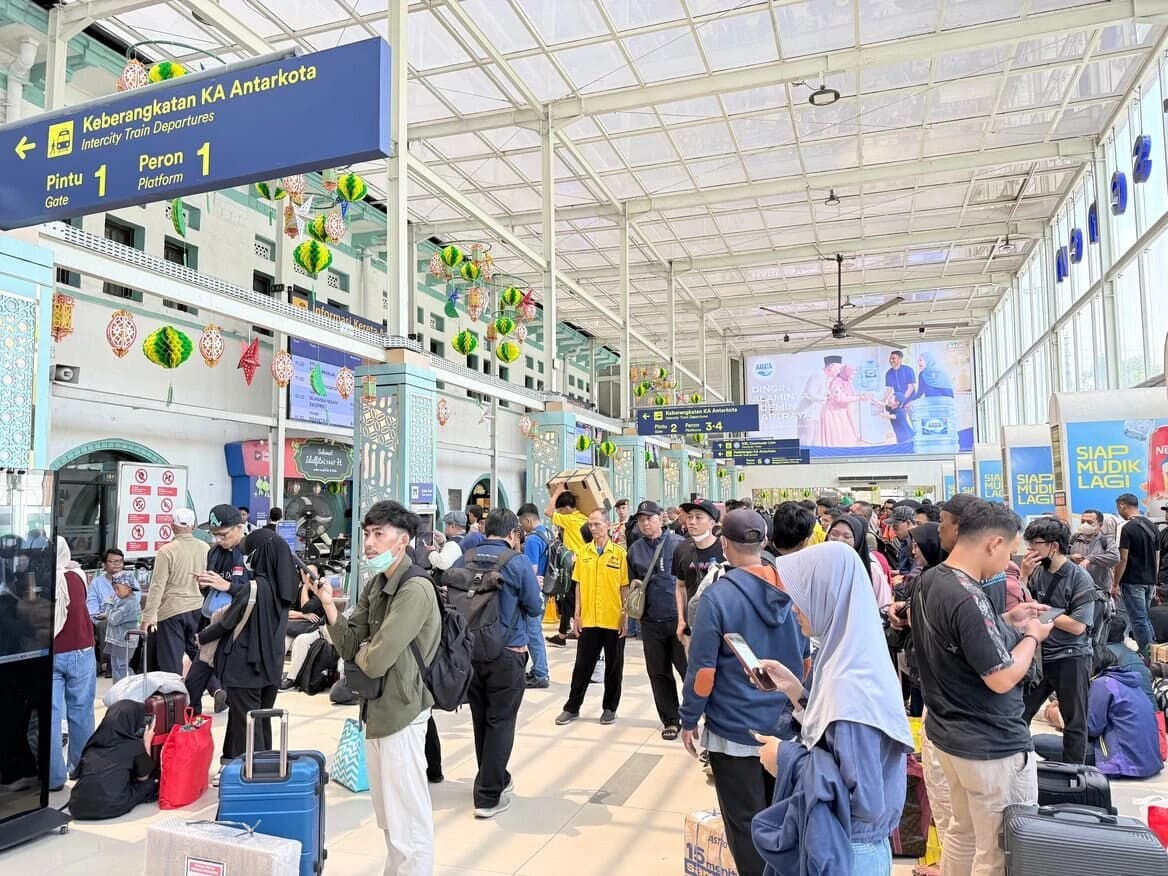
GAPEKA 2026: KAI Cuts Travel Time for PSO Trains by Up to 92 Minutes, Making Subsidized Train Journeys Shorter
PT Kereta Api Indonesia (Persero), or KAI, is preparing to improve subsidized railway services through the implementation of the Train Travel Graphic (GAPEKA) 2026, effective December 1, 2026. Schedule and operational pattern adjustments will reduce travel time by up to 92 minutes on selected journeys, including KA Kahuripan, Airlangga, Serayu, Probowangi, Cikuray, Bengawan, and Tawang Alun. These changes are part of efforts to improve public transportation quality, supported by the government through the Public Service Obligation (PSO) scheme.
KAI Vice President of Corporate Communication Anne Purba said that reduced travel time directly benefits customers using subsidized economy-class trains. For long-distance intercity journeys, saving more than an hour allows customers to arrive earlier and better organize their activities at their destinations.
“Through GAPEKA 2026, PSO railway services continue to improve. One of the results can be seen in KA Kahuripan from Blitar to Kiaracondong, where travel time has been reduced by 92 minutes. Customers using subsidized services now have shorter travel time options on several routes,” Anne said.
The greatest travel time reduction is recorded for KA Kahuripan from Blitar to Kiaracondong, with the journey becoming 92 minutes, or 1 hour and 32 minutes, shorter compared with GAPEKA 2025. This adjustment benefits customers traveling from East Java to Bandung and its surrounding areas, including for education, work, and family trips.
For KA Airlangga from Surabaya Pasarturi to Pasar Senen, travel time has been reduced by 52 minutes. Meanwhile, the journey from Pasar Senen to Surabaya Pasarturi is now 51 minutes shorter. Adjustments in both directions provide time savings for customers traveling between Jakarta and Surabaya using subsidized economy-class trains.
“KA Airlangga serves public mobility along the Jakarta–Surabaya corridor. With travel time reductions of more than 50 minutes in each direction, customers have the opportunity to arrive earlier at their destinations. These changes provide additional benefits from PSO services, which have long supported public travel with affordable fares,” Anne explained.
Travel time reductions are also recorded for KA Serayu from Pasar Senen to Purwokerto via Kroya. For journeys numbered KA 318–319, travel time is now 31 minutes shorter. Other KA Serayu journeys have also experienced reductions of varying durations, ranging from 3 to 6 minutes, depending on the direction and train number.
Along the East Java corridor, KA Probowangi from Surabaya Gubeng to Ketapang has experienced a 12-minute travel time reduction. This train serves passenger mobility from Surabaya to the Tapal Kuda region and Banyuwangi, including journeys to economic activity centers, educational institutions, and tourist destinations.
Further adjustments apply to KA Cikuray from Pasar Senen to Garut, with travel time reduced by 7 minutes, and KA Bengawan from Purwosari to Pasar Senen, which is now 4 minutes shorter. Meanwhile, KA Tawang Alun from Ketapang via Bangil to Malang Kota Lama has experienced a 1-minute travel time reduction.
Anne emphasized that each travel time reduction applies according to the direction and train number specified in GAPEKA 2026. Adjustments are made through schedule evaluations, train crossing and overtaking arrangements, station stop adjustments, and considerations of facilities and infrastructure conditions along each railway line.
“Adjustments are made in a measured manner based on the operational characteristics of each journey. Some routes have travel time reductions of up to 92 minutes, while others experience different changes. Safety remains the primary consideration in all schedule arrangements,” Anne said.
The high utilization of PSO services demonstrates the importance of these service improvements. From January to October 2026, KA Airlangga served 1,102,509 customers, KA Serayu 1,047,130 customers, and KA Kahuripan 681,208 customers. Together, these three services served a total of 2,830,847 customers during the first ten months of the year.
During the same period, KA Bengawan served 666,106 customers, KA Probowangi 597,015 customers, and KA Cikuray 477,310 customers. Thus, these six PSO services served a total of 4,571,278 customers from January to October 2026.
“More than 4.57 million customers used these six services from January to October 2026. This substantial volume is an important reason for KAI to continue evaluating journey quality. Through GAPEKA 2026, service improvements are directed toward aspects that customers can experience directly, including reduced travel time and schedule arrangements that better accommodate mobility needs,” Anne said.
Public service development through GAPEKA 2026 is also being carried out in Sumatra. Intercity train capacity has increased from 17,204 to 17,648 seats, representing an additional 444 seats. Meanwhile, urban train capacity has increased from 18,432 to 20,176 seats, adding 1,744 seats compared with the previous GAPEKA.
This capacity development complements railway service arrangements in Sumatra, including service areas covered by KA Putri Deli, Bukit Serelo, Ekspres Rajabasa, and Kuala Stabas. Each service plays a role in connecting residential centers, trade activities, educational institutions, and economic activities across regions.
Anne explained that the implementation of PSO services through government support provides the public with access to affordable railway transportation. In line with this, KAI conducts operational evaluations to improve the quality of services received by customers.
“Government subsidies through PSO help maintain affordable railway fares. KAI manages these services by continuously adjusting schedules, increasing capacity, and optimizing travel time. Therefore, the benefits of public services can be seen in the availability of transportation access and improvements in the quality of journeys experienced by the public,” Anne said.
Overall, GAPEKA 2026 records 74 intercity train journeys with shorter travel times compared with the previous GAPEKA. This figure covers various intercity railway services, including several PSO journeys, with different travel time reductions for each route.
KAI encourages customers to recheck train departure and arrival schedules through the Access by KAI app or the company's official information channels ahead of the implementation of GAPEKA 2026 on December 1, 2026.
“Through these travel arrangements, KAI aims to ensure that government support for PSO services delivers greater benefits to the public. Shorter travel times on selected routes and continuously developed capacity are part of improving public transportation services accessible to the community,” Anne concluded.
VP Corporate Communication KAI