
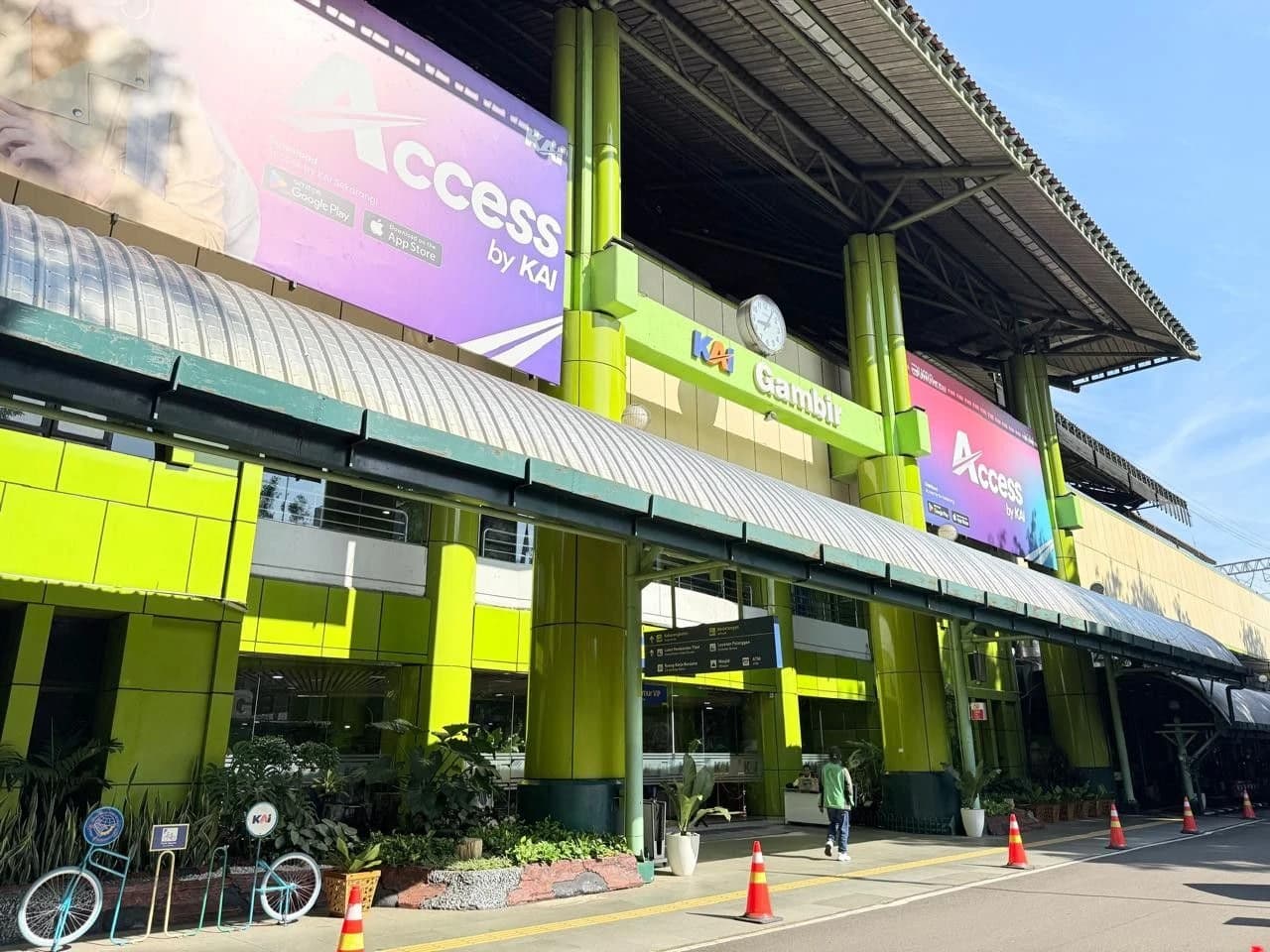
Gambir to Be Developed as a Hospitality and Leisure Hub, KAI Optimizes Station Assets
PT Kereta Api Indonesia (Persero) is developing Gambir Station into a more productive space that delivers broader benefits. Located in the heart of Jakarta, the station's assets are being optimized to enhance customer services, provide opportunities for commercial tenants, strengthen economic activity, and create both direct and supporting employment opportunities.
KAI Vice President of Corporate Communication Anne Purba stated that Gambir occupies a highly strategic location, situated near the National Monument (Monas), government offices, business districts, hotels, public spaces, and various onward transportation connections.
"Gambir serves as the gateway for Long-Distance Train travel while also functioning as the front porch of central Jakarta. Therefore, we are developing it as a hospitality and leisure destination where customers can comfortably wait for their trains, dine, shop, access travel services, and continue their activities in the city center," Anne said.
According to Gambir Station's 2026 tenant data, there are currently 132 leased commercial areas, consisting of 67 commercial spaces and 65 open-space locations. Commercial spaces are dedicated indoor areas used for retail outlets or specific services, while open-space locations are utilized for service facilities, promotional activities, self-service machines, parking, and other commercial purposes.
The tenants at Gambir include restaurants, coffee shops, convenience stores, retail outlets, souvenir shops, bookstores, lounges, lockers, transit hotels, sleeping pods, ATMs, vending machines, parking facilities, outdoor media, and various travel support services. The diversity of these tenants demonstrates that Gambir has developed a vibrant commercial ecosystem that meets customer needs.
Passenger data also reflects Gambir's strong mobility base. In 2022, Gambir Station served 5,759,495 passengers. This increased to 6,530,778 passengers in 2023, representing growth of 13.39%. In 2024, passenger volume reached 5,914,820 before rising again to 6,105,784 passengers in 2025, an increase of 3.23% compared with the previous year. On average, Gambir served approximately 16,700 passengers per day in 2025. During the first semester of 2026, the station served 3,227,508 passengers, consisting of 1,652,532 departures and 1,574,976 arrivals.
According to Anne, passenger traffic of this scale requires comprehensive supporting facilities. Customers need comfortable waiting areas, a wide selection of food and beverages, travel-related retail services, information services, convenient onward transportation access, and family-friendly spaces.
"Our optimization of Gambir is aimed at making the station's assets more productive. Customers enjoy a more comfortable travel experience, business partners gain room to grow, employment opportunities are created, and the Monas area becomes more vibrant through well-organized economic activity," Anne said.
From an employment perspective, a single small retail outlet typically employs two to three workers for cashier services, food preparation, kitchen operations, and daily operations. With 67 active commercial spaces, the existing tenant ecosystem at Gambir currently supports an estimated 134 to 201 direct jobs at the tenant level. This figure does not yet include cleaning personnel, security officers, technicians, parking attendants, transit hotel staff, lounge operators, tenant logistics personnel, food and beverage suppliers, and other supporting service providers.
According to the Gambir Station Business Optimization and Visioning Study, the New Gambir concept is envisioned as a Modern Station & Lifestyle Hub—a modern railway station integrated with lifestyle destinations. The study outlines the development of retail facilities, food and beverage outlets, lounges, hotels, a rooftop park, public spaces, and meeting and event facilities. The study also refers to Net Leasable Area (NLA), which represents the commercial floor area available for lease to tenants.
Based on the study, the new retail development will provide approximately 15,479 square meters of net leasable commercial space, while hotel and meeting facilities will occupy approximately 3,756 square meters. The meeting facilities are also associated with the concept of MICE (Meetings, Incentives, Conventions, and Exhibitions), providing venues for corporate meetings, conventions, exhibitions, and community or corporate events.
If the development proceeds according to the study, the new retail area has the potential to accommodate approximately 220 to 310 small and medium-sized business units, assuming an average tenant size of 50 to 70 square meters. If each business employs two to three workers, the retail development alone could generate approximately 440 to 930 direct jobs.
Beyond tenant operations, the hospitality and leisure district will also require supporting personnel, including cleaning staff, security officers, building technicians, parking management, customer service personnel, park and rooftop maintenance staff, loading and logistics personnel, and waste management workers. As a result, once fully operational, the Gambir development has the potential to create approximately 500 to 1,000 direct and supporting employment opportunities. The actual number will depend on the final design, tenant composition, development phases, and operational model of the area.
Anne explained that the Gambir development also forms part of KAI's strategy to strengthen Non-Fare Box (NFB) revenue, which refers to income generated outside train ticket sales. Through well-planned commercial functions, the station can provide better services to customers while increasing the economic value of the company's assets.
"KAI wants Gambir to become not only a place of travel but also a place where people experience the city. Through development focused on hospitality, leisure, and Non-Fare Box business, Gambir is being prepared to become the face of KAI's services in central Jakarta—comfortable for customers, productive for the company, and beneficial to the wider community," Anne concluded.
VP Corporate Communication KAI