
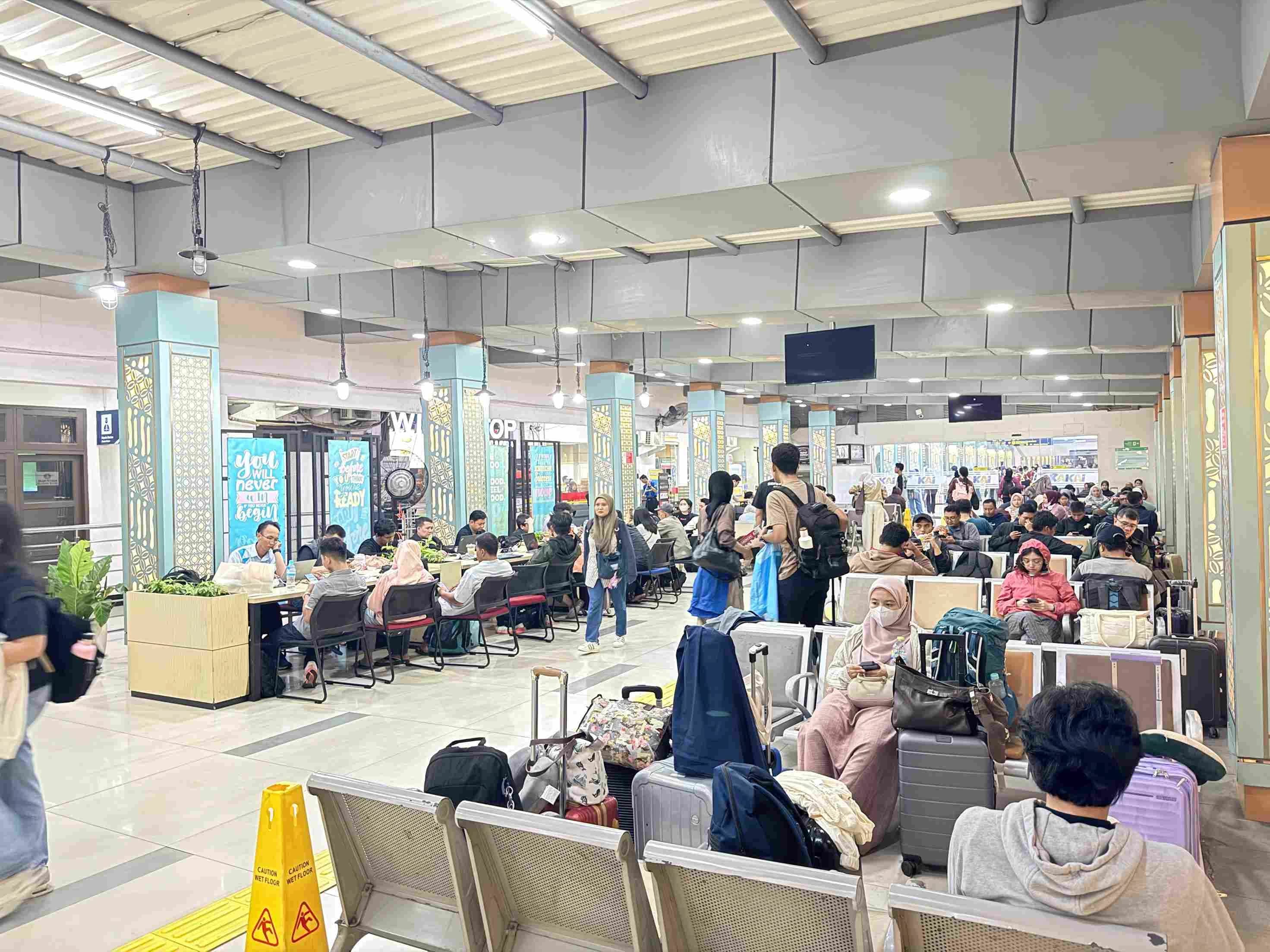
Backed by Government PSO, KAI Secures Affordable Mobility for 7.88 Million Passengers
PT Kereta Api Indonesia (Persero) records that Public Service Obligation (PSO) train services continue to be the choice of the public for long-distance and local travel. Throughout January–May 2026, PSO Long-Distance Trains and PSO Local Trains managed by the parent company KAI served 7,882,165 passengers, an increase of 7.9 percent compared to the same period in 2025 with 7,303,687 passengers.
This growth demonstrates the important role of PSO services in maintaining public mobility access. Through the support of the Government via the Directorate General of Railways of the Ministry of Transportation, KAI provides economy-class train services with affordable tariffs on routes needed by the public.
KAI’s Vice President of Corporate Communication, Anne Purba, said that PSO trains are an important part of rail-based public services because they directly touch the travel needs of the public.
"PSO trains help the public obtain more affordable travel access for work, school, medical treatment, trading, meeting family, and traveling between regions. Together with the Government through DJKA of the Ministry of Transportation, KAI continues to ensure that this service remains relevant to customers' needs,"
Based on KAI data, PSO Long-Distance Trains served 4,951,267 passengers in January–May 2026. This number increased by 5.1 percent compared to January–May 2025 with 4,709,193 passengers. Meanwhile, PSO Local Trains served 2,930,898 passengers, an increase of 13.0 percent compared to the same period in the previous year with 2,594,494 passengers.
Anne explained that PSO Long-Distance Trains play a role in connecting cities in Java and Sumatra with more measured travel costs for the public. This service provides room for customers to make intercity trips more economically, especially for students, workers, traders, families, and the public who need routine transportation access.
For PSO Long-Distance Train services, KAI operates 13 trains, namely: KA Kahuripan (Blitar–Kiaracondong PP route), KA Bengawan (Purwosari–Pasar Senen PP route), KA Sri Tanjung (Lempuyangan–Ketapang PP route), KA Airlangga (Surabaya Pasarturi–Pasar Senen PP route), KA Serayu (Purwokerto–Kroya–Pasar Senen PP route), KA Kutojaya Selatan (Kutoarjo–Kiaracondong PP route), KA Tawang Alun (Ketapang–Bangil–Malang Kota Lama PP route), KA Bukit Serelo (Kertapati–Lubuklinggau PP route), KA Ekspres Rajabasa (Kertapati–Tanjungkarang PP route), KA Putri Deli (Tanjungbalai–Medan PP route), KA Probowangi (Ketapang–Probolinggo–Surabaya Gubeng PP route), KA Kuala Stabas (Baturaja–Tanjungkarang PP route), KA Cikuray (Garut–Pasar Senen PP route)
On the other hand, PSO Local Trains strengthen regional mobility. This service is widely used by the public to move from residential areas toward downtowns, markets, schools, campuses, healthcare facilities, connecting stations, and local economic activity centers.
According to Anne, the 13.0 percent growth in PSO Local Train passengers shows that the need for short- and medium-distance travel continues to increase. Local trains are chosen because they have regular schedules, large capacities, and tariffs that help the public manage daily mobility costs.
"For many customers, PSO trains are a connector to opportunity. There are students departing for school, workers heading to the workplace, traders maintaining economic activities, and families who stay connected between cities,"
KAI also continues to maintain the service quality of PSO trains through travel safety, cleanliness of the rolling stock, operational punctuality, and ease of access to information and ticket booking. Customers can buy tickets through the Access by KAI application, KAI's official website, station ticket counters, and other official channels partnering with KAI.
Anne added that the sustainability of PSO services requires synergy between the operator, the government, and the public. KAI will continue to ensure that PSO services run according to regulations, are accurately targeted, and provide direct benefits to customers in various regions.
"KAI is grateful for the support of the Government through DJKA of the Ministry of Transportation in organizing PSO trains. With this collaboration, trains can continue to be present as public transportation that is safe, comfortable, affordable, and close to the needs of the public,"
VP of Corporate Communication KAI
