
Behind Every Train Journey Rail Maintenance Innovations Are Becoming More Environmentally Friendly
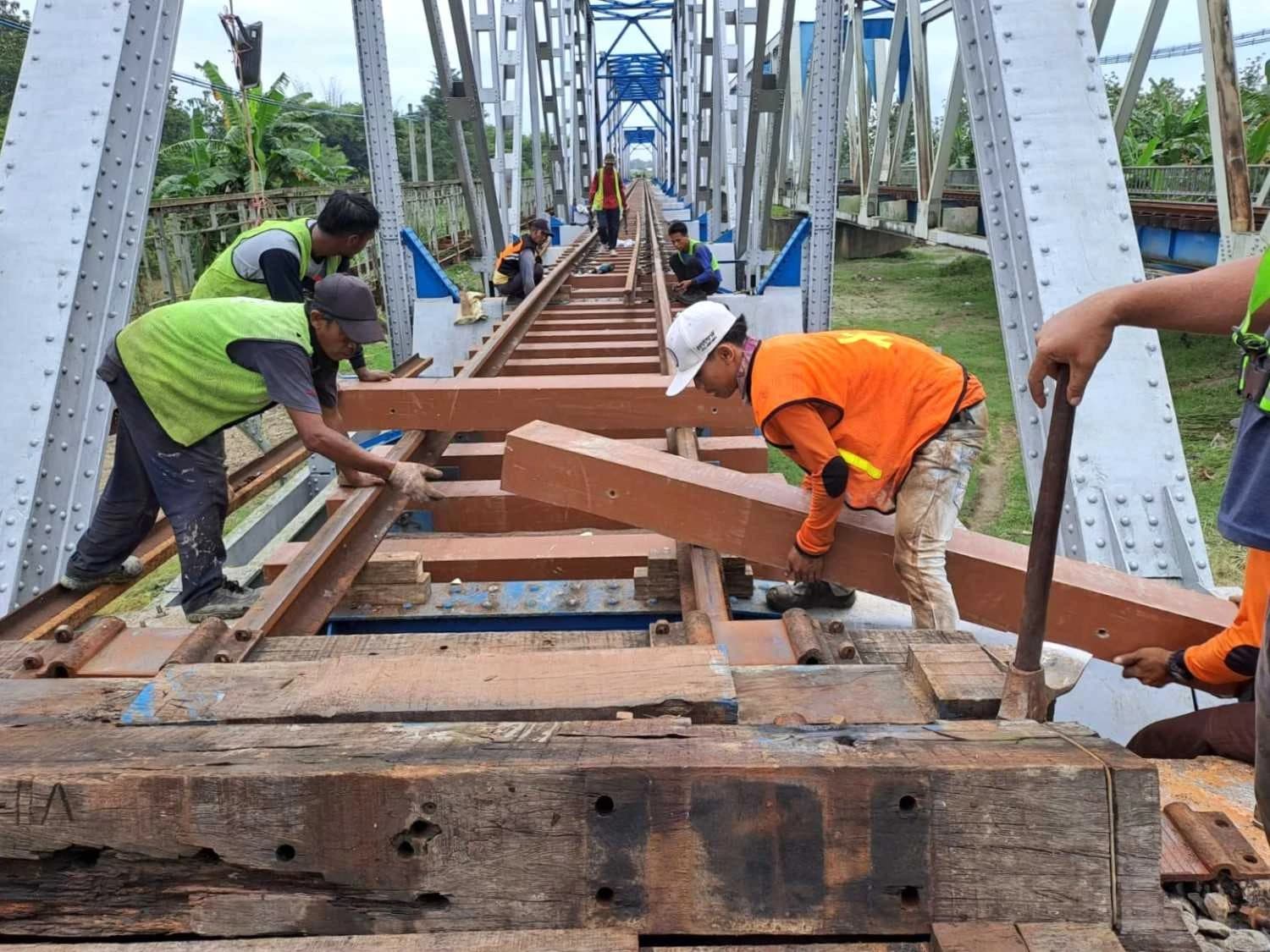
Every train journey that takes customers to various destinations involves a long process to ensure that railway tracks remain in good condition. Behind these journeys, KAI continues to develop various infrastructure maintenance innovations through the use of increasingly modern materials and technologies.
PT Kereta Api Indonesia (Persero) continues to develop its infrastructure maintenance practices through the use of synthetic sleepers as well as battery and electric powered maintenance equipment. These initiatives are part of KAI’s efforts to maintain railway track quality, improve the efficiency of field operations, and support better environmental management.
Vice President of Corporate Communication KAI Anne Purba said that safe and comfortable train journeys are supported by the readiness of various aspects, including the infrastructure on which trains operate.
“Behind every train journey enjoyed by customers, there is an ongoing maintenance process. KAI continues to introduce innovations in maintenance materials and technologies to ensure reliable infrastructure while supporting environmental sustainability,” said Anne.
One of the innovations implemented by KAI is the use of synthetic sleepers made from Fiber Reinforced Foamed Urethane as an alternative railway sleeper material. This material has a longer service life than wooden sleepers and offers better resistance to weather and environmental conditions.
The use of synthetic sleepers has continued to grow in recent years. Based on KAI data, procurement of synthetic sleepers totaled 5,656 units in 2022, increasing to 16,353 units in 2023, followed by 15,864 units in 2024, 13,789 units in 2025, and 16,839 units in 2026. Overall, from 2022 to 2026, KAI procured a total of 68,501 synthetic sleepers.
Anne explained that the use of synthetic sleepers supports railway track maintenance because of their longer durability. The material helps reduce the frequency of material replacement, reduce the use of wood as a raw material, and support the reduction of waste generated from material replacement.
To ensure material quality before use, synthetic sleepers undergo various technical tests. These include tests for flexural strength and Young’s modulus, flexural load resistance, longitudinal compressive strength, shear strength, bond shear strength, dielectric withstand voltage, insulation resistance, screw spike pull-out strength, dimensional measurement, fire resistance, fatigue resistance, and weather resistance.
In addition to using new materials for railway tracks, KAI is also transforming its infrastructure maintenance equipment through the use of battery- and electric-powered technology. Cordless equipment has begun to be used to support more efficient maintenance work while making field operations easier for personnel.
Currently, several battery-powered tools used by KAI include impact wrenches, drills, lighting equipment, grinders, and track geometry trolleys. These tools support various maintenance activities, from installing railway track components and drilling to illuminating work areas, cutting materials, and measuring railway track geometry.
KAI is also preparing to expand the use of battery-powered equipment through the planned procurement of various tools, including battery rail saws, rail grinders, electric hydraulic jacks, battery-powered portable tampers, battery drills, electric paint sprayers, electric high-pressure washers, and chainsaws. These tools are expected to make infrastructure maintenance work more practical, ergonomic, and efficient.
The transition toward battery- and electric-powered infrastructure maintenance equipment is part of KAI’s efforts to reduce the use of fuel-powered equipment and support more environmentally friendly maintenance operations.
In addition to developing maintenance technologies, KAI also implements various environmental management programs at its infrastructure facilities. These programs include the implementation of Wastewater Treatment Plants (WWTP) to ensure that wastewater from washing and maintenance activities meets quality standards before being discharged into the environment, the management of hazardous and toxic waste (B3) in accordance with applicable regulations, and regular environmental audits in work areas.
KAI is also preparing plans to install a Solar Power Plant (PLTS) at the Infrastructure Balai Yasa through the installation of photovoltaic solar panels to support operational electricity needs. This initiative is complemented by energy efficiency measures and the implementation of green building concepts at infrastructure maintenance facilities.
Anne added that infrastructure innovation is part of KAI’s journey to provide train services that are increasingly prepared to meet the needs of the community.
“Every train journey begins with a well-maintained track. Through innovations in materials, maintenance technologies, and environmental management, KAI continues to maintain infrastructure quality to make customers’ journeys safer, more comfortable, and more reliable,” Anne concluded.
VP Corporate Communication KAI