
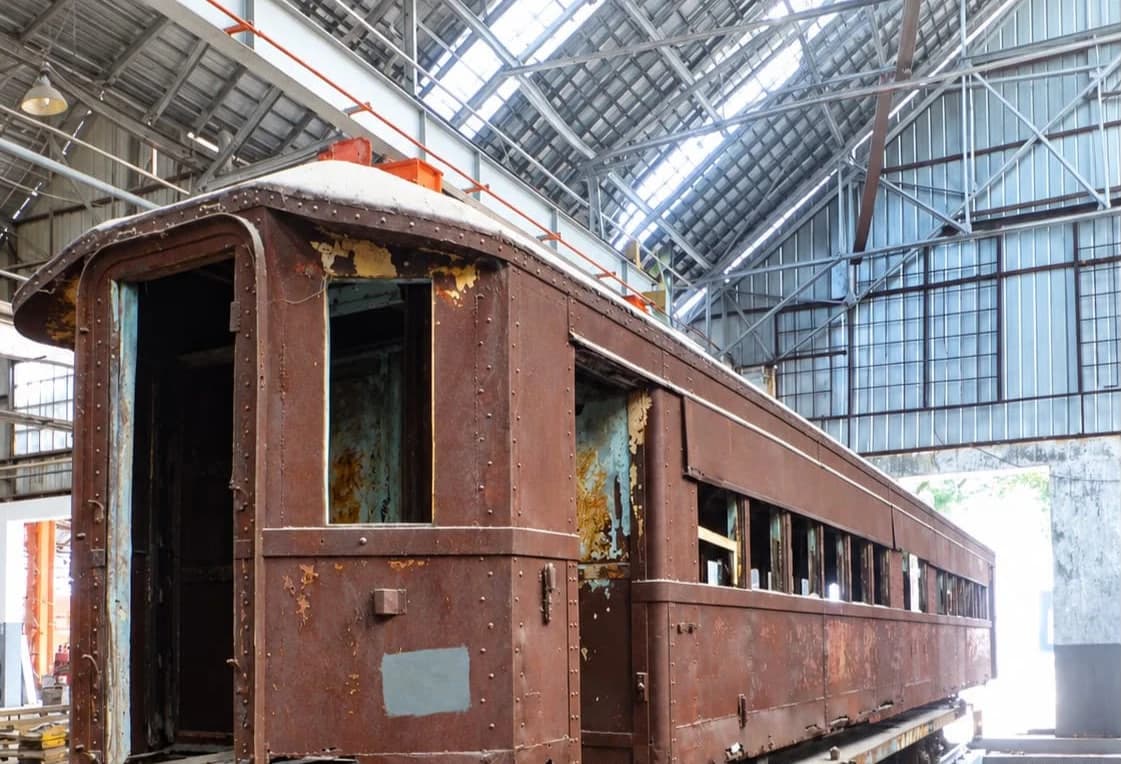
From Batavia Trams to Whoosh, Indonesia’s Long Journey of Electric Trains for More Than a Century
More than a century ago, electric technology began making its way into Indonesia’s rail transportation. From electric trams in Batavia in 1899, it evolved into Electric Multiple Units (KRL) for urban mobility, followed by the introduction of LRT Jabodebek and the Whoosh High-Speed Train as part of the development of modern railway technology.
As KAI approaches its 81st anniversary, PT Kereta Api Indonesia (Persero) continues to advance railway technology through the expansion of electrification networks and increased service capacity to meet the mobility needs of the public.
President Director of KAI Bobby Rasyidin said the development of electrification is part of the company’s strategy to increase the capacity of electric train services, particularly in the Greater Jakarta agglomeration area.
“KAI continues to prepare for the development of the KRL network through additional electrification. Going forward, the Bekasi KRL line will be extended from Cikarang to Cikampek, while the Bogor line will be extended to Cigombong. This development will be carried out gradually to increase KRL service capacity toward two million customers per day,” said Bobby.
The development is carried out through the addition of overhead power supply (LAA) or railway electrification. Currently, the electrification of the Bekasi line has reached Cikarang Station, while the southern line has reached Bogor Station. The extension of these networks is targeted for completion in 2028.
The development of electrification is part of the long journey of electric technology in Indonesia’s railway industry, which has spanned more than a century.
Vice President of Corporate Communication KAI Anne Purba said electric technology has been an important part of the development of Indonesia’s railway industry since the late 19th century.
“Electric technology has been part of Indonesia’s railway journey for more than a century. Its development shows how rail transportation continues to adapt, from serving urban mobility to providing services with modern technology,” said Anne.
The use of electricity in Indonesia’s rail transportation began with the introduction of electric trams in Batavia. On April 10, 1899, electric trams officially began operating as a new form of mass public transportation in Batavia.
The electric tram fleet was supplied by Dyle et Bacalan, Belgium, and operated by Batavia Elektrische Tram Maatschappij (BETM).
The inauguration of the electric tram service took place behind Bataviasche Planten En Dierentuin, or Batavia Zoo, in the Cikini, Menteng area. A BETM tram depot was also built at the location, equipped with workshop facilities and a power generation engine room.
During its early operations, the Batavia electric tram network connected several areas, including Harmoni, Tanah Abang, Menteng, Kramat, Pasar Senen, Pintu Besi, and Batavia Station.
The introduction of electric trams marked one of the early milestones in the use of electric technology for rail-based transportation in Indonesia.
The development of electric technology then continued with the railway system. Following the construction of electrification infrastructure, Indonesia’s first electric train began operating on April 6, 1925, along the Tanjung Priok–Meester Cornelis (Jatinegara) line.
The introduction of electric trains became an important part of the development of urban mobility. The electric railway network continued to expand, eventually connecting Jakarta and its surrounding areas.
In 1930, the electric train service between Batavia and Buitenzorg (Jakarta–Bogor) began full operations.
After Indonesia gained independence, electric railway technology continued to develop in line with urban growth and the public’s travel needs. Electric Multiple Units (KRL) subsequently became one of the main modes of urban transportation, particularly in the Greater Jakarta area.
The role of electric train services has continued to grow in supporting public mobility. As of August 2026, KAI Group had served 351,602,397 customers, an increase of 7.09 percent compared with the same period the previous year.
This growth reflects the continued increase in public demand for railway services, including electrified services.
The development of electric rail technology entered a new chapter with the introduction of LRT Jabodebek in 2023.
The service has a 44.43-kilometer route and uses Communication Based Train Control (CBTC) signaling technology with Grade of Automation 3 (GoA3) driverless operation.
LRT Jabodebek is part of the development of modern electric urban transportation in Indonesia, providing travel options for communities across Jakarta, Bogor, Depok, and Bekasi.
In the same year, Indonesia entered a new era with the operation of Whoosh, Indonesia’s first electric high-speed train.
Whoosh was inaugurated on October 2, 2023, and began commercial operations on October 17, 2023.
The high-speed train uses CR400AF trainsets with an operating speed of up to 350 km/h, making it the first high-speed train in Southeast Asia.
With the presence of KRL, LRT Jabodebek, and Whoosh, the development of electric technology demonstrates how Indonesia’s rail transportation continues to evolve in line with public needs.
From daily journeys using KRL and urban mobility with LRT Jabodebek to intercity travel using the Whoosh high-speed train, electric technology continues to be part of the development of Indonesia’s railway services.
Anne said the journey of electric technology reflects how railway innovation continues to develop from one generation to the next.
“From Batavia’s electric trams to KRL, LRT Jabodebek, and Whoosh, every technological development has brought changes to society. KAI continues to be part of this journey by providing services that increasingly serve the public,” said Anne.
As KAI approaches its 81st anniversary, the company continues to advance Indonesia’s railway journey through technological innovation, service development, and connectivity that supports the needs of the public.
VP Corporate Communication KAI